New design methods promise better flight-control systems —safer, cheaper, and greener aircraft

With knowledge from many fields, it is possible to propose the right solution for the aircraft's control system at an early stage. This reduces the risk of wasted efforts on faulty designs, which entails lower developmental costs and enhanced safety.
When a new airplane is projected, designers need knowledge and competence from many disciplines in order to make the right decisions about the plane's complex and intricately interactive systems and functions.
The EU project “Simulating aircraft stability and control characteristics for use in conceptual design” (SimSAC) is intended to facilitate the coordination of this knowledge. The budget is €5.1 million, with €3.3 million provided by the EU Commission.
“New airplanes must meet rigorous requirements for energy efficiency, environmental friendliness, aviation safety, and high performance at a low operational cost. Early multidisciplinary work that is followed up throughout the developmental process is an indispensable tool,” says Arthur Rizzi, professor at the Department of Aeronautical and Vehicle Engineering, Royal Institute of Technology, in Sweden and one of those behind the project and now coordinating it.
A control system with the right features is necessary for the safe and efficient operation of aircraft. But today control systems are usually constructed only after the main features of the plane have been determined, often using handbook and experiential data as a basis. By including the control system earlier in the developmental process, you increase the chances of getting it right the first time.
“Up to 80 percent of the total cost of an airplane's life cycle is set during the early design phase, so mistakes are expensive. Faulty assumptions about stability and control lead to costly and failed test flights. This can involve the loss of prototypes and, in the worst case, human life. To minimize risks, multidisciplinary analyses should be introduced early in the developmental process, and decisions should be based more on simulations than on empirical data,” says Arthur Rizzi.
To meet these challenges, 17 leading representatives of the European academic community and the aeronautics industry from nine countries will now be collaborating in the SimSAC project. Sweden is represented by, along with the Royal Institute of Technology, the Swedish Defense Research Agency and SAAB Aerosystems. The initiative for the project came from the Royal Institute of Technology and EADS (Germany), which are both active in the field of developing designs and products that are “first-time right.”
“We Europeans must step up our competence in the field, since Europe has fallen behind the U.S. Competition is also increasing from the growing Asian aeronautics industry, and this interdisciplinary project is designed to help Europe regain the lead,” says Arthur Rizzi.
Out of 239 EU applications in aeronautical engineering, SimSAC was ranked sixth.
When the project concludes in October 2009, Arthur Rizzi counts on having produced a tailor-made environment of aircraft design, with support both for how better design should be carried out and for producing the best possible data for decision-making.
Media Contact
More Information:
http://www.simsacdesign.org/All latest news from the category: Transportation and Logistics
This field deals with all spatial and time-related activities involved in bridging the gap between goods and people, including their restructuring. This begins with the supplier and follows each stage of the operational value chain to product delivery and concludes with product disposal and recycling.
innovations-report provides informative reports and articles on such topics as traffic telematics, toll collection, traffic management systems, route planning, high-speed rail (Transrapid), traffic infrastructures, air safety, transport technologies, transport logistics, production logistics and mobility.


Newest articles

A universal framework for spatial biology
SpatialData is a freely accessible tool to unify and integrate data from different omics technologies accounting for spatial information, which can provide holistic insights into health and disease. Biological processes…

How complex biological processes arise
A $20 million grant from the U.S. National Science Foundation (NSF) will support the establishment and operation of the National Synthesis Center for Emergence in the Molecular and Cellular Sciences (NCEMS) at…
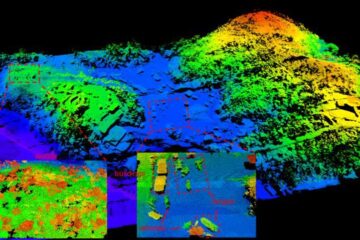
Airborne single-photon lidar system achieves high-resolution 3D imaging
Compact, low-power system opens doors for photon-efficient drone and satellite-based environmental monitoring and mapping. Researchers have developed a compact and lightweight single-photon airborne lidar system that can acquire high-resolution 3D…