Towards a better and cheaper retail supply chain

By extending the Newsvendor-formula it can be proven that from the point where most of the value is created, inventory should move all the way downstream. He will defend his PhD thesis 'Synchronizing the Retail Supply Chain' on June 29th, 2007 (Friday) 16:00 hours at the Erasmus University Rotterdam.
To produce efficiently suppliers have to produce in batches. By extending the EOQ-formula it can be proven that goods should move in large quantities. The cheapest retail supply chain is realized when distribution is synchronized to production. Right from production goods should move downstream the supply chain at low cost in full pallets and in full truckloads, in quantities large enough to cover the needs till the next production run. The suppliers’ warehouses then become stockless cross docking points, where goods from the supplier’s various sourcing plants are brought together to consolidate them into full truckloads to the retail clients. Whenever suppliers deliver lower volumes, they better bring all of these goods to only the nearest retailer’s facility; thereafter the retailer himself should move these goods onward to the proper destination within the retailer’s network. And finally shop replenishment should be rationalized based on shelf coverage, so as to enhance the retailer’s warehouse operations.
Piet van der Vlist is member of the Erasmus Research Institute of Management (ERIM), the research school in the field of management of the Erasmus University Rotterdam. The founding participants of ERIM are RSM Erasmus University and the Erasmus School of Economics. ERIM was founded in 1999 and officially is accredited by the Royal Netherlands Academy of Arts and Science (KNAW). The objective of ERIM is to carry out first rate research in management and to offer an advanced doctoral programme in Research of Management.
Media Contact
More Information:
http://www.eur.nl/englishAll latest news from the category: Transportation and Logistics
This field deals with all spatial and time-related activities involved in bridging the gap between goods and people, including their restructuring. This begins with the supplier and follows each stage of the operational value chain to product delivery and concludes with product disposal and recycling.
innovations-report provides informative reports and articles on such topics as traffic telematics, toll collection, traffic management systems, route planning, high-speed rail (Transrapid), traffic infrastructures, air safety, transport technologies, transport logistics, production logistics and mobility.


Newest articles
A universal framework for spatial biology
SpatialData is a freely accessible tool to unify and integrate data from different omics technologies accounting for spatial information, which can provide holistic insights into health and disease. Biological processes…

How complex biological processes arise
A $20 million grant from the U.S. National Science Foundation (NSF) will support the establishment and operation of the National Synthesis Center for Emergence in the Molecular and Cellular Sciences (NCEMS) at…
Airborne single-photon lidar system achieves high-resolution 3D imaging
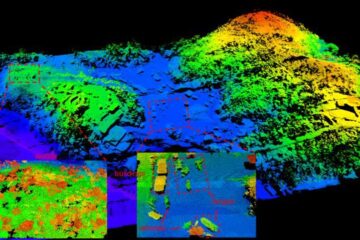
Compact, low-power system opens doors for photon-efficient drone and satellite-based environmental monitoring and mapping. Researchers have developed a compact and lightweight single-photon airborne lidar system that can acquire high-resolution 3D…