European first in aerospace engineering

The School of Mechanical, Materials and Manufacturing Engineering is joining forces with Rolls Royce, the East Midlands Development Agency (emda) and the Midlands Aerospace Alliance to establish the £1.1 million centre, which will explore how the technology can be used to create parts for the aerospace industry.
Waterjet cutting technology is one of the fastest growing machine tool processes in the world, as the equipment is versatile and easy to operate. However, in the UK the process has been predominantly limited so far to ‘flat bed’ techniques — cutting two dimensional objects from sheets of raw material.
Engineers at the new centre will use a six-axis waterjet machine, capable of cutting three dimensional parts from blocks of metal, to develop new processes and techniques.
“It’s a method that’s particularly suited to aerospace engineering,” said Professor Ian Pashby, who leads the project. “The metals used within the industry are difficult to cut and machine using other methods. Waterjet technology is very precise and adaptable — it can even be used to cut food.”
The waterjet process is also more environmentally-friendly than other machine cutting techniques. The six-axis waterjet can be used to create ‘pockets’ within blocks of metal that are essential to the manufacture of aerospace parts. Currently, corrosive acids are used to do this, which must then be disposed of separately. The waterjet machine uses just water and grit. “Which is not as nasty as the chemicals used elsewhere,” said Professor Pashby.
Stephen Burgess, Rolls-Royce Manufacturing Process and Technology Director, added: “Waterjet manufacturing can be and has been used to reduce the cost and environmental impact of producing and refurbishing our components. It is suitable for many commodities in our supply chain as well as processing next generation materials and structures. The machine at the University of Nottingham will allow us and the aerospace industry to research and develop solutions to a range of manufacturing challenges.”
A £492,000 grant from emda has been used to purchase new equipment. Rolls Royce and the University are supporting technical development at the centre. The centre is unique in UK engineering and is the first time the technology has been used for the aerospace industry outside of the US. It will be an important resource for the engineering and manufacturing businesses based in the East Midlands, making them more competitive within the global aerospace market.
Mike Carr, emda's Executive Director of Business Services, commented: “In a global economy where the scope to compete on a cost basis is increasingly limited, innovation is crucial in maintaining the competitive advantage. We are pleased to support this project, and recognise that Rolls Royce and the University of Nottingham – alongside other Universities and businesses in the East Midlands – are leading the way in developing new and exciting technologies, contributing to the vision of a flourishing region by 2020.”
The centre will be launched at the School of Mechanical, Materials and Manufacturing Engineering on University Park on Wednesday 24th January.
Media Contact
More Information:
http://www.nottingham.ac.ukAll latest news from the category: Transportation and Logistics
This field deals with all spatial and time-related activities involved in bridging the gap between goods and people, including their restructuring. This begins with the supplier and follows each stage of the operational value chain to product delivery and concludes with product disposal and recycling.
innovations-report provides informative reports and articles on such topics as traffic telematics, toll collection, traffic management systems, route planning, high-speed rail (Transrapid), traffic infrastructures, air safety, transport technologies, transport logistics, production logistics and mobility.


Newest articles

A universal framework for spatial biology
SpatialData is a freely accessible tool to unify and integrate data from different omics technologies accounting for spatial information, which can provide holistic insights into health and disease. Biological processes…

How complex biological processes arise
A $20 million grant from the U.S. National Science Foundation (NSF) will support the establishment and operation of the National Synthesis Center for Emergence in the Molecular and Cellular Sciences (NCEMS) at…
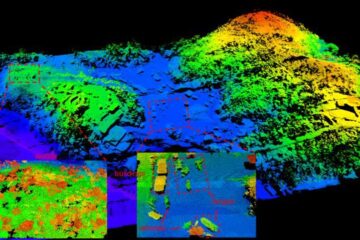
Airborne single-photon lidar system achieves high-resolution 3D imaging
Compact, low-power system opens doors for photon-efficient drone and satellite-based environmental monitoring and mapping. Researchers have developed a compact and lightweight single-photon airborne lidar system that can acquire high-resolution 3D…