Perforating aircraft wings with minute holes could make for more efficient flying

One way to make aeroplanes fly more efficiently is to drill millions of tiny holes in the leading edges of the wings. Like the dimples on a golf ball this has the effect of reducing drag. However, producing these holes on a manufacturing scale is not yet commercially feasible.
Researchers at Heriot-Watt University, funded by the Engineering and Physical Sciences Research Council, and the aerospace company BAE SYSTEMS, have carried out a series of fundamental studies on drilling such holes using laser beams. The results of the work are being assessed by BAE SYSTEMS to determine whether the airflow characteristics of holes produced in this way are suitable.
Dr Duncan Hand is a member of the research team. “It’s been known for a long time that arrays of millions of holes, 50 or 60 micrometres in diameter, on the leading edge of aircraft wings can improve the air flow characteristics around the wing,” he says. “But there’s been no cost-effective way of producing these holes accurately, quickly and cheaply – it is important to justify the increased manufacturing costs against any improvement in the aircraft’s efficiency.”
While conventional mechanical drilling techniques are insufficiently accurate and too slow for holes of this size and in these numbers, using lasers to drill the holes might be a feasible option. Here the energy of the laser melts or vaporises the metal, leaving a hole. By splitting the laser beam it would be possible to drill many holes simultaneously.
“If laser drilling is to be considered it’s necessary to know what sort of laser pulse is best, how much energy is needed, what are the most appropriate conditions – all these factors are important,” says Dr Hand.
The Heriot-Watt team has been examining two ways of laser drilling. One is using the laser in a ‘long pulse’ mode, where the pulse of laser energy lasts for around a millisecond. The other is a ‘short pulse’ mode, where the laser pulses are in the range of nanoseconds.
“For the short pulse mode you need many pulses to drill the hole, whereas for the longer pulse mode you only need a single pulse,” says Dr Hand. “While the shorter pulses produce holes which have more geometric uniformity, they take longer to drill. We also found that because the short pulses have a very high peak power, they tend to ionise the gases they come into contact with – both the air layer on the surface of the material and the vaporised metal.” This ionised gas, or plasma, can block a significant proportion of the laser energy.
The main issue with drilling with the longer pulse lasers is that the holes are less uniform. “There is a lot of interest in the variability of geometry of the holes,” says Dr Hand. “We have found that you can control certain parameters in the process to minimise the variability between holes, but there will always be an intrinsic variability. The main question is whether this variability is acceptable. That is something which is now being assessed.”
Media Contact
All latest news from the category: Transportation and Logistics
This field deals with all spatial and time-related activities involved in bridging the gap between goods and people, including their restructuring. This begins with the supplier and follows each stage of the operational value chain to product delivery and concludes with product disposal and recycling.
innovations-report provides informative reports and articles on such topics as traffic telematics, toll collection, traffic management systems, route planning, high-speed rail (Transrapid), traffic infrastructures, air safety, transport technologies, transport logistics, production logistics and mobility.


Newest articles

A universal framework for spatial biology
SpatialData is a freely accessible tool to unify and integrate data from different omics technologies accounting for spatial information, which can provide holistic insights into health and disease. Biological processes…

How complex biological processes arise
A $20 million grant from the U.S. National Science Foundation (NSF) will support the establishment and operation of the National Synthesis Center for Emergence in the Molecular and Cellular Sciences (NCEMS) at…
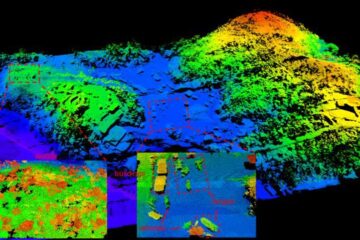
Airborne single-photon lidar system achieves high-resolution 3D imaging
Compact, low-power system opens doors for photon-efficient drone and satellite-based environmental monitoring and mapping. Researchers have developed a compact and lightweight single-photon airborne lidar system that can acquire high-resolution 3D…