The future of tropical forests

New projections hopeful
Deforestation and habitat loss are expected to lead to an extinction crisis among tropical forest species. Humans in rural settings contribute most to deforestation of extant tropical forests. However, “Trends such as slowing population growth and intense urbanization give reason to hope that deforestation will slow, regeneration will accelerate, and mass extinction of tropical forest species will be avoided,” report S.J. Wright, Smithsonian Tropical Research Institute and H.C. Muller-Landau, University of Minnesota, in Biotropica online.
The authors show that the proportion of potential forest cover remaining correlates with human population density among countries in both the tropics and the temperate zone. They use United Nations population projections and continent-specific relationships between both total and rural population density and forest remaining today to project future tropical forest cover.
According to their projections, deforestation rates will decrease as population growth slows, and a much larger area will continue to be forested than previous studies suggest. Tropical forests diminished during repeated Pleistocene glacial events in Africa and more recently in selected areas that supported large prehistoric human populations. “Despite many caveats, our projections for forest cover provide hope that many tropical forest species will be able to survive the current wave of deforestation and human population growth,” stress Wright and Mueller-Landau.
“Creative strategies to preserve tropical biodiversity might include policies to improve conditions in tropical urban settings to encourage urbanization and preemptive conservation efforts in countries with large areas of extant forest and large projected rates of future human population growth,” the authors conclude. “We hope that this first attempt inspires others to produce better models of future tropical forest cover and associated policy recommendations.”
Media Contact
More Information:
http://www.stri.org/All latest news from the category: Ecology, The Environment and Conservation
This complex theme deals primarily with interactions between organisms and the environmental factors that impact them, but to a greater extent between individual inanimate environmental factors.
innovations-report offers informative reports and articles on topics such as climate protection, landscape conservation, ecological systems, wildlife and nature parks and ecosystem efficiency and balance.


Newest articles

A universal framework for spatial biology
SpatialData is a freely accessible tool to unify and integrate data from different omics technologies accounting for spatial information, which can provide holistic insights into health and disease. Biological processes…

How complex biological processes arise
A $20 million grant from the U.S. National Science Foundation (NSF) will support the establishment and operation of the National Synthesis Center for Emergence in the Molecular and Cellular Sciences (NCEMS) at…
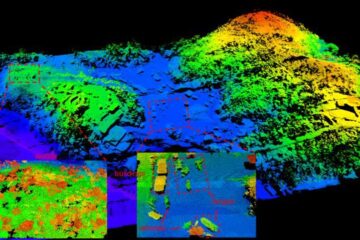
Airborne single-photon lidar system achieves high-resolution 3D imaging
Compact, low-power system opens doors for photon-efficient drone and satellite-based environmental monitoring and mapping. Researchers have developed a compact and lightweight single-photon airborne lidar system that can acquire high-resolution 3D…