Tufts University bioengineers discover secret of spider, silkworm fiber strength

Findings could drive new tissue engineering applications, organ repair and high-strength materials
Tufts University bioengineers have discovered how spiders and silkworms are able to spin webs and cocoons made of incredibly strong fibers. The answer lies in how they control the silk protein solubility and structural organization in their glands.
“This finding could lead to the development of processing methods resulting in new high-strength and high-performance materials used for biomedical applications, and protective apparel for military and police forces,” said David Kaplan, professor and chair of biomedical engineering, and director of Tufts’ Bioengineering Center.
“We identified key aspects of the process that should provide a roadmap for others to optimize artificial spinning of silks as well as in improved production of silks in genetically engineered host systems such as bacteria and transgenic animals,” said Kaplan, also a professor of chemical and biological engineering.
He and former postdoctoral fellow Hyoung-Joon Jin published their findings, “Mechanism of Processing of Silks in Insects and Spiders,” in the Aug. 28 issue of the international science journal Nature.
The research was funded with $1 million from the National Institutes of Health Dental Institute and $200,000 from the U.S. Air Force Office of Scientific Research. Kaplan collaborated with Tufts colleagues across the University – from chemical, biological and biomedical to the veterinary and dental schools.
Silk is the strongest natural fiber known, but its strength has yet to be replicated in a laboratory. One reason may be the previous lack of understanding how spiders and silkworm process the silk.
The Tufts team has identified the way that spiders and silkworms control the solubility, concentration and structure of the proteins in their glands that spin the silk.
According to Kaplan, silk proteins are organized into pseudo-micelle or soap-like structures that form globular and gel states during processing in the glands. This semi-stable state, with sufficiently entrapped water and liquid crystalline structures, prevents the proteins from crystallizing too early, until the spinning process.
The structures formed in the process can be easily converted artificially into fibers with physical shear (moving the silk gel between two plates of glass) or during fiber spinning in the native process. The control of water content and structure development are essential because premature crystallization of the protein could cause a permanent blockage of the spinning system, leading to catastrophic consequences for the spider or silkworm.
This process, when combined with the novel polymer design features in silk proteins, retains sufficient water to keep the protein soluble, while allowing the protein to self-organize and reach spinnable concentrations. Achieving sufficient concentration of protein is key to the proper spinning of fibers and to the spider’s and silkworm’s survival.
Kaplan says this new insight into silk processing could result in:
New high-strength and high-performance materials such as sports equipment, hiking gear and protective clothing for law enforcement;
New biomaterial applications for cell growth in tissue engineering, as well as general biomaterial needs for tissue and organ repair;
Environmentally sound processes to generate fibers and films from these types of polymers, since the entire process occurs in water.
“Kaplan’s research is distinctive because it addresses a fundamental problem common to all prior research in this field,” said Jamshed Bharucha, Tufts provost and senior vice president.
In 2002, Kaplan and his team of researchers from Tufts’ schools of engineering and medicine developed a tissue engineering strategy to repair one of the world’s most common knee injuries — ruptured anterior cruciate ligaments (ACL) — by mechanically and biologically engineering new ones using silk scaffolding for cell growth. This ligament at the center of the knee connects the leg to the thigh and stabilizes the knee joint in leg extension and flexion.
Approximately 200,000 ACL surgeries were done in the U.S. in 2001, costing an estimated $3.5 billion, plus another $200 million for subsequent therapy. The costs associated with surgery can range from $10,000 to $25,000 per procedure, and up to $1,200 in physical therapy.
Tufts University, located on three Massachusetts campuses in Boston, Medford/Somerville, and Grafton, and in Talloires, France, is recognized among the premier research universities in the United States. Tufts enjoys a global reputation for academic excellence and for the preparation of students as leaders in a wide range of professions. A growing number of innovative teaching and research initiatives span all Tufts campuses, and collaboration among the faculty and students in the undergraduate, graduate and professional programs across the University’s eight schools is widely encouraged.
Media Contact
More Information:
http://www.tufts.edu/All latest news from the category: Life Sciences and Chemistry
Articles and reports from the Life Sciences and chemistry area deal with applied and basic research into modern biology, chemistry and human medicine.
Valuable information can be found on a range of life sciences fields including bacteriology, biochemistry, bionics, bioinformatics, biophysics, biotechnology, genetics, geobotany, human biology, marine biology, microbiology, molecular biology, cellular biology, zoology, bioinorganic chemistry, microchemistry and environmental chemistry.


Newest articles
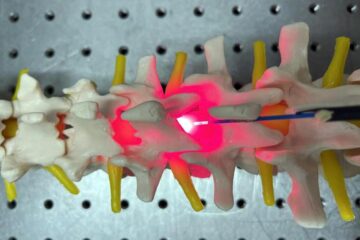
Red light therapy for repairing spinal cord injury passes milestone
Patients with spinal cord injury (SCI) could benefit from a future treatment to repair nerve connections using red and near-infrared light. The method, invented by scientists at the University of…
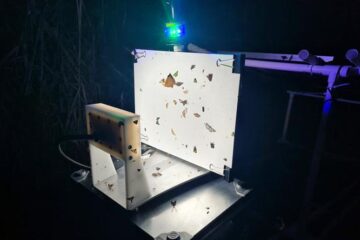
Insect research is revolutionized by technology
New technologies can revolutionise insect research and environmental monitoring. By using DNA, images, sounds and flight patterns analysed by AI, it’s possible to gain new insights into the world of…

X-ray satellite XMM-newton sees ‘space clover’ in a new light
Astronomers have discovered enormous circular radio features of unknown origin around some galaxies. Now, new observations of one dubbed the Cloverleaf suggest it was created by clashing groups of galaxies….