
Young stars ejecting plasma could give us clues into the Sun’s past Kyoto, Japan — Down here on Earth we don’t usually notice, but the Sun is frequently ejecting huge masses of plasma into space. These are called coronal mass ejections (CMEs). They often occur together with sudden brightenings called flares, and sometimes extend far enough to disturb Earth’s magnetosphere, generating space weather phenomena including auroras or geomagnetic storms, and even damaging power grids on occasion. Scientists believe that when…

Classic Graph Convolutional Networks (GCNs) often learn node representation holistically, which would ignore the distinct impacts from different neighbors when aggregating their features to update a node’s representation. Disentangled GCNs have been proposed to divide each node’s representation into several feature channels. However, current disentangling methods do not try to figure out how many inherent factors the model should assign to help extract the best representation of each node. To solve the problems, a research team led by Chuliang WENG published…
A JCAP study proposes a test for the Cosmological Principle using weak gravitational lensing “The cosmological principle is like an ultimate kind of statement of humility,” explains James Adam, astrophysicist at the University of the Western Cape, Cape Town, South Africa, and lead author of the new paper. According to the Cosmological Principle, not only are we not at the center of the Universe, but a true center does not exist. A further assumption, similar to but distinct and independent…
Extraordinary accumulation of rare atoms could improve geological dating methods Beryllium-10, a rare radioactive isotope produced by cosmic rays in the atmosphere, provides valuable insights into the Earth’s geological history. A research team from the Helmholtz-Zentrum Dresden-Rossendorf (HZDR), in collaboration with the TUD Dresden University of Technology and the Australian National University (ANU), has discovered an unexpected accumulation of this isotope in samples taken from the Pacific seabed. Such an anomaly may be attributed to shifts in ocean currents or…
Measurements and data collected from space can be used to better understand life on Earth. An ambitious, multinational research project funded by NASA and co-led by UC Merced civil and environmental engineering Professor Erin Hestir demonstrated that Earth’s biodiversity can be monitored and measured from space, leading to a better understanding of terrestrial and aquatic ecosystems. Hestir led the team alongside University of Buffalo geography Professor Adam Wilson and Professor Jasper Slingsby from the University of Cape Town on BioSCape, which collected data over six…
For the first time astronomers have succeeded in observing the magnetic field around a young star where planets are thought to be forming. The team was able to use dust to measure the three-dimensional structure “fingerprint” of the magnetic field. This will help improve our understanding of planet formation. Planets form in turbulent disks of gas and dust called protoplanetary disks around young stars. It is thought that the first step in planet formation is dust grains colliding and sticking…
Physicists have performed a groundbreaking simulation they say sheds new light on an elusive phenomenon that could determine the ultimate fate of the Universe. Pioneering research in quantum field theory around 50 years ago proposed that the universe may be trapped in a false vacuum – meaning it appears stable but in fact could be on the verge of transitioning to an even more stable, true vacuum state. While this process could trigger a catastrophic change in the Universe’s structure,…
The new method optimises the technical design with regard to classic objectives such as costs, efficiency and package space requirements and also takes greenhouse gas emissions along the entire supply chain into account The development of vehicle components is a lengthy and therefore very costly process. Researchers at Graz University of Technology (TU Graz) have developed a method that can shorten the development phase of the powertrain of battery electric vehicles by several months. A team led by Martin Hofstetter…
International research team led by Göttingen University develops new method for ultrafast imaging of dark excitons How can the latest technology, such as solar cells, be improved? An international research team led by the University of Göttingen is helping to find answers to questions like this with a new technique. For the first time, the formation of tiny, difficult-to-detect particles – known as dark excitons – can be tracked precisely in time and space. These invisible carriers of energy will…
Scientists at the National Institute of Standards and Technology (NIST) have created a new thermometer using atoms boosted to such high energy levels that they are a thousand times larger than normal. By monitoring how these giant “Rydberg” atoms interact with heat in their environment, researchers can measure temperature with remarkable accuracy. The thermometer’s sensitivity could improve temperature measurements in fields ranging from quantum research to industrial manufacturing. Unlike traditional thermometers, a Rydberg thermometer doesn’t need to be first adjusted…
A UMD geologist helped develop advanced dating methods to track geological changes on the far side of the moon and found evidence of relatively recent activity. Scientists have studied the moon’s surface for decades to help piece together its complex geological and evolutionary history. Evidence from the lunar maria (dark, flat areas on the moon filled with solidified lava) suggested that the moon experienced significant compression in its distant past. Researchers suspected that large, arching ridges on the moon’s near…
Medieval friar William of Ockham posited a famous idea: always pick the simplest explanation. Often referred to as the parsimony principle, “Ockham’s razor” has shaped scientific decisions for centuries. But lately, incredibly complex AI models have begun outperforming their simpler counterparts. Consider AlphaFold for predicting protein structures, or ChatGPT and its competitors for generating humanlike text. A new paper in PNAS argues that by relying too much on parsimony in modeling, scientists make mistakes and miss opportunities. First author and…
Evaluation of an AI-based voice biomarker tool to detect signals consistent with moderate to severe depression Background and Goal: Depression impacts an estimated 18 million Americans each year, yet depression screening rarely occurs in the outpatient setting. This study evaluated an AI-based machine learning biomarker tool that uses speech patterns to detect moderate to severe depression, aiming to improve access to screening in primary care settings. Study Approach: The study analyzed over 14,000 voice samples from U.S. and Canadian adults….
Ammonia Air Pollution as Seen from Space. Image Credit: Sally PusedeA groundbreaking study led by researchers from the University of Virginia has used satellite measurements to show the long-term persistence of air pollution inequalities tied to industrialized swine facilities in Eastern North Carolina. Using satellite data spanning a 15-year period from 2008–2023, the study quantifies disparities in ammonia (NH₃) — an air pollutant emitted by swine operations — for Black, Hispanic and Indigenous communities. These inequalities, exacerbated by hot and…
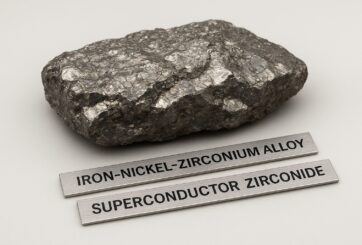
Student project uncovers superconductivity in polycrystalline iron nickel zirconide Zirconide: A New Transition Metal Tokyo, Japan – Researchers from Tokyo Metropolitan University have discovered a new superconducting material. They combined iron, nickel, and zirconium, to create a new transition metal zirconide with different ratios of iron to nickel. While both iron zirconide and nickel zirconide are not superconducting, the newly prepared mixtures are, exhibiting a “dome-shaped” phase diagram typical of so-called “unconventional superconductors,” a promising avenue for developing high temperature…
Joule-Thomson optical expansion. Left: The expansion of a dense, warm gas leads to a rapid drop in temperature, in which interactions between the gas particles cause an irreversible energy conversion. Right: Against a similar mathematical background, intense laser beams can ‘clean’ their profile on their own and can even be efficiently combined if they are allowed to propagate into a larger system such as a multi-core optical fiber. (Image Credit: University of Southern California / Giorgos Pyrialakos).Inspired by ideas from…
Researchers have demonstrated new wearable technologies that both generate electricity from human movement and improve the comfort of the technology for the people wearing them. The work stems from an advanced understanding of materials that increase comfort in textiles and produce electricity when they rub against another surface. Amphiphiles: The Key to Reduced Skin Friction At issue are molecules called amphiphiles, which are often used in consumer products to reduce friction against human skin. For example, amphiphiles are often incorporated…
 Feedback


