
Young stars ejecting plasma could give us clues into the Sun’s past Kyoto, Japan — Down here on Earth we don’t usually notice, but the Sun is frequently ejecting huge masses of plasma into space. These are called coronal mass ejections (CMEs). They often occur together with sudden brightenings called flares, and sometimes extend far enough to disturb Earth’s magnetosphere, generating space weather phenomena including auroras or geomagnetic storms, and even damaging power grids on occasion. Scientists believe that when…

Advancing the search for weird life on weird planets Scientists have identified a promising new way to detect life on faraway planets, hinging on worlds that look nothing like Earth and gases rarely considered in the search for extraterrestrials. In a new Astrophysical Journal Letters paper, researchers from the University of California, Riverside, describe these gases, which could be detected in the atmospheres of exoplanets — planets outside our solar system — with the James Webb Space Telescope, or JWST….
Gemini North’s MAROON-X instrument finds evidence for four mini-Earth exoplanets around our famous cosmic neighbor Barnard’s Star For a century, astronomers have been studying Barnard’s Star in the hope of finding planets around it. First discovered by E. E. Barnard at Yerkes Observatory in 1916, it is the nearest single star system to Earth [1]. Barnard’s Star is classified as a red dwarf — low-mass stars that often host closely-packed planetary systems, often with multiple rocky planets. Red dwarfs are extremely numerous in the Universe, so scientists…
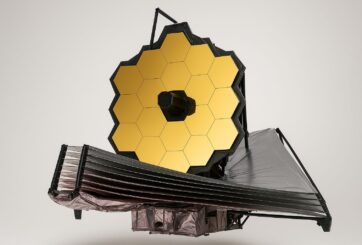
University of Arizona astronomers have learned more about a surprisingly mature galaxy that existed when the universe was just less than 300 million years old – just 2% of its current age. What Does the James Webb Telescope Tell Us About the Universe? Ever since the launch of the James Webb Telescope, it has sailed across the starry universe, discovering galaxies formed around thirteen billion years ago—almost the inception of time itself! It possesses advanced infrared capabilities, much more evolved…
CAM is proposed to highlight the class-related activation regions for an image classification network, where feature positions related to the specific object class are activated and have higher scores while other regions are suppressed and have lower scores. For specific visual tasks, CAM can be used to infer the object bounding boxes in weakly-supervised object location(WSOL) and generate pseudo-masks of training images in weakly-supervised semantic segmentation (WSSS). Therefore, obtaining the high-quality CAM is very important to improve the recognition performance…
Computer simulations reveal how water separates into high-density and low-density liquids Water is unique. It is one of the only substances that can exist in nature as a solid, liquid and gas at the same time under ambient conditions (think of solid ice over a pond, which is liquid underneath while storm clouds float overhead). It is also one of the only substances whose solid form is less dense than its liquid — this is why ice floats. Now scientists…
Cutting-edge observations of Centaurus Cluster shine new light on evolving universe The XRISM collaboration have discovered flows of hot gas in the core of the Centaurus Cluster. By comparing state-of-the-art X-ray measurements from the XRISM satellite with numerical simulations, they showed this is evidence for collisions between galaxy clusters, causing gas inside to “slosh”. This solves the longstanding mystery of how cluster cores stay hot, and sheds light on how our universe continues to evolve. Astronomers have long envisioned how…
A recent paper published in the journal Engineering delves into the future of artificial intelligence (AI) beyond large language models (LLMs). LLMs have made remarkable progress in multimodal tasks, yet they face limitations such as outdated information, hallucinations, inefficiency, and a lack of interpretability. To address these issues, researchers explore three key directions: knowledge empowerment, model collaboration, and model co-evolution. Knowledge empowerment aims to integrate external knowledge into LLMs. This can be achieved through various methods, including integrating knowledge into training objectives,…
EP’s cutting-edge instruments and international collaboration drive new discoveries in transient and multi-messenger astronomy The Science White Paper for the Einstein Probe (EP) mission has been published in Science China: Physics, Mechanics & Astronomy. This mission, spearheaded by the Chinese Academy of Sciences (CAS) in collaboration with the European Space Agency (ESA), the Max Planck Institute for Extraterrestrial Physics (MPE), and the French National Centre for Space Studies (CNES), is poised to advance the field of time-domain and X-ray astronomy…
Hyperspectral imaging and AI can identify individuals using blood vessels in palms Hyperspectral imaging is a technology that detects slight differences in color to pinpoint the characteristics and conditions of an object. While a normal camera creates images using red, green, and blue, a hyperspectral camera can obtain over 100 images in the visible to near-infrared light range in a single shot. As a result, hyperspectral imaging can obtain information that the human eye cannot see. Specially Appointed Associate Professor…
New method to detect life makes Mars sample return protocols rock solid Within the next decade, space agencies plan to bring samples of rock from Mars to Earth for study. Of concern is the possibility these samples contain life, which could have unforeseen consequences. Therefore, researchers in this field strive to create methods to detect life. For the first time, researchers, including those from the University of Tokyo and NASA, successfully demonstrated a method to detect life in ancient rocks…
The discovery of a planet-forming disk much older than expected provides new insights into planet formation and the habitability of planets outside our solar system If there were such a thing as a photo album of the universe, it might include snapshots of pancake-like disks of gas and dust, swirling around newly formed stars across the Milky Way. Known as planet-forming disks, they are believed to be a short-lived feature around most, if not all, young stars, providing the raw…
Q&A with Brendan Cottrell, who investigated the use of smartphones to create 3D scans of stranded marine life that can help scientists protect marine species What inspired you to become a researcher? My interest in research began with an early love for nature, particularly the ocean and its wildlife. Drawn to conservation, I am fascinated by how technology can help study and protect marine mammals. Can you tell us about the research you’re currently working on? This research focuses on…
Scientists from UNSW Sydney have located a potential new exoplanet – a planet that orbits a star outside of our solar system – using a technique known as ‘transit timing variation’. In research highlighted in a new paper, published today in The Astrophysical Journal, Scientia Senior Lecturer Ben Montet and PhD candidate Brendan McKee analysed changes in the timing of a known planet’s transit across its star, to infer the presence of a second exoplanet. After identifying an unusual trend in the…
The University of Basel and the University of Bern are setting up a new research center to enable the construction of superconducting quantum units. The Werner Siemens Foundation is supporting the project with a total of CHF 15 million over the next eleven years. The WSS Research Center for Molecular Quantum Systems is working on a pioneering technology set to lay the foundations for reliable and powerful quantum computers. This involves what are known as topological quantum bits (qubits), computing…
A new site for organic molecule formation? Niigata, Japan – Organic molecules that serve as the building blocks of life are believed to form in space, but their exact formation sites and delivery mechanisms to planets remain a major mystery in astronomy and planetary science. One of the key elements in solving this mystery is the presence of ice in interstellar environments. In cold, dense, and shielded regions of the galaxy, atoms and molecules adhere to the surfaces of submicron-sized…
A new study published in Engineering presents a novel framework that combines machine learning (ML) and blockchain technology (BT) to enhance computational security in engineering. The framework, named Machine Learning on Blockchain (MLOB), aims to address the limitations of existing ML-BT integration solutions that primarily focus on data security while overlooking computational security. ML has been widely used in engineering to solve complex problems, offering high accuracy and efficiency. However, it faces security threats such as data tampering and logic corruption….
 Feedback


