
New study finds that the nutritional value of prey within a single species can widely vary, offering key insights for food web dynamics and ecosystem change The hunt is on and a predator finally zeroes in on its prey. The animal consumes the nutritious meal and moves on to forage for its next target. But how much prey does a predator need to consume? Following a period of massive starvation among animals living along the California coast, University of California…

Today, slates, i.e. slate blackboards, and slate pencils, which were used by generations of schoolchildren up to the last century, have usually survived merely…
Published This breakthrough has been led by Professor Guntae Kim in the School of Energy and Chemical Engineering at UNIST in collaboration with Professor…
The Antarctic is a frigid continent south of the Antarctic Circle, where researchers are the only inhabitants. Despite the hostile conditions, here the Alfred…
Surveying glaciers is nothing new. There are two methods which are used particularly often. In the first method, researchers take several measurements directly…
Global warming is leaving more and more apparent scars in the world’s permafrost regions. As the new global comparative study conducted by the international…
A new computational model could potentially boost efficiencies and profits in natural gas production by better predicting previously hidden fracture mechanics….
This study is published in the journal Science China Earth Sciences with title of Responses of benthic foraminifera to changes of temperature and salinity:…
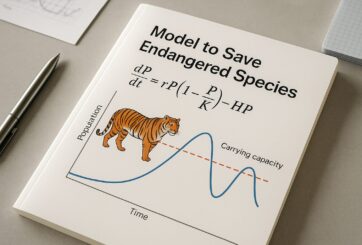
The risk of extinction varies from species to species depending on how individuals in its populations reproduce and how long each animal survives….
The three-year research project EVAR* to investigate possible climate change impacts on key biogeochemical processes in the Benguela upwelling system off South…
In addition to the carbon emissions, fire plumes also generate air pollutants, including ozone (O3) and fine mode aerosols (e.g., PM2.5, particulate matter…
Twenty-one light years away, in the constellation Cassiopeia, a planet by the name of HD219134 b orbits its star with a year that is just three days long. With…
The age of the water in the world's oceans is critical for understanding ocean circulation, especially for the transport of gases from the atmosphere into the…
How do airborne particles, so-called aerosols, affect the formation and life cycle of clouds and precipitation?
In order to analyse climate change or provide information on natural hazards, for example, it is important for researchers to gather knowledge about rain.
Slow-motion collisions of tectonic plates under the ocean drag about three times more water down into the deep Earth than previously estimated, according to a…
The results, published in the current issue of Scientific Reports, are the first to tackle the potential environmental changes that the overall basin could…
 Feedback


