
New study finds that the nutritional value of prey within a single species can widely vary, offering key insights for food web dynamics and ecosystem change The hunt is on and a predator finally zeroes in on its prey. The animal consumes the nutritious meal and moves on to forage for its next target. But how much prey does a predator need to consume? Following a period of massive starvation among animals living along the California coast, University of California…

In the past decades mainly static attributes have been investigated using machine learning approaches, such as the distribution of soil properties from the…
A team of British and American researchers, co-led by the University of Cambridge, has measured how much the McMurdo ice shelf in Antarctica flexes in response…
An international team led by the Innsbruck geologists Arata Kioka, Tobias Schwestermann, Jasper Moernaut, and Michael Strasser could quantify for the first…
Cracks in the floating ice tongue of Petermann Glacier in the far northwest reaches of Greenland indicate the pending loss of another large iceberg.
Vertebrates’ skeletons are unique in that they become mineralised as they develop, allowing them to become hard whilst remaining flexible. ‘The mineralised…
In traditional seismology, researchers studying how the earth moves in the moments before, during, and after an earthquake rely on sensors that cost tens of…
An international team of scientists heads to Antarctica this week (4 February 2019) to investigate a mysterious marine ecosystem that’s been hidden beneath an…
Due to overcapacities in fishing fleets and insufficiently regulated catches, many fish stocks in the Northeast-Atlantic had reached very low levels by the end…
Obtaining accurate meteorological and oceanographic (METOC) data requires conducting ocean-based meteorological and oceanographic sampling of an extensive…
Just like 50 years ago, the IOW will again go on five monitoring cruises this year, collecting data at stations that were already defined as reference points…
‘All higher animal life forms, including us humans, produce cholesterol. Algae and bacteria produce their own characteristic fat molecules.’ says first author…
“Long-necked dinosaurs” (sauropods) were among the most successful herbivores of the Mesozoic Era – the age of the dinosaurs. Characteristic for this group…
Today, many emergencies while drilling are connected with rock instability. Collapse leads to large time and financial expenses.
Over the next few months, geophysicists and geologists from the Alfred Wegener Institute, Helmholtz Centre for Polar and Marine Research will gain…
The ice fields of southwest Greenland are becoming particularly sensitive to a climate cycle called the North Atlantic Oscillation as global warming proceeds,…
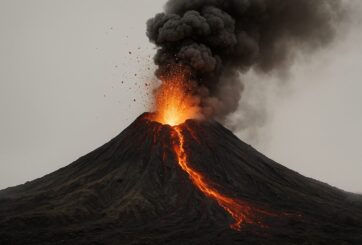
Large explosive volcanic eruptions can have lasting effects on climate and have been held responsible for severe climate effects in Earth's history. One such…
 Feedback


