
Young stars ejecting plasma could give us clues into the Sun’s past Kyoto, Japan — Down here on Earth we don’t usually notice, but the Sun is frequently ejecting huge masses of plasma into space. These are called coronal mass ejections (CMEs). They often occur together with sudden brightenings called flares, and sometimes extend far enough to disturb Earth’s magnetosphere, generating space weather phenomena including auroras or geomagnetic storms, and even damaging power grids on occasion. Scientists believe that when…

Looking like a glittering cosmic geode, a trio of dazzling stars blaze from the hollowed-out cavity of a reflection nebula in this new image from NASA’s Hubble Space Telescope. The triple-star system is made up of the variable star HP Tau, HP Tau G2, and HP Tau G3. HP Tau is known as a T Tauri star, a type of young variable star that hasn’t begun nuclear fusion yet but is beginning to evolve into a hydrogen-fueled star similar to…
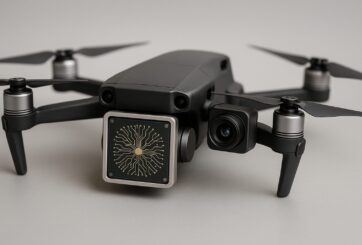
First neuromorphic vision and control of a flying drone. A team of researchers at Delft University of Technology has developed a drone that flies autonomously using neuromorphic image processing and control based on the workings of animal brains. Animal brains use less data and energy compared to current deep neural networks running on GPUs (graphic chips). Neuromorphic processors are therefore very suitable for small drones because they don’t need heavy and large hardware and batteries. The results are extraordinary: during…
Humboldt Professor Dieter Schmalstieg does research at the University of Stuttgart. Dieter Schmalstieg, Alexander von Humboldt Professor of Visual Computing at the University of Stuttgart, has been awarded the Humboldt Professorship. Germany’s most prestigious international research award was awarded to top researchers who have chosen to join German universities from abroad. Schmalstieg is working on augmented reality projects – with the aim of making people’s lives easier. “The Humboldt Professorship is a great honor and source of motivation,” says computer…
In the battle against climate change, mangroves are important allies – they store up to five times more carbon dioxide than other trees. A recently developed method from researchers in the member institutes of the U Bremen Research Alliance now provides more detailed information about the population of mangrove forests, which can help to protect these. Forest inventory with drone and ai. Photo: Jens Lehmkühler / U Bremen Research Alliance Dr. Arjun Chennu views mangroves as “super trees” because they…
A robot, designed to mimic the motion of a snail, has been developed by researchers at the University of Bristol. Adding to the increasing innovative new ways robots can navigate, the team, based at the Bristol Robotics Laboratory, fitted the robot with a sliding suction mechanism enabling the device to slide on water, a substitute of a snail’s mucus which also acts as an adhesive. The study, which was published today in the journal of Nature Communications, shows a novel…
Research examines the nature of explosive events in the magnetosphere. Southwest Research Institute is investigating an unusual event in the Earth’s magnetotail, the elongated portion of the planet’s magnetosphere trailing away from the Sun. Using data from NASA’s Magnetospheric Multiscale (MMS) mission, SwRI scientists are examining the nature of substorms, fleeting disturbances in the magnetotail that release energy and often cause aurorae. Since their launch in 2015, the MMS spacecraft have been surveying the magnetopause, the boundary between the magnetosphere…
The SPECULOOS project has revealed the existence of an Earth-sized planet around SPECULOOS-3, a nearby star similar in size to Jupiter and twice as cold as our Sun. The SPECULOOS project, led by the astronomer Michaël Gillon from the University of Liège, has just discovered a new Earth-sized exoplanet around SPECULOOS-3, an “ultracool dwarf” star as small as Jupiter, twice as cold as our Sun, and located 55 light-years from Earth. After the famous TRAPPIST-1, SPECULOOS 3 is the second…
A new nucleosynthesis process denoted the νr-process has been suggested by scientists from GSI Helmholtzzentrum für Schwerionenforschung, Technische Universität Darmstadt, and the Max Planck Institute for Astrophysics. It operates when neutron-rich material is exposed to a high flux of neutrinos. The theoretical proposal, which was recently published in “Physical Review Letters”, may be the solution to a long-standing issue related to the production of a group of rare isotopes present in the solar system but whose origin is still poorly…
A team from UPV participates in developing a new technique that allows studying turbulence in a completely different way from that used in the last 100 years. When we mention turbulence, the first association that springs to mind is often the uncomfortable jostling experienced during airplane travel. However, turbulence encompasses far more than just that; it’s a continuous presence in our daily lives. This term denotes the irregular and chaotic behavior exhibited by fluids, gases, and liquids in a wide…
HZDR team achieves new energy record for next generation proton accelerators. The Helmholtz-Zentrum Dresden-Rossendorf (HZDR) has made a significant advance in laser plasma acceleration. By employing an innovative method, a research team managed to substantially exceed the previous record for proton acceleration. For the first time, they achieved energies that so far have only seemed possible at much larger facilities. As the research group reported in the journal Nature Physics (DOI: 10.1038/s41567-024-02505-0), promising applications in medicine and materials science have…
In a recent study published in Nature Physics, researchers from the Hefei Institutes of Physical Science of the Chinese Academy of Sciences, together with researchers of University of Science and Technology of China, have introduced the concept of the “Topological Kerr Effect” by using the low-temperature magnetic field microscopy system and the magnetic force microscopy imaging system supported by the steady-state high magnetic field experimental facility. The study holds great promise for advancing our understanding of topological magnetic structures. Originating in particle physics, skyrmions are unique topological excitations…
Conditions on Saturn’s moon Enceladus simulated in the laboratory. In 2018, very large organic molecules were discovered in ice particles on Saturn’s moon Enceladus. It is still unclear whether they indicate the existence of life or were created in some other way. A recent study could help to answer this question. It is possible, that conditions that support or maintain life in extraterrestrial oceans could leave molecular traces in grains of ice. The research on this was conducted at the…
… could lead to surfing a quantum internet. Researchers develop new methods to couple light to sound waves that glide on surfaces. Researchers at the University of Rochester used surface acoustic waves to overcome a significant obstacle in the quest to realize a quantum internet. In a new study published in Nature Communications, scientists from Rochester’s Institute of Optics and Department of Physics and Astronomy describe a technique for pairing particles of light and sound that could be used to faithfully convert information stored in quantum systems—qubits—to optical fields,…
Slow electrons are used in cancer therapy as well as in microelectronics. It is very hard to observe how they behave in solids. But scientists at TU Wien have made this possible. Electrons can behave very differently depending on how much energy they have. Whether you shoot an electron with high or low energy into a solid body determines which effects can be triggered. Electrons with low energy can be responsible for the development of cancer, for example, but conversely…
Zoom is one of the most popular software products for video conferencing in the world. Every day, it is used by millions of users, trusting that their data is secure and that their conversations cannot be intercepted. So far, this depends on the Zoom servers, which also control group access: They verify if all group members are in possession of the meeting password. Now, there is another way of doing this: CISPA-Faculty Professor Dr. Cas Cremers, his postdoc Mang Zhao,…
Researchers at ETH Zurich have, for the first time, made visible how electrons form vortices in a material at room temperature. Their experiment used a quantum sensing microscope with an extremely high resolution. In brief In graphene, electrons behave like a liquid. This can lead to the formation of vortices. Such electron vortices have now been made visible using a quantum magnetic field sensor with a high spatial resolution. Typically, transport phenomena are more easily detected at low temperatures. Thanks…
 Feedback


