
Young stars ejecting plasma could give us clues into the Sun’s past Kyoto, Japan — Down here on Earth we don’t usually notice, but the Sun is frequently ejecting huge masses of plasma into space. These are called coronal mass ejections (CMEs). They often occur together with sudden brightenings called flares, and sometimes extend far enough to disturb Earth’s magnetosphere, generating space weather phenomena including auroras or geomagnetic storms, and even damaging power grids on occasion. Scientists believe that when…

Texas A&M researchers have harnessed the power of satellites to constantly monitor infrastructure conditions and maintain them. As infrastructure ages, it becomes more susceptible to failure, which can cause safety and mobility concerns for drivers and pedestrians, and economic woes for taxpayers. A recent study published in “Transportation Research Record” shows that high-resolution synthetic aperture radar (SAR) satellite data can detect infrastructure issues early on, which can help prevent further damage to roads in the same way that annual checkups can help…
A compact, lightweight sensor system with infrared imaging capabilities developed by an international team of engineers could be easily fitted to a drone for remote crop monitoring. This flat-optics technology has the potential to replace traditional optical lens applications for environmental sensing in a range of industries. This innovation could result in cheaper groceries as farmers would be able to pinpoint which crops require irrigation, fertilisation and pest control, instead of taking a one-size-fits-all approach, thereby potentially boosting their harvests….
How AI could prevent devastating wildfires… Australian scientists are getting closer to detecting bushfires in record time, thanks to cube satellites with onboard AI now able to detect fires from space 500 times faster than traditional on-ground processing of imagery. Remote sensing and computer science researchers have overcome the limitations of processing and compressing large amounts of hyperspectral imagery on board the smaller, more cost-effective cube satellites before sending it to the ground for analysis, saving precious time and energy….
Experiments in weightlessness isolate classic diffusion phenomenon. For years, various models have been developed to describe an important class of mixing effects that occur, for example, in the flow in a chemical reactor. Experimental validation, however, has lagged far behind due to the superimposition of gravity effects. A European research team involving the Helmholtz-Zentrum Dresden-Rossendorf (HZDR) and partners at the University of Szeged (Hungary) and Université libre de Bruxelles (ULB, Belgium) has now closed this gap with experiments conducted under…
Optical waves propagating through air or multi-mode fiber can be patterned or decomposed using orthogonal spatial modes, with far-ranging applications in imaging, communication, and directed energy. Yet the systems that perform these wavefront manipulations are cumbersome and large, restricting their utilization to high-end applications. The development of a Free-Standing Microscale Photonic Lantern Spatial Mode (De-)Multiplexer using 3D Nanoprinting, as revealed by a recent study, marks a significant advancement in photonic technology. This spatial multiplexer, characterized by its compactness, minimal footprint,…
Developing transparent particles and imaging their positions, researchers shed light on never-before-seen interiors of crystalline structures. A team of New York University researchers has created a new way to visualize crystals by peering inside their structures, akin to having X-ray vision. Their new technique—which they aptly named “Crystal Clear”—combines the use of transparent particles and microscopes with lasers that allow scientists to see each unit that makes up the crystal and to create dynamic three-dimensional models. “This is a powerful…
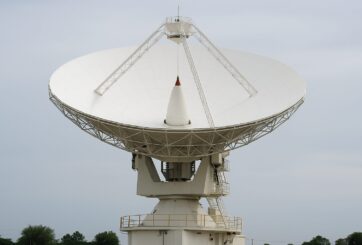
The National Astronomical Research Institute of Thailand (NARIT), in collaboration with the Max Planck Institute for Radio Astronomy (MPIfR), has achieved the historic first detection of astronomical radio signals using Very Long Baseline Interferometry (VLBI) with the 40-m Thai National Radio Telescope (TNRT). The experiment, performed together with the Effelsberg 100-m radio telescope in Germany, marks the first ever VLBI signal detection made in Thailand. Very Long Baseline Interferometry (VLBI) refers to multiple radio telescopes located far away from each…
New telescope images of Jupiter’s moon Io rival those from spacecraft. Astronomers have captured a volcanic event on Jupiter’s moon Io at a resolution never before achieved with Earth-based observations. New images of Jupiter’s volcano-studded moon Io, taken by the Large Binocular Telescope on Mount Graham in Arizona, offer the highest resolution of Io ever achieved with an Earth-based instrument. The observations were made possible by a new high-contrast optical imaging instrument, dubbed SHARK-VIS, and the telescope’s adaptive optics system,…
Theoretical physicists and experimentalists work together to measure the mass of a rare isotope expected to form a rare proton halo, publishing the first results from FRIB’s precision measurement program. In May 2022, the Facility for Rare Isotope Beams (FRIB) at Michigan State University (MSU), launched its precision measurement program. Staff from FRIB’s Low Energy Beam and Ion Trap (LEBIT) facility take high-energy, rare-isotope beams generated at FRIB and cool them to a lower energy state. Afterward, the researchers measure…
Artificial intelligence (AI) combined with a novel bio-inspired camera achieves 100 times faster detection of pedestrians and obstacles than current automotive cameras. This important step for computer vision and AI achieved by researchers of the University of Zurich can greatly improve the safety of automotive systems and self-driving cars. The image shows both color information from the color camera and events (blue and red dots) from the event camera; bounding boxes show the detection of cars by the algorithm. (c)…
For the first time, magnetic fields have been detected in three massive, hot stars in our neighboring galaxies, the Large and Small Magellanic Clouds. While magnetic massive stars have already been detected in our own galaxy, the discovery of magnetism in the Magellanic Clouds is especially important because these galaxies have a strong population of young massive stars. This provides a unique opportunity to study actively forming stars and the upper limit to the mass that a star can have…
Researchers have developed a new type of holograms, known as “metaholograms”, capable of projecting multiple high-fidelity images free of crosstalk. This breakthrough paves the way for next-generation technologies including virtual/augmented reality (AR/VR) displays, information storage, and image encryption. Metaholograms offer several advantages over traditional holograms, including broader operational bandwidth, higher imaging resolution, wider viewing angle, and more compact size. However, a major challenge for metaholograms has been their limited information capacity that only allows to project a few independent images….
Lenses are used to bend and focus light. Normal lenses rely on their curved shape to achieve this effect, but physicists from the University of Amsterdam and Stanford University have made a flat lens of only three atoms thick which relies on quantum effects. This type of lens could be used in future augmented reality glasses. When you imagine a lens, you probably picture a piece of curved glass. This type of lens works because light is refracted (bent) when…
²Lying between the microwave and infrared regions of the electromagnetic spectrum, the terahertz (1 THz = 10¹² Hz) gap is being rapidly closed by development of new terahertz sources and detectors, with promising applications in spectroscopy, imaging, sensing, and communication. These applications greatly benefit from terahertz sources delivering high-energy or high-average-power radiation. On the other hand, high-intensity or strong-field terahertz sources are essential to observe or exploit novel nonlinear terahertz-matter interactions, where the electric and/or magnetic field strengths play a…
Start-up sewts succeeds with AI-based industrial robots. The industrial robots from the Munich-based start-up sewts use AI algorithms to learn how to handle materials with unstable shapes. Laundries are already using the technology to automatically transfer towels to folding machines. The founders and graduates of the Technical University of Munich (TUM) now want to automate the processing of clothing returns in online retail. The founders of swets use robots and AI to prepare laundry for the folding machine. In the…
– via the telegraph equation. When a train approaches or an ambulance with its siren blaring nears us, we hear the sound with an increased frequency, gradually decreasing slightly. As it passes, the frequency changes abruptly to a lower one, then decreases further. This commonly encountered Doppler effect can be a valuable clue to the nature of a phenomenon seemingly completely unrelated to sound propagation: heat transport. Burns are not pleasant for anyone, but they hurt physicists two-fold: not only…
 Feedback


