
New study reveals how human astroviruses bind to humans cells and paves the way for new therapies and vaccines Human astroviruses are a leading viral cause of the stomach bug—think vomiting, diarrhea, and fever. It often impacts young children and older adults, leading to vicious cycles of sickness and malnutrition, particularly for those in low and middle income countries. It’s very commonly found in wastewater studies, meaning it’s frequently circulating in communities. As of now, there are no vaccines for…

The Australian fire beetle is attracted to freshly burnt wood. Experts also call this pyrophilia (“love of fire”). This behavior is not very common in insects….
The African Matabele ants (Megaponera analis) tend to the wounds of their injured comrades. And they do so rather successfully: Without such attendance, 80…
Surfaces must satisfy a wide range of requirements: they need to be decorative, and even contribute substantially to hygiene. They also play a large role in…
A UQ School of Chemistry and Molecular Biosciences study led by Associate Professor Luke Guddat uncovered how penoxsulam, the active ingredient in the world's…
Respiratory, urinary tract, wound infections, and sepsis: the list of sites in which severe and life-threatening diseases manifest as a result of multidrug…
The small intestine is the main site where we digest and absorb nutrients and minerals from food, and it is also a place where many intestinal infections occur…
The discovery of penicillin about 90 years ago and the widespread introduction of antibiotics to combat infectious diseases have revolutionized human medicine….
Models for extinction risk are necessarily simple. Most reduce complex ecological systems to a linear relationship between resource density and population…
A team of researchers led by the Department of Energy's Oak Ridge National Laboratory used neutron macromolecular crystallography to investigate the different…
Microbes can be found in a variety of habitats and ecosystems, where they have almost perfectly adapted to their natural environment. In particular,…
Scientists already knew that a molecular blueprint guides the formation of upside-down V-shaped bundles on the surface of inner ear cells that detect sound,…
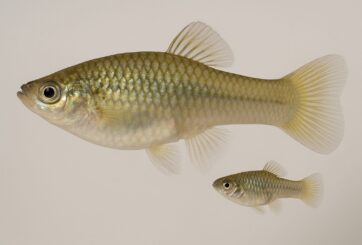
Species that produce asexually are rare among vertebrates, making the Amazon molly (Poecilia formosa) the big exception. The small fish species, who is native…
On the cellular highway, motor proteins called dyneins rule the road. Dyneins “walk” along structures called microtubules to deliver cellular cargo, such as…
Genomic profiling of mostly untreatable and deadly nerve sheath tumors led scientists to test a possible therapeutic strategy that inhibited tumor growth in…
“It’s about analyzing gene-expression data* of a large number of individual cells,” explains lead author Alex Wolf of the Institute of Computational Biology…
The generation of new nerve cells was once thought to taper off at the end of embryonic development. However, recent research has shown that the adult brain…
 Feedback


