



Feeding 9 Billion: Innovations in Agricultural Modeling
Researchers at Linköping University have successfully visualized blood flow in an artificial heart in real time using magnetic resonance imaging (MRI). The findings, published in Scientific Reports, pave the way for designing artificial hearts that lower the risk of blood clots and red blood cell damage—two of the most common complications in current devices.
The project was carried out in collaboration with Scandinavian Real Heart AB, a company working on the development of an artificial heart.
“The heart is a muscle that never rests. It can never rest. The heart can beat for a hundred years without being serviced or stopping even once. But constructing a pump that can function in the same way – that’s a challenge,” says Tino Ebbers, professor of physiology at Linköping University.
Globally, around 9,000 heart transplants are performed annually. Yet, the demand far outstrips supply, with approximately 2,800 patients on waiting lists in the EU and 3,400 in the US.
Currently, many patients with severe heart failure depend on large hospital-based machines for blood circulation support. An artificial heart could offer these patients mobility and independence while awaiting a donor heart.
“Finding a biologically compatible heart for a transplant can take a long time. In those cases, an artificial heart can enable the patient to wait at home. They may not be running around like Usain Bolt, but patients can be with their loved ones during the waiting period,” explains Twan Bakker, PhD student at the Center for Medical Image Science and Visualization (CMIV), LiU.
Artificial hearts often struggle with complications such as:
These issues stem from uneven blood flow patterns inside artificial pumps. Refining the technology requires an accurate understanding of how blood moves within the device.
To address this, the LiU team used advanced MRI imaging to study blood circulation in Scandinavian Real Heart’s pulsating artificial heart. The results were compared with healthy human heart blood flow.
“The cool thing about this technology is that it’s possible to look inside a patient, or in this case an artificial heart, without physically opening and checking – this is completely unique,” notes Tino Ebbers.
Findings showed that blood flow in the artificial heart closely mirrored that of a natural, healthy heart—evidence of strong design and engineering progress.
Scandinavian Real Heart’s device recently received Humanitarian Use Device (HUD) designation from the US Food and Drug Administration (FDA). This status allows the company to apply for a Humanitarian Device Exemption (HDE), potentially granting limited market approval under an accelerated framework.
Despite this progress, researchers caution that clinical application is still several years away. Extensive pre-clinical and clinical trials must first be completed.
“Our dream is to develop an artificial heart as a permanent solution. We’re not there yet, as we’re required to first show that it functions as a bridge to transplantation so as to prevent the patient from dying while waiting for a heart. But our ultimate goal is fantastic, and when we reach it, there will be no need for donor hearts,” says Twan Bakker.
Summary of Key Points
Original Publication
Authors: Twan Bakker, Azad Najar, Thomas Finocchiaro, Ina Laura Perkins, Jonas Lantz and Tino Ebbers.
Journal: Scientific Reports
DOI: 10.1038/s41598-025-18422-y
Method of Research: Imaging analysis
Subject of Research: Not applicable
Article Title: 4D flow MRI enhances prototype testing of a total artificial heart
Article Publication Date: 15-Sep-2025
COI Statement: The research was partly funded by Scandinavian Real Heart AB, where co-authors Azad Najar, Thomas Finocchiaro and Ina Laura Perkins are employees and/or shareholders. The other participants declare no conflict of interest.
The study found that flow patterns in the artificial heart were complex, with recirculating flows in the atrium during filling and the formation of counter-rotating vortices in the AV-cylinder during diastole.
As heart rate increases, the flow rates at the inlet and outlet of the artificial heart also increase, while the level of stasis, which can lead to blood clots, decreases, indicating better flow dynamics at higher heart rates.
Higher heart rates result in increased kinetic energy and turbulent kinetic energy throughout the artificial heart, particularly in the inlet, atrium, and outflow tract, which can affect blood flow dynamics and potential blood damage.




Around one-third of the 50 million people living with epilepsy worldwide do not respond to anti-seizure medications, leaving them with limited treatment options. Surgical removal of the seizure-causing region can sometimes help, but it is not viable when seizures originate from multiple or unclear brain regions. Deep brain stimulation (DBS) has emerged as a promising alternative for these patients. DBS involves implanting electrodes that deliver controlled electrical impulses to specific brain regions to help control seizures. While stimulation of the…
Each year in the UK, more than 40,000 people suffer an out-of-hospital cardiac arrest (OHCA), yet fewer than 10% survive. Rapid CPR and early use of an Automated External Defibrillator (AED) can at least double survival chances, but in practice, AEDs are often difficult to locate quickly. To address this, researchers at the University of Warwick have partnered with the Welsh Ambulance Services University NHS Trust and drone specialists SkyBound to test whether drones could deliver AEDs directly to the…
The precise excision of tumours is a key and formidable part of oncological surgery. For example, up to 35% of surgical operations for breast cancer result in positive margins, which show that there are cancerous cells in the area around the removed tissue. This increases the risk of cancer recurrence and often leads to repeated surgeries. Before surgery, imaging techniques like ultrasonography are helpful, but during the process, they frequently fail to clearly define the boundaries of the tumour. The…
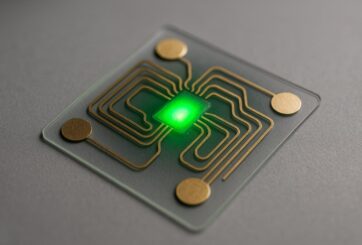
Engineers have harnessed quantum physics to detect the presence of biomolecules without the need for an external light source, overcoming a significant obstacle to the use of optical biosensors in healthcare and environmental monitoring settings Optical biosensors use light waves as a probe to detect molecules, and are essential for precise medical diagnostics, personalized medicine, and environmental monitoring. Their performance is dramatically enhanced if they can focus light waves down to the nanometer scale – small enough to detect proteins…
 Feedback
