



Feeding 9 Billion: Innovations in Agricultural Modeling
Around one-third of the 50 million people living with epilepsy worldwide do not respond to anti-seizure medications, leaving them with limited treatment options. Surgical removal of the seizure-causing region can sometimes help, but it is not viable when seizures originate from multiple or unclear brain regions.
Deep brain stimulation (DBS) has emerged as a promising alternative for these patients. DBS involves implanting electrodes that deliver controlled electrical impulses to specific brain regions to help control seizures. While stimulation of the anterior nucleus of the thalamus is already approved for epilepsy treatment in Europe and Canada, researchers are now increasingly focused on another promising target: the centromedian nucleus (CM).
The CM has extensive cortical and subcortical connections, making it a strong candidate for controlling generalized and frontal lobe seizures, including those seen in conditions such as Lennox–Gastaut syndrome. However, its small size, deep location, and proximity to other thalamic nuclei make accurate targeting challenging with standard imaging techniques.
Misplaced electrodes can reduce the effectiveness of DBS and increase surgical risks. This technical difficulty has slowed the widespread adoption of CM-DBS as a standard treatment approach.
In a recent review published in Brain Network Disorders (Volume 1, Issue 2, March 9, 2025), a research team led by Dr. Cristina Virgina Torres Díaz from University Hospital La Princesa, Madrid, in collaboration with the University Medical Center of the Johannes Gutenberg University Mainz, examined cutting-edge methods to enhance CM targeting during DBS procedures.
“Our primary goal was to reduce targeting errors and expand the clinical viability of CM-DBS,” says Dr. Torres Díaz, corresponding author of the study. “By integrating advanced imaging and neurophysiology, we can more confidently localize the CM, especially in patients with complex anatomy or structural abnormalities.”
The review highlights the use of an MRI sequence called magnetization-prepared 2 rapid acquisition gradient echo (MP2RAGE), which provides high-resolution brain imaging. MP2RAGE improves contrast between the CM and surrounding thalamic structures, enabling clearer anatomical identification. When combined with 3D brain atlases and image gradient analysis, it enhances CM visualization.
Other promising MRI-based techniques include quantitative susceptibility mapping (QSM) and EDGE-MICRA (edge-enhancing gradient echo with multi-image co-registration and averaging), which may further refine CM delineation.
The authors also discussed intraoperative microelectrode recordings (MER), which record electrical activity from deep brain structures during surgery. MER can distinguish the CM from nearby nuclei based on its unique neural firing patterns.
MER data from previous studies show that the CM exhibits distinctive ‘tonic activity’ and ‘lower spike rates’ compared to neighboring nuclei like the ventral lateral nucleus, making it a useful neurophysiological marker during electrode implantation.
Diffusion tensor imaging (DTI) tractography is another approach explored in the review. This technique maps brain pathways and helps guide stimulation to circuits linked with seizure control.
Studies have shown that optimal stimulation sites are closely aligned with fiber tracts connecting the CM to the brainstem, cerebellum, sensorimotor cortex, and supplementary motor area. Patients whose electrodes targeted these pathways often experienced a 50% or greater reduction in seizure frequency.
“Through the review of our own patient series, we found that patients who responded most favorably to CM-DBS had strong structural and functional links between the stimulation site and specific brain networks involved in motor regulation and arousal,” Dr. Torres Díaz explained. “This highlights the importance of targeting not just a nucleus, but the circuits it controls.”
This review offers a comprehensive roadmap for implementing CM-DBS in patients with drug-resistant epilepsy. By combining high-resolution imaging, intraoperative electrophysiological mapping, and connectivity analysis, surgical teams can better tailor electrode placement to each patient’s unique brain anatomy and seizure network.
“As diagnostic tools advance and improve our understanding of brain networks, CM-DBS could offer life-changing results for patients once deemed untreatable,” concludes Dr. Torres Díaz. “Precision targeting is not just a technical achievement; it is a path to renewed hope for people with the most challenging forms of epilepsy.”
Precision CM-DBS could transform care for patients with drug-resistant epilepsy.
Original Publication
Authors: Guillermo J. Bazarra Castro, Gabriel González-Escamilla, Carlos Martínez Macho, Alejandra Madero Pohlen, Adrián Martin Segura, Amelia Álvarez-Sala, Enrique Barbero Pablos, Sergiu Groppa, Jose A. Fernández-Alén and Cristina Virgina Torres Díaz.
Journal: Brain Network Disorders
DOI: 10.1016/j.bnd.2024.11.002
Method of Research: Literature review
Subject of Research: Not applicable
Article Title: Targeting the centromedian nucleus of the thalamus for epilepsy
Article Publication Date: 26-Jun-2025
COI Statement: The authors declare that they have no known competing financial interests or personal relationships that could have appeared to influence the work reported in this paper.
Original Source: https://www.sciencedirect.com/science/article/pii/S3050623924000178?via%3Dihub




Researchers at Linköping University have successfully visualized blood flow in an artificial heart in real time using magnetic resonance imaging (MRI). The findings, published in Scientific Reports, pave the way for designing artificial hearts that lower the risk of blood clots and red blood cell damage—two of the most common complications in current devices. The project was carried out in collaboration with Scandinavian Real Heart AB, a company working on the development of an artificial heart. “The heart is a…
Each year in the UK, more than 40,000 people suffer an out-of-hospital cardiac arrest (OHCA), yet fewer than 10% survive. Rapid CPR and early use of an Automated External Defibrillator (AED) can at least double survival chances, but in practice, AEDs are often difficult to locate quickly. To address this, researchers at the University of Warwick have partnered with the Welsh Ambulance Services University NHS Trust and drone specialists SkyBound to test whether drones could deliver AEDs directly to the…
The precise excision of tumours is a key and formidable part of oncological surgery. For example, up to 35% of surgical operations for breast cancer result in positive margins, which show that there are cancerous cells in the area around the removed tissue. This increases the risk of cancer recurrence and often leads to repeated surgeries. Before surgery, imaging techniques like ultrasonography are helpful, but during the process, they frequently fail to clearly define the boundaries of the tumour. The…
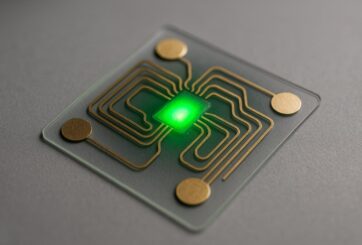
Engineers have harnessed quantum physics to detect the presence of biomolecules without the need for an external light source, overcoming a significant obstacle to the use of optical biosensors in healthcare and environmental monitoring settings Optical biosensors use light waves as a probe to detect molecules, and are essential for precise medical diagnostics, personalized medicine, and environmental monitoring. Their performance is dramatically enhanced if they can focus light waves down to the nanometer scale – small enough to detect proteins…
 Feedback
