



Feeding 9 Billion: Innovations in Agricultural Modeling
Each year in the UK, more than 40,000 people suffer an out-of-hospital cardiac arrest (OHCA), yet fewer than 10% survive. Rapid CPR and early use of an Automated External Defibrillator (AED) can at least double survival chances, but in practice, AEDs are often difficult to locate quickly.
To address this, researchers at the University of Warwick have partnered with the Welsh Ambulance Services University NHS Trust and drone specialists SkyBound to test whether drones could deliver AEDs directly to the scene of a cardiac arrest. The National Institute for Health and Care Research (NIHR)-funded study explored how drone technology might transform emergency response, particularly in remote areas where ambulances face delays.
The team simulated emergency responses in rural countryside locations using a DJI M300 drone equipped with a winch system to lower an AED. SkyBound’s autonomous flight software managed the drone’s journey, while ambulance service call handlers guided public volunteers in resuscitation efforts using a CPR mannequin.
Chief Investigator Dr Christopher Smith, University of Warwick, said:
“Ambulance services work as swiftly as possible to get to patients who have suffered cardiac arrests. However, it can sometimes be difficult to get there quickly. AEDs can be used by members of the public before the ambulance gets there, but this rarely happens. We’ve built a drone system to deliver defibrillators to people having cardiac arrest which could help save lives.
“We have successfully demonstrated that drones can safely fly long distances with a defibrillator attached and maintain real-time communications with emergency services during the 999 call. We are in a position where we could operationalise this system and use it for real emergencies across the UK soon.”
The study was informed by patient representative Mark Holt, who helped save his father Steve during a cardiac arrest in the Lake District in 2019. Despite immediate CPR and use of a nearby AED, paramedics were delayed by 25 minutes due to weather conditions grounding the air ambulance.
Mark, now advising the research team, said:
“While I was resuscitating dad it felt like an eternity waiting for help. Ambulances can be delayed, especially when trying to get to remote areas like those we were in. But in the future a call handler may be able to explain that help is on the way with a drone which can arrive much quicker.
Without clinical research, healthcare advances would not come to fruition. It has been a privilege to be involved with the NIHR and the University of Warwick’s work.”
The pilot study recruited 11 participants and assessed real-time communication between call handlers, drone operators, and bystanders. Results showed:
However, once on the ground, delays occurred before the AED was used. It took an additional 4.35 minutes after drone arrival for a shock to be delivered to the simulated patient. Most delays came from bystanders struggling to operate the AED, rather than retrieving it. Researchers concluded that better training and clearer support from call handlers are essential for drone-delivered defibrillators to be effective.
Professor Mike Lewis, NIHR Scientific Director for Innovation, emphasised the importance of the work:
“Cardiac arrest, as the Secretary of State highlighted, is one of the biggest killers, claiming tens of thousands of people’s lives a year. In an emergency situation, time is of the essence and it’s crucial that bystanders can help before ambulance crews arrive.
That’s why it’s so exciting this innovative study is investigating if enabling emergency services can harness drones to deliver defibrillators to help improve survival. This demonstrates how health and care research can deliver high tech solutions to improve health and care services, and powers the country’s life sciences sector and technical advantage.”
The next step will be larger-scale studies to test whether drone AED delivery can be integrated into NHS emergency response systems.
Original Publication
Authors: Christopher M. Smith, Carl Powell, Celia J. Bernstein, Harry Howe, Mark Holt, Mary O’Sullivan, Keith Couper and Nigel Rees.
Journal: Resuscitation Plus
DOI: 10.1016/j.resplu.2025.101045
Method of Research: Randomized controlled/clinical trial
Subject of Research: People
Article Title: The use of drone-delivered Automated External Defibrillators in the emergency response for out-of-hospital cardiac arrest. A simulation study
Drone-delivered AEDs can reach patients much faster than traditional ambulance services, which can significantly increase the chances of survival and better neurological outcomes.
Bystanders often struggle with communication during emergencies, feeling uncertain about when to leave the patient to retrieve the AED and how to use it effectively.
Effective real-time communication between the drone operator, emergency call-handler, and bystanders is crucial to ensure that bystanders feel confident and supported in using the AED quickly.




Researchers at Linköping University have successfully visualized blood flow in an artificial heart in real time using magnetic resonance imaging (MRI). The findings, published in Scientific Reports, pave the way for designing artificial hearts that lower the risk of blood clots and red blood cell damage—two of the most common complications in current devices. The project was carried out in collaboration with Scandinavian Real Heart AB, a company working on the development of an artificial heart. “The heart is a…
Around one-third of the 50 million people living with epilepsy worldwide do not respond to anti-seizure medications, leaving them with limited treatment options. Surgical removal of the seizure-causing region can sometimes help, but it is not viable when seizures originate from multiple or unclear brain regions. Deep brain stimulation (DBS) has emerged as a promising alternative for these patients. DBS involves implanting electrodes that deliver controlled electrical impulses to specific brain regions to help control seizures. While stimulation of the…
The precise excision of tumours is a key and formidable part of oncological surgery. For example, up to 35% of surgical operations for breast cancer result in positive margins, which show that there are cancerous cells in the area around the removed tissue. This increases the risk of cancer recurrence and often leads to repeated surgeries. Before surgery, imaging techniques like ultrasonography are helpful, but during the process, they frequently fail to clearly define the boundaries of the tumour. The…
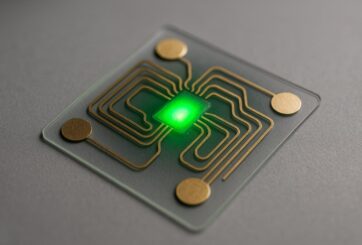
Engineers have harnessed quantum physics to detect the presence of biomolecules without the need for an external light source, overcoming a significant obstacle to the use of optical biosensors in healthcare and environmental monitoring settings Optical biosensors use light waves as a probe to detect molecules, and are essential for precise medical diagnostics, personalized medicine, and environmental monitoring. Their performance is dramatically enhanced if they can focus light waves down to the nanometer scale – small enough to detect proteins…
 Feedback
