
SINGAPORE, 8 September 2025 — Dengue infection can “re-programme” the body’s immune system much like a computer operating system being rewritten, leaving a long-lasting genetic imprint that influences how people respond to future infections. Strikingly, this imprint is not seen with vaccination. Published in Med, the new study by Duke-NUS Medical School and an international research team uncovers how dengue reshapes immunity and why vaccines behave differently from natural infection. The findings fill a key knowledge gap, providing insights that…

A Japanese research team has demonstrated a new, more accurate way to analyze brain imaging data in children with attention deficit/hyperactivity disorder (ADHD), offering fresh insights into the brain structure differences that underlie the condition. The findings, published in Molecular Psychiatry, could pave the way for earlier diagnosis and more effective, personalized treatments for affected children. Tackling Inconsistencies in ADHD Brain Imaging ADHD affects more than 5% of children worldwide, leading to difficulties with attention, hyperactivity, and impulsivity. Brain imaging…
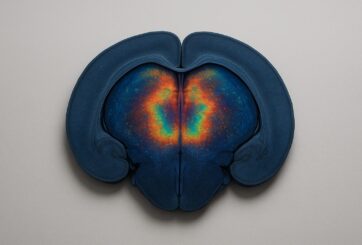
PRINCETON, N.J., September 3, 2025 — A team of researchers has created the first brain-wide map of decision-making at single-cell resolution in a mammal, using mice trained to turn tiny steering wheels to move shapes on a screen. The findings, published in Nature by the International Brain Laboratory (IBL) — a global consortium of 22 labs — offer an unprecedented view of how distributed neural networks across the brain coordinate to guide behavior. Beyond Single Brain Regions For decades, most…
Tokyo, Japan — September 2, 2025 — A new study led by Professor Tadafumi Kato (Juntendo University Graduate School of Medicine) and Dr. Akito Nagakura (Tokyo Metropolitan Matsuzawa Hospital) has uncovered evidence of neurodegeneration in a key brain region implicated in bipolar disorder (BD). The research, published in Psychiatry and Clinical Neurosciences, provides the strongest neuropathological evidence to date that BD is not just a psychiatric condition but also a brain-based disease with distinct biological underpinnings. A Major Health Burden…
Tokyo, Japan — August 1, 2025 — Polyamines, naturally occurring molecules essential for cell growth and differentiation, have long fascinated scientists for their ability to extend lifespan and support healthy aging. Yet, these same compounds—particularly spermidine—are also linked to cancer development and rapid tumor growth. A new study led by Associate Professor Kyohei Higashi at Tokyo University of Science has now unraveled the molecular mechanisms behind this paradox, offering fresh insights into both aging research and cancer therapy. The findings…
VILLARS-SUR-GLÂNE, SWITZERLAND, 2 September 2025 — A newly released Genomic Press Interview in Psychedelics spotlights groundbreaking findings from Professor Gregor Hasler that are redefining global mental health treatment. As Chair of Psychiatry at the University of Fribourg and Director of the Molecular Psychiatry Lab, Professor Hasler is pioneering a scientific movement that could transform outcomes for millions of patients suffering from treatment-resistant psychiatric conditions. The feature, part of the Innovators & Ideas series, presents decades of research demonstrating how psychedelics…
Too much fat can be harmful, and the way fat cells (adipocytes) form is critical for maintaining healthy fat tissue. A team led by researchers from the University Hospital Bonn (UKB) and the University of Bonn has studied how dysfunction in primary cilia—the antenna-like structures on precursor cells—affects fat cell development in mice. The study, published in The EMBO Journal, reveals that overactivation of the Hedgehog signaling pathway leads precursor cells to develop into connective tissue-like cells instead of white…
Researchers at the University of California, San Diego, Sanford Stem Cell Institute have devised an innovative technique to stimulate and mature human brain organoids utilising graphene, a monolayer of carbon atoms. The study, published in Nature Communications, presents Graphene-Mediated Optical Stimulation (GraMOS), a safe, non-genetic, biocompatible, and non-invasive method for modulating brain activity over periods of days to weeks. This method expedites the formation of brain organoids, which is particularly crucial for modelling age-associated disorders such as Alzheimer’s disease, and…
A prehistoric Yersinia pestis genome obtained from sheep sheds illuminates a previously enigmatic infectious illness that afflicted Eurasia for more than 2000 years. Key Points Approximately 5,000 years ago, an enigmatic epidemic disseminated across Eurasia, vanishing 2,000 years thereafter. This enigmatic ‘LNBA plague’ lineage, known solely from ancient DNA, has confounded experts regarding its probable zoonotic origin and transmission. A recent study published in Cell identifies this ancient plague in an animal for the first time: a 4,000-year-old domesticated sheep…
Researchers at Tsinghua University have devised a technique to cultivate kidney cancers in vitro, utilising cells from actual patients, presenting a promising new instrument in the battle against renal cancer. Their study, published in the journal Biofabrication, delineates how 3D bioprinting technology might be employed to recreate the distinct properties of each patient’s cancer. The team integrated cancer cells with several cell types, including structures resembling blood vessels, to replicate the in vivo environment. The lab-cultivated tumours, referred to as…
Omega-3 fatty acids are recognised as a vital component of a nutritious diet. Since humans are incapable of synthesising them, they must be ingested in adequate quantities. Nonetheless, omega-6, -7, -9, and -10 fatty acids are also crucial in lipid metabolism. These numbers denote the location of the initial double bond in a fatty acid chain. Alterations in the omega position may indicate enzymatic dysfunctions or abnormal metabolic processes, including those associated with cancer. Researchers at the University of Graz…
For 25 years, scientists at Northwestern Medicine have been investigating a remarkable group of individuals known as SuperAgers — people aged 80 and older whose memory functions match those of adults at least 30 years younger. These findings challenge the long-standing belief that significant memory decline is an inevitable part of aging. The study, which was published as a perspective article in Alzheimer’s & Dementia: The Journal of the Alzheimer’s Association, was published in conjunction with the journal’s special issue…

Researchers at the University of California, Davis have uncovered key insights into how freshwater apple snails can fully regenerate their eyes — a rare ability that could one day inform treatments for human eye injuries. In a new study published on August 6 in Nature Communications, Assistant Professor Alice Accorsi and her team reveal that apple snail and human eyes are strikingly similar in both structure and genetics, positioning these snails as a promising model for eye regeneration research. “Apple…
The percentage of babies in Sweden who receive antibiotics to treat suspected sepsis varies significantly by region, according to a recent study from the University of Gothenburg. In addition to emphasising areas that exhibit outstanding practices, the researchers hope to raise awareness of the problem of overprescribing. The main reason antibiotics are given to infants is to treat suspected sepsis, a dangerous illness that needs to be treated right away. Even while sepsis occurrences have been progressively declining over time,…
Recent research uncovers an unexpected connection between advantageous and detrimental gut bacteria that could facilitate tailored strategies for enhancing intestinal health. The human gastrointestinal tract harbours trillions of bacteria that are crucial for digesting, immunological control, and overall health. An imbalance in the composition or variety of these microbes, referred to as gut microbiota dysbiosis, has been associated with numerous digestive problems and diseases. Nevertheless, scientists have not yet comprehensively elucidated the mechanisms by which these bacteria interact to preserve…
The cerebral cortex processes sensory information through a sophisticated network of neuronal connections. In what manner are these signals modified to enhance perception? A team from the University of Geneva (UNIGE) has discovered a method via which specific thalamic inputs influence neurones and alter their activity. This study, published in Nature Communications, uncovers an unrecognised mode of communication between the thalamus and the somatosensory cortex. This may elucidate why identical sensory stimuli do not consistently provoke the same sensation and…
 Feedback


