



Feeding 9 Billion: Innovations in Agricultural Modeling
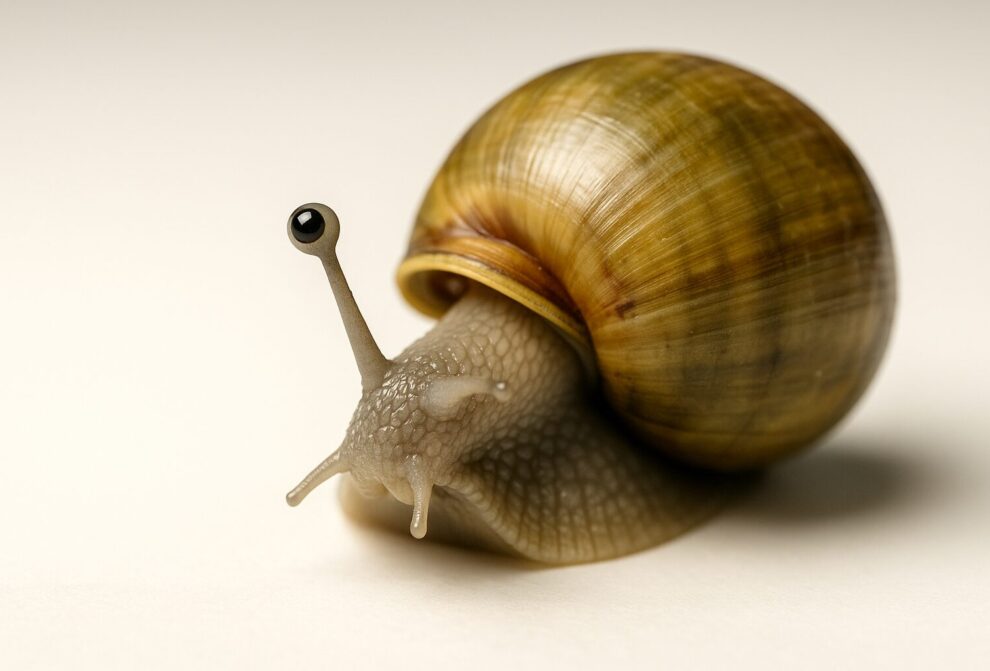
AI Generated Image
Researchers at the University of California, Davis have uncovered key insights into how freshwater apple snails can fully regenerate their eyes — a rare ability that could one day inform treatments for human eye injuries. In a new study published on August 6 in Nature Communications, Assistant Professor Alice Accorsi and her team reveal that apple snail and human eyes are strikingly similar in both structure and genetics, positioning these snails as a promising model for eye regeneration research.
“Apple snails are an extraordinary organism,” said Accorsi. “They provide a unique opportunity to study regeneration of complex sensory organs. Before this, we were missing a system for studying full eye regeneration.”
The golden apple snail (Pomacea canaliculata), native to South America and invasive in many parts of the world, is not just prolific in the wild but also well-suited for laboratory studies. Their fast reproduction and resilience make them ideal for genetic and developmental research.
“Apple snails are resilient, their generation time is very short, and they have a lot of babies,” Accorsi explained.
Notably, these snails possess “camera-type” eyes — the same general eye structure found in humans, composed of a cornea, lens, and retina. This similarity makes them uniquely relevant for research in vision and regeneration.
While snail regeneration has been noted since the 18th century — including reports of decapitated snails regrowing their heads — this study is the first to use snails in detailed, modern regenerative biology research. Accorsi believes previous underuse was due to logistical challenges.
“When I started reading about this, I was asking myself, why isn’t anybody already using snails to study regeneration?” said Accorsi. “I think it’s because we just hadn’t found the perfect snail to study, until now.”
Using a combination of dissections, microscopy, and genomic analysis, Accorsi’s team confirmed that apple snail eyes mirror the anatomy and genetics of human eyes.
“We did a lot of work to show that many genes that participate in human eye development are also present in the snail,” said Accorsi. “After regeneration, the morphology and gene expression of the new eye is pretty much identical to the original one.”
The regeneration process, which unfolds over approximately one month, involves multiple distinct stages:
“We still don’t have conclusive evidence that they can see images, but anatomically, they have all the components that are needed to form an image,” Accorsi said. “It would be very interesting to develop a behavioral assay to show that the snails can process stimuli using their new eyes… That’s something we’re working on.”
Even after 28 days, gene expression analysis revealed 1,175 genes still behaving differently compared to uninjured adult snail eyes, indicating that full maturation likely extends beyond the visibly complete regeneration.
To explore which genes are essential for eye regeneration, the team developed genome editing tools for apple snails using CRISPR-Cas9. Their first target was the gene pax6, a master regulator of eye development in humans and many other species.
“The idea is that we mutate specific genes and then see what effect it has on the animal, which can help us understand the function of different parts of the genome,” said Accorsi.
In experiments, snails lacking functional copies of pax6 failed to develop eyes, confirming its critical role. The next step is to test whether pax6 is also required for eye regeneration, not just development.
Accorsi’s team is also investigating other eye-specific genes, including those that shape the lens and retina or interact with pax6 during regeneration.
“If we find a set of genes that are important for eye regeneration, and these genes are also present in vertebrates, in theory we could activate them to enable eye regeneration in humans,” she said.
This research was primarily conducted at the Stowers Institute for Medical Research, where Accorsi completed her postdoctoral fellowship before joining UC Davis in 2024. Co-authors include researchers from UC Davis and Stowers, with funding provided by the Howard Hughes Medical Institute, the Society for Developmental Biology, the American Association for Anatomy, and the Stowers Institute for Medical Research.
Future Goals: Explore if pax6 and other genes also govern eye regeneration, with long-term potential for human therapies.
Study Focus: Investigating how apple snails regenerate their eyes to inform potential therapies for human vision loss.
Key Discovery: Snail and human eyes are structurally and genetically similar.
Regeneration Process: Complete regeneration takes about a month, involving wound healing, cell migration, and tissue maturation
Gene Involvement: The pax6 gene is essential for initial eye development in snails, as in humans.
Tools Developed: The team successfully applied CRISPR-Cas9 gene editing in apple snails.
Original Publication
Authors: Alice Accorsi, Brenda Pardo, Eric Ross, Timothy J. Corbin, Melainia McClain, Kyle Weaver, Kym Delventhal, Asmita Gattamraju, Jason A. Morrison, Mary Cathleen McKinney, Sean A. McKinney and Alejandro Sánchez Alvarado.
Journal: Nature Communications
DOI: 10.1038/s41467-025-61681-6
Method of Research: Experimental study
Subject of Research: Animals
Article Title: A genetically tractable non-vertebrate system to study complete camera-type eye regeneration
Article Publication Date: 6-Aug-2025
COI Statement: None declared.
Original Source: https://www.ucdavis.edu/news/snails-eyes-grow-back-could-they-help-humans-do-same




Scientists uncover how support cells, once thought harmless, send damaging signals that weaken the heart Heart failure (HF) is one of the leading causes of death and disability worldwide, affecting millions of people and placing an enormous burden on healthcare systems. The disease occurs when the heart can no longer pump blood efficiently, leaving patients short of breath, fatigued, and at risk of life-threatening complications. For decades, scientists have focused on studying cardiomyocytes—the heart’s muscle cells responsible for pumping blood—believing…
European research team presents comprehensive review in Brain Medicine on tDCS, rTMS, and DBS for obsessive-compulsive disorder Lausanne, Switzerland – 28 October 2025. In a peer-reviewed article published today in Brain Medicine, a European research team presents a focused review of emerging neuromodulation techniques for treatment-resistant obsessive-compulsive disorder (OCD). The article, “Neuromodulation techniques in obsessive-compulsive disorder: Current state of the art,” examines how transcranial direct current stimulation (tDCS), repetitive transcranial magnetic stimulation (rTMS), and deep brain stimulation (DBS) are changing…
Lawsonia inermis, widely recognised as the source of henna dye used for colouring skin and fabrics, may soon have a life-saving medical application. Researchers at Osaka Metropolitan University have discovered that pigments derived from the plant could help combat liver fibrosis — a serious disease that leads to excessive scar tissue formation in the liver due to chronic injury. Understanding Liver Fibrosis Liver fibrosis occurs when prolonged liver damage — often from factors like alcohol abuse or unhealthy lifestyles —…
Study finds the molecule CCL5 is both protective and harmful, suggesting future drugs could target only its damaging effects Chronic kidney disease (CKD) is a progressive condition in which the kidneys gradually lose their ability to filter waste from the blood. It is a common health concern that affects an estimated 8–16% of the global population, particularly among older adults. CKD can arise from various causes, including glomerulonephritis, a group of diseases that damage the glomeruli, the tiny filtering units…
 Feedback
