
According to new research, large ocean species can be protected in large Marine Protected Areas (MPAs) for a large portion of their lifecycles. The Chagos Archipelago MPA is a 640,000 km² protected area in the Indian Ocean where the study monitored the migrations of seabirds, manta rays, and sea turtles. Findings revealed that 95% of all recorded tracking locations for these wide-ranging species fell within the MPA boundaries — highlighting its effectiveness in protecting highly mobile marine wildlife. Comparing Large…
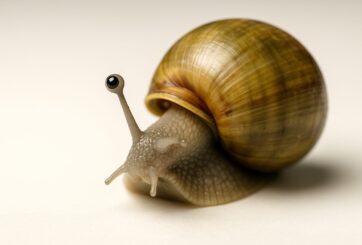
Researchers at the University of California, Davis have uncovered key insights into how freshwater apple snails can fully regenerate their eyes — a rare ability that could one day inform treatments for human eye injuries. In a new study published on August 6 in Nature Communications, Assistant Professor Alice Accorsi and her team reveal that apple snail and human eyes are strikingly similar in both structure and genetics, positioning these snails as a promising model for eye regeneration research. “Apple…
Hubble Telescope Reveals Clues to Unusual White Dwarf’s Origins Astronomers at the University of Warwick have uncovered compelling evidence that a nearby white dwarf star is the result of a rare stellar collision. Using data from the Hubble Space Telescope, researchers identified subtle carbon signatures in the star’s ultraviolet spectrum — a discovery that points to a past merger between two stars. White dwarfs are the dense, compact cores left behind after stars exhaust their fuel. Typically Earth-sized but with…
An ancient meat-eating mammal 56 million years ago adapted to a significant event of global warming by eating more bones, according to study headed by Rutgers University. This finding provides contemporary insights into how animals may react to climate change. Lessons from the Paleocene–Eocene Thermal Maximum According to a recent study done by Rutgers University, during the Paleocene–Eocene Thermal Maximum (PETM), a rapid warming event that lasted roughly 200,000 years ago, the extinct predator Dissacus praenuntius modified its diet in…
A University of Queensland-led study has discovered that Australian skinks have independently evolved molecular adaptations that protect them from the paralysing effects of snake venom. This remarkable evolutionary trait allows the reptiles to survive encounters with some of Australia’s most venomous predators. Unlocking the Molecular Secrets of Resistance Lead researcher Professor Bryan Fry from UQ’s School of the Environment explained that the skinks’ resistance lies in small but critical mutations in a receptor known as the nicotinic acetylcholine receptor—the very…
The percentage of babies in Sweden who receive antibiotics to treat suspected sepsis varies significantly by region, according to a recent study from the University of Gothenburg. In addition to emphasising areas that exhibit outstanding practices, the researchers hope to raise awareness of the problem of overprescribing. The main reason antibiotics are given to infants is to treat suspected sepsis, a dangerous illness that needs to be treated right away. Even while sepsis occurrences have been progressively declining over time,…
Substantial surface waves generated by powerboats are essential for recreational watersports. A recent study from the University of Minnesota Twin Cities indicates that underlying factors, including propeller thrust and various wave types, might affect fragile lakebed ecosystems. Researchers at the University of Minnesota’s St. Anthony Falls Laboratory expanded on earlier studies to investigate powerboat impacts on lake ecosystems during the 2022 and 2023 field seasons. The lake bottom and the water column are two different places and depths where the…
As early humans migrated from verdant African forests to grasslands, their need for accessible energy supplies prompted them to cultivate a preference for herbaceous plants, particularly grains and subterranean starchy tissues. However, a recent study led by Dartmouth indicates that hominins commenced consuming these carbohydrate-dense foods prior to developing the optimal dentition for such dietary practices. The research presents the inaugural evidence from the human fossil record of behavioural drive, indicating that survival-enhancing behaviours arise before to the physical adaptations…
Terrestrial ecosystems are offsetting a marine decline. Thus, indicating key implications for climate and planetary health A recent study published on August 1 in Nature Climate Change indicates that global photosynthesis rose from 2003 to 2021, chiefly attributed to enhanced carbon absorption by terrestrial vegetation. This increase is largely counterbalanced by a concurrent reduction in photosynthetic activity among marine phytoplankton, especially in tropical and subtropical waters. The research conducted by scholars at Duke University’s Nicholas School of the Environment underscores…
Recent research uncovers an unexpected connection between advantageous and detrimental gut bacteria that could facilitate tailored strategies for enhancing intestinal health. The human gastrointestinal tract harbours trillions of bacteria that are crucial for digesting, immunological control, and overall health. An imbalance in the composition or variety of these microbes, referred to as gut microbiota dysbiosis, has been associated with numerous digestive problems and diseases. Nevertheless, scientists have not yet comprehensively elucidated the mechanisms by which these bacteria interact to preserve…
Researchers introduce a new term to explain apes’ fondness for fermented fruit—and how it could illuminate human evolution. What Is ‘Scrumping’? A recent study conducted by academics at Dartmouth and the University of St Andrews introduces a name for a behaviour that has been long observed but never explicitly characterised in great apes: scrumping. The phrase denotes the act of collecting or appropriating fermenting fruits—usually those that have fallen from trees—by apes. “We never bothered to differentiate fruits in trees…
The cerebral cortex processes sensory information through a sophisticated network of neuronal connections. In what manner are these signals modified to enhance perception? A team from the University of Geneva (UNIGE) has discovered a method via which specific thalamic inputs influence neurones and alter their activity. This study, published in Nature Communications, uncovers an unrecognised mode of communication between the thalamus and the somatosensory cortex. This may elucidate why identical sensory stimuli do not consistently provoke the same sensation and…
Recent research conducted by the University of Southampton suggests that a substantial area of exceptionally hot rock beneath the Appalachian Mountains may be associated not with the recognised separation of North America from Northwest Africa 180 million years ago, but with a more recent continental rifting event. The research suggests that the Northern Appalachian Anomaly (NAA) – a 350-kilometer-wide region of unusually heated rock situated around 200 km beneath New England — began far further north. Researchers currently assert that…
A recent study conducted by experts at the University of Waterloo suggests that female pilots may excel above their male colleagues in high-pressure flight scenarios. The results contest conventional beliefs in aviation and indicate that female pilots may possess distinct advantages that warrant more acknowledgement in pilot training and assessment frameworks. “These findings are exciting because they push us to rethink how we evaluate pilots,” Naila Ayala, the principal author of the study and a postdoctoral scholar at Waterloo’s Multisensory…
Investigating plant vegetative reproduction is essential for enhancing crop yield and advancing bioengineering. Kobe University research is advancing in the investigation of genetic regulation in liverworts, which serve as exemplary model plants and potential candidates for space agriculture. Potatoes are tubers, while ginger is a rhizome; both represent modes of vegetative plant reproduction, wherein plants produce structures that can give rise to genetically identical individuals. This reproductive mode is crucial for agriculture and horticulture; nevertheless, research on the underlying genetic…
A frog vocalises from a footpath. A hiker captures an image and uploads it to iNaturalist. This solitary action — one individual, one amphibian, and one click — contributes to an expanding worldwide dataset utilised by scientists to delineate changing species distributions, identify invasive concerns, and perhaps uncover new species. A global study conducted by researchers at the University of Florida Institute of Food and Agricultural Sciences (UF/IFAS) demonstrates that iNaturalist, the worldwide technology platform enabling individuals to share wildlife…
 Feedback


