



Feeding 9 Billion: Innovations in Agricultural Modeling
An ancient meat-eating mammal 56 million years ago adapted to a significant event of global warming by eating more bones, according to study headed by Rutgers University. This finding provides contemporary insights into how animals may react to climate change.
According to a recent study done by Rutgers University, during the Paleocene–Eocene Thermal Maximum (PETM), a rapid warming event that lasted roughly 200,000 years ago, the extinct predator Dissacus praenuntius modified its diet in response to rising global temperatures.
Dissacus started eating harder, more fragile foods like bones rather than meat like contemporary cheetahs do. The researchers contend that this dietary shift is a reaction to the ecological upheaval and food shortage brought on by climate change. Palaeogeography, Palaeoclimatology, and Palaeoecology all published their findings.
Lead author Andrew Schwartz, a PhD candidate in the Department of Anthropology at Rutgers, examined microscopic pits and scratches on fossilised teeth using a technique known as dental microwear texture analysis. What the animal consumed just before it passed away is shown by these minute wear patterns.
“Before the PETM, they were eating mostly soft tissue, like modern carnivores,” Schwartz explained. “During and after the warming, they started chewing more brittle materials—likely bones—because prey was probably smaller or less available.”
This finding marks a significant shift in dietary behavior, suggesting that climate change directly influenced feeding habits.
Apart from food modifications, the fossil record suggests that Dissacus also had a little decrease in body size. Prior theories attributed this shift solely to warming temperatures, but Schwartz’s research indicates that a more significant factor was the scarcity of food.
“The PETM mirrors what’s happening today,” he said. “Carbon dioxide levels were higher, temperatures rose quickly, and ecosystems were thrown into disarray. The same patterns are emerging now.”
The study highlights a key lesson: flexibility increases the odds of survival. Schwartz emphasizes that generalist species—those able to adapt their diet and behavior—tend to fare better in unstable environments.
“In the short term, being a specialist might make you the best at what you do,” he said. “But long-term survival favors adaptability. Generalists like raccoons or jackals can shift their diets, and we’re already seeing this happen in response to habitat loss.”
These findings are valuable for conservation efforts, as they may help biologists identify which species are most vulnerable to modern climate change.
Schwartz conducted his fieldwork in the Bighorn Basin of Wyoming, a location with a remarkably complete fossil record spanning the PETM. The site allowed the team to track changes in both environmental conditions and animal behavior across time.
Co-authors of the study include Associate Professor Robert Scott of Rutgers and Larisa DeSantis of Vanderbilt University.
Schwartz, who developed a passion for paleontology in childhood while exploring fossil beds with his father, believes that ancient clues can guide modern action.
“One of the best ways to know what might happen in the future is to look to the past,” he said. “These fossils don’t just tell us about extinction—they tell us about resilience.”
He also hopes to inspire future scientists: “When I see a kid at a museum staring at a dinosaur, I tell them, ‘I’m a paleontologist. You can do this, too.’”
Original Publication
Authors: Andrew Schwartz, Larisa R.G. DeSantis and Rob S. Scott.
Journal: Palaeogeography Palaeoclimatology Palaeoecology
DOI: 10.1016/j.palaeo.2025.113089
Method of Research: Observational study
Subject of Research: Not applicable
Article Title: Dietary change across the Paleocene-Eocene Thermal Maximum in the mesonychid Dissacus praenuntius
Article Publication Date: 17-Jun-2025
COI Statement: The authors declare that they have no known competing financial interests or personal relationships that could have appeared to influence the work reported in this paper.
Original Source: https://www.sciencedirect.com/science/article/pii/S0031018225003748?via%3Dihub




Earthquakes in the American state of Utah, the Soultz-sous-Forêts region of France or in the Dutch province of Groningen should not be able to occur even if the subsurface has been exploited for decades. This is because the shallow subsurface behaves in such a way that faults there become stronger as soon as they start moving. At least that is what geology textbooks teach us. And so, in theory, it should not be possible for earthquakes to occur. So why…
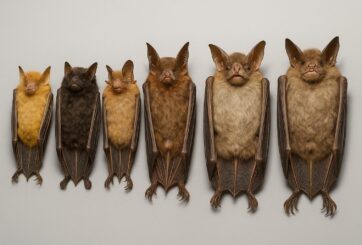
Just in time for Halloween, researchers from the Royal Ontario Museum (ROM), the Field Museum in Chicago, and Lawrence University in Wisconsin have announced the discovery of six new species of bats. These newly identified species, all found in the Philippines, belong to the group known as tube-nosed bats—a fascinating and diverse branch of the mammal family tree. Expanding the Tree of Life Formally recognized as new species through morphological and genetic analysis, this discovery expands the already impressive global…
In a recent study published today in the European Geosciences Union (EGU) journal Biogeosciences, scientists have confirmed that mercury pollution from artisanal and small-scale gold mining (ASGM) is contaminating food crops not through the soil, as previously believed, but directly from the air. Driven by the surging price of gold, which has increased by more than tenfold since 2000, the rapid expansion of unregulated mining in these regions raises urgent questions about food security, human health, and environmental justice The…
A new study from Iceland’s Surtsey island shows that birds carried most of the plants that colonised the island, challenging long-held beliefs that seed or fruit shape determines how plants spread — offering fresh insight into life’s adaptation to c When the volcanic island of Surtsey rose from the North Atlantic Ocean in 1963, it offered scientists a once-in-a-lifetime opportunity to observe how life takes hold on a brand-new and barren land. For decades, ecologists believed that plants’ ability to…
 Feedback
