
Tokyo, Japan – Researchers from Tokyo Metropolitan University have traced the genetic origins of a now extinct plant population from Nishinoshima, a remote volcanic island known for its frequent eruptions that periodically wipe out vegetation. Their analysis revealed that while the plants likely originated from a nearby island, their genetic makeup displayed unique traits shaped by a phenomenon known as the “founder’s effect.” The findings provide rare insight into the earliest stages of ecosystem formation in isolated environments. Volcanic Resets…

UNIVERSITY PARK, Pa. — Tiny crimson specks discovered by NASA’s James Webb Space Telescope (JWST) could represent an entirely new class of cosmic object — massive black holes wrapped in star-like atmospheres — offering fresh insights into how the first galaxies may have formed. Unexpected Red Dots Challenge Existing Theories When JWST began sending data in 2022, astronomers were startled by the presence of tiny “little red dots” scattered across the early universe. Initially, researchers, including a team from Penn…

For decades, scientists have known that adding small molecules such as amino acids to medical formulations—like insulin—helps stabilize the proteins they contain. These small molecules prevent larger protein particles from interacting in unwanted ways. While this stabilizing effect has been widely used, the mechanism behind it has remained unclear—until now. An international research team led by the Supramolecular Nano-Materials and Interfaces Laboratory at EPFL’s School of Engineering has uncovered how this process works. Their findings, published in Nature, involved collaboration…
AMHERST, Mass. — Black holes may not be as eternal as they seem. New research from the University of Massachusetts Amherst, published in Physical Review Letters, suggests there’s a more than 90% chance that a black hole will explode within the next decade—and that our current telescopes could detect it. Such an explosion would be the first-ever observation of a primordial black hole (PBH)—a theorized type of black hole that could have formed less than a second after the Big…
SOUTHAMPTON, UK — Astronomers have discovered a white dwarf star locked in a deadly dance with its stellar companion—devouring it at a rate never seen before. The doomed pair, known as V Sagittae, lies around 10,000 light-years from Earth and has long puzzled scientists with its unusual brightness. The new study, led by Dr Pasi Hakala from the University of Turku (Finland) and involving Professor Phil Charles from the University of Southampton (UK) and Dr Pablo Rodríguez Gil from the…
STUTTGART/MELBOURNE, 8 September 2025 — A joint research team from the University of Stuttgart (Germany) and the University of Melbourne (Australia) has developed a simple, affordable method for detecting nanoplastics in environmental samples. Using only a standard optical microscope and a specially designed test strip—the “optical sieve”—scientists can now visualize and analyze particles that were previously invisible without expensive, high-tech equipment. The breakthrough has been published in Nature Photonics (doi: 10.1038/s41566-025-01733-x). “The test strip can serve as a simple analysis…
SINGAPORE, 8 September 2025 — Dengue infection can “re-programme” the body’s immune system much like a computer operating system being rewritten, leaving a long-lasting genetic imprint that influences how people respond to future infections. Strikingly, this imprint is not seen with vaccination. Published in Med, the new study by Duke-NUS Medical School and an international research team uncovers how dengue reshapes immunity and why vaccines behave differently from natural infection. The findings fill a key knowledge gap, providing insights that…
Each year in the UK, more than 40,000 people suffer an out-of-hospital cardiac arrest (OHCA), yet fewer than 10% survive. Rapid CPR and early use of an Automated External Defibrillator (AED) can at least double survival chances, but in practice, AEDs are often difficult to locate quickly. To address this, researchers at the University of Warwick have partnered with the Welsh Ambulance Services University NHS Trust and drone specialists SkyBound to test whether drones could deliver AEDs directly to the…
A new 30-year study has confirmed that East Antarctica’s interior is warming more rapidly than its coastal regions—and much earlier than previously thought. Published in Nature Communications and led by Professor Naoyuki Kurita of Nagoya University, the research identifies a major driver of this change: intensified warm air flow linked to temperature variations in the Southern Indian Ocean. Because East Antarctica contains the majority of the planet’s glacial ice, this discovery suggests that current models may underestimate how quickly Antarctic…
A new species of marsupial, closely related to the kangaroo, has been identified through fossil evidence from caves in the Nullarbor and southwest Australia. Researchers from Curtin University, the Western Australian Museum, and Murdoch University revealed the discovery of a previously unknown bettong species, along with two new subspecies of the woylie. Tragically, the newly identified species is already believed to be extinct. The Role of Woylies in the Ecosystem Woylies, also known as brush-tailed bettongs, are small marsupials native…
Palaeontologists at the University of Leicester have solved a 150-million-year-old puzzle: how two baby pterosaurs met their end. According to a new study published in Current Biology, the young reptiles perished in violent storms, which also created the perfect conditions for their exceptional preservation in stone. Fragile Creatures in a Fossil World of Giants The Mesozoic Era, often remembered as the “Age of Reptiles,” is typically associated with giant dinosaurs, marine predators, and vast-winged pterosaurs. However, as in today’s ecosystems,…
A research team from the Tokyo University of Science (TUS) and the National Institute of Advanced Industrial Science and Technology (AIST) has developed a groundbreaking measurement system that reveals how energy is lost in soft magnetic materials. The discovery could accelerate the design of next-generation power electronics, making transformers, motors, and renewable energy systems smaller, lighter, and more efficient. Cracking the Puzzle of Iron Loss Soft magnetic materials are essential to devices such as transformers and generators, but their efficiency…
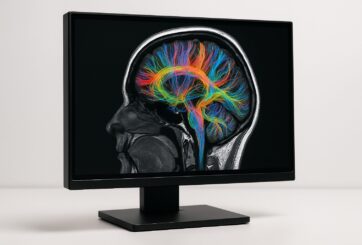
A Japanese research team has demonstrated a new, more accurate way to analyze brain imaging data in children with attention deficit/hyperactivity disorder (ADHD), offering fresh insights into the brain structure differences that underlie the condition. The findings, published in Molecular Psychiatry, could pave the way for earlier diagnosis and more effective, personalized treatments for affected children. Tackling Inconsistencies in ADHD Brain Imaging ADHD affects more than 5% of children worldwide, leading to difficulties with attention, hyperactivity, and impulsivity. Brain imaging…
WASHINGTON, Sept. 3, 2025 — Detecting microplastics in the environment could soon become faster and more affordable thanks to a new biosensor developed by scientists and published today in ACS Sensors. The living sensor, built from a safe laboratory strain of Pseudomonas aeruginosa, attaches to plastic and glows green under fluorescence, making even tiny plastic fragments visible in water samples. Tackling the Microplastics Problem Microplastics—tiny fragments of plastic often invisible to the naked eye—are now found in air, soil, and…
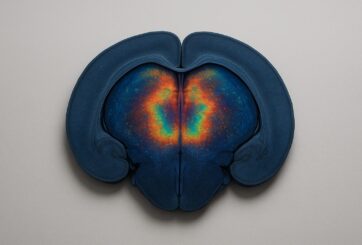
PRINCETON, N.J., September 3, 2025 — A team of researchers has created the first brain-wide map of decision-making at single-cell resolution in a mammal, using mice trained to turn tiny steering wheels to move shapes on a screen. The findings, published in Nature by the International Brain Laboratory (IBL) — a global consortium of 22 labs — offer an unprecedented view of how distributed neural networks across the brain coordinate to guide behavior. Beyond Single Brain Regions For decades, most…
Tokyo, Japan — September 2, 2025 — A new study led by Professor Tadafumi Kato (Juntendo University Graduate School of Medicine) and Dr. Akito Nagakura (Tokyo Metropolitan Matsuzawa Hospital) has uncovered evidence of neurodegeneration in a key brain region implicated in bipolar disorder (BD). The research, published in Psychiatry and Clinical Neurosciences, provides the strongest neuropathological evidence to date that BD is not just a psychiatric condition but also a brain-based disease with distinct biological underpinnings. A Major Health Burden…
 Feedback


