
New study finds that the nutritional value of prey within a single species can widely vary, offering key insights for food web dynamics and ecosystem change The hunt is on and a predator finally zeroes in on its prey. The animal consumes the nutritious meal and moves on to forage for its next target. But how much prey does a predator need to consume? Following a period of massive starvation among animals living along the California coast, University of California…

Discovery of 20,000-year-old cave sediments on Prince of Wales Island offers rare land-based evidence of ancient meltwater events Paul Wilcox, a geologist at the University of Innsbruck, has discovered the first land-based evidence of meltwater pulses from the Cordilleran Ice Sheet during the last ice age about 20,000 years ago. The age of the cave sediments was constrained via optical dating techniques, which is crucial to help piece together the sequence of climate events leading to a warming planet. The…

Palaeontologists at the Manitoba Museum and Royal Ontario Museum (ROM) have discovered a remarkable new 506-million-year-old predator from the Burgess Shale of Canada. The results are announced in a paper in the journal Royal Society Open Science. Mosura fentoni was about the size of your index finger and had three eyes, spiny jointed claws, a circular mouth lined with teeth and a body with swimming flaps along its sides. These traits show it to be part of an extinct group…

In the modern world, a reliable supply of hydrogen gas is vital for the function of society. Fertiliser produced from hydrogen contributes to the food supply of half the global population, and hydrogen is also a key energy component in many roadmaps to a carbon neutral future, essential if we are to prevent the worst predictions of climate change. Today, hydrogen is produced from hydrocarbons, with waste gases contributing to 2.4% of global CO2 emissions. Demand for hydrogen is set…

Fishing pots fitted with LED lights catch significantly more shrimp and fish, new research shows. In the new study, by the University of Exeter and Fishtek Marine, pots fitted with LEDs caught up to 19 times more northern shrimp than unlit pots. Importantly, illuminated pots also attracted fish – raising hopes for new low-impact fishing. “We think that the light attracts zooplankton – like moths around a flame – which in turn attracts shrimp (which eat zooplankton), and that entices…

Experts update watchlist of species to watch out for in next 10 years Pink salmon, Purple Asian clams, marine invertebrates that form spaghetti-like colonies and a nematode worm that causes extensive deaths of trees are among the new entries in experts’ watchlist of invasive non-native species that could threaten Great Britain in the next 10 years. The latest version of the watchlist, which again includes known problem species such as the yellow-legged (Asian) hornet, raccoon and twoleaf watermilfoil, has been…
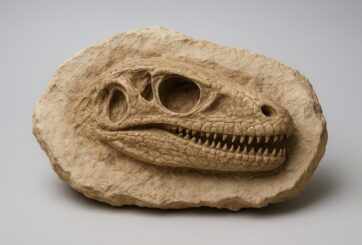
Originally from South America, the charismatic tegu made its way to the United States via the pet trade of the 1990s. After wreaking havoc in Florida’s ecosystems, the exotic lizard was classified as an invasive species. But a recent discovery from the Florida Museum of Natural History reveals the reptiles are no strangers to the region — tegus were here millions of years before their modern relatives arrived in pet carriers. Described in a new study in the Journal of…
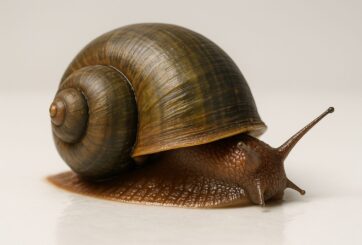
A new study led by researchers at Sun Yat-sen University has mapped the current and future potential distribution of Physella acuta, an invasive freshwater snail threatening China’s ecosystems, public health, and agriculture. Using advanced climate modeling, the team predicts that while southern China may see shrinking suitable habitats for the snail, northern regions could face increased invasion risk, underscoring the need for targeted monitoring and control strategies. “Physella acuta is a global invader with severe ecological and economic impacts, and China…
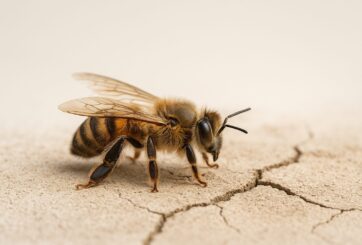
The number and diversity of insects is declining worldwide. Some studies suggest that their biomass has almost halved since the 1970s. Among the main reasons for this are habitat loss – for example through agriculture or urbanization – and climate change. These threats have long been known. What is less well-known is how these global change drivers interact and how their effects can become even more severe that way. For example, insects that have been deprived of their natural habitat…

Central Asia, located in the heart of the Eurasian continent, has experienced significant climatic shifts in recent decades, characterized by warming and increased humidity. This trend contrasts sharply with the global pattern of drought-induced tree growth decline, making Central Asia a unique region for studying the impacts of climate change on forest ecosystems. Alpine forests in this region are critical for regional water reserves and ecological stability and are the origins of many inland rivers such as Amu Darya and…

New research reveals that shifts in plant life played a key role in speeding up major climate changes during the late Miocene, a period spanning 11.6 to 5.3 million years ago. During this time, Earth’s climate shifted from the warm conditions of the middle Miocene to conditions closer to what we experience today, turning forests into grasslands and forcing animals like horses and elephants to evolve tougher teeth for eating gritty plants. At the same time, predators like big cats…
The BRICS nations, Brazil, Russia, India, China and South Africa, represent the world’s major emerging markets. In 2022, their aggregated GDP amounted to about USD 25.95 trillion, accounting for 26% of global GDP. Over the past decade, these economies have grown at an average annual rate of about 2.87%, surpassing the global average of 2.73%. This rapid economic growth has also driven energy demand, with the BRICS nations collectively accounting for about 46% of the world’s total primary energy consumption…
Individually, Antarctic krill (Euphausia superba) do not make much of an impression. With a maximum body length of six centimetres, a weight of just two grams and its transparent skin, it does not look very spectacular. Yet krill play a central role for life in the Southern Ocean. Billions of these small crustaceans form huge swarms that can extend over several square kilometers and are the most important food source for many predators. A research team from Julius-Maximilians-Universität Würzburg (JMU),…
The finding offers new insights into Asia’s rainforest history, researchers say UNIVERSITY PARK, Pa. — For the first time, scientists have discovered fossil evidence of an endangered, living tropical tree species. The unprecedented find was made in Brunei, a country on the large island of Borneo, and reveals a critical piece of the ancient history of Asia’s rainforests, highlighting the urgent need for conservation in the region, according to researchers at Penn State who led the discovery. The research team…
A new study found that brick kiln owners were willing to implement energy-efficient operational changes after receiving training and support. The social benefits of reduced carbon emissions from these changes outweighed costs by a factor of 65 to 1 Brick manufacturing is a central component of the economy in South Asia, but also a major source of greenhouse gas emissions and air pollution, as the practice releases carbon dioxide (CO₂), fine particulate matter (PM2.5), and other contaminants into the environment….
Scientists have launched an interactive global map to show the migratory patterns of more than 100 marine species in an effort to protect at-risk wildlife. New models were developed by The University of Queensland and Duke University scientists to be part of the Migratory Connectivity in the Ocean (MiCO) database which aims to bridge information gaps for policymakers and conservationists. Dr Lily Bentley from UQ’s Centre for Biodiversity and Conservation Science said the online tool was the first freely accessible…
Tyrannosaurus rex evolved in North America, but its direct ancestor came from Asia, crossing a land bridge connecting the continents more than 70 million years ago, according to a new study led by UCL researchers. The study, published in Royal Society Open Science, also found that the rapid growth in size of tyrannosaurids (the group that included the T. rex) as well as a closely related group called megaraptors coincided with a cooling of the global climate following a peak…
 Feedback


