
New study finds that the nutritional value of prey within a single species can widely vary, offering key insights for food web dynamics and ecosystem change The hunt is on and a predator finally zeroes in on its prey. The animal consumes the nutritious meal and moves on to forage for its next target. But how much prey does a predator need to consume? Following a period of massive starvation among animals living along the California coast, University of California…

As the ocean warms across its temperate regions, kelp forests are collapsing and turf algae species are taking over. This shift from dense canopies of tall kelp to low-lying mats of turf algae is driving biodiversity loss and altering the flow of energy and nutrients through reef ecosystems. It’s also fundamentally altering the chemical ecology of coastal ecosystems. New research in Science, led by researchers at Bigelow Laboratory for Ocean Sciences, has shown for the first time how turf algae…
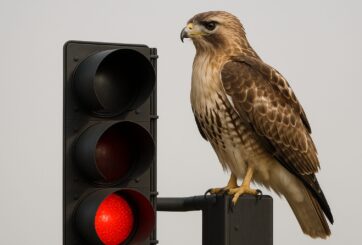
Guest editorial by Dr Vladimir Dinets, research assistant professor at the University of Tennessee and author of a new Frontiers in Ethology article Many years ago, I got to spend some time in Ngorongoro Crater, a unique place in Africa where immense herds of animals are being watched by equally immense crowds of 4×4-riding tourists, and traffic jams of all kinds are frequent. On my last evening there, a local guide told me at a campfire that some buffalo in…
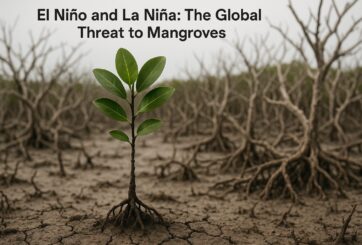
A new international study led by researchers at Tulane University shows that the El Niño and La Niña climate patterns affect nearly half of the world’s mangrove forests, underscoring the vulnerability of these vital coastal ecosystems to climatic shifts. Mangroves are shrubs or trees that grow in dense thickets mainly in coastal saline or brackish water. The research, published in Nature Geoscience, is based on nearly two decades of satellite data from 2001 to 2020 and is the first study…

UChicago-led study tests neural networks’ ability to handle ‘gray swan’ events Increasingly powerful AI models can make short-term weather forecasts with surprising accuracy. But neural networks only predict based on patterns from the past—what happens when the weather does something that’s unprecedented in recorded history? A new study led by scientists from the University of Chicago, in collaboration with New York University and the University of California Santa Cruz, is testing the limits of AI-powered weather prediction. In research published May 21…
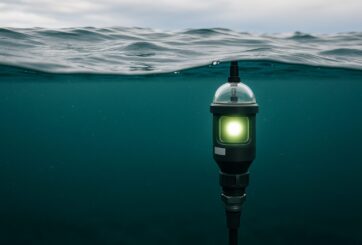
UV radiation fluctuates amid wet-dry extremes in clear water bodies Lake Tahoe is experiencing large-scale shifts in ultraviolet radiation (UV) as climate change intensifies wet and dry extremes in the region. That is according to a study led by the University of California, Davis’ Tahoe Environmental Research Center and co-leading collaborator Miami University in Ohio. For the study, published in ASLO, the journal of the Association for the Sciences of Limnology and Oceanography, scientists analyzed an 18-year record of underwater irradiance…

Two-year study offers insight on rice cultivar tolerance to newly registered herbicide FAYETTEVILLE, Ark. — A word of caution to rice growers: the herbicide fluridone has become a valuable tool in fighting Palmer pigweed, but it can cause injury to some rice cultivars, depending on when it is used. Registered under the trade name Brake by SePRO Corporation, fluridone is a residual herbicide used to suppress grasses and broadleaf weeds before they emerge, also known as a preemergence herbicide. In…

Without American bullfrogs, native pond turtles increase at national park The call of American bullfrogs was deafening when scientists from the University of California, Davis, first began researching the impact of invasive bullfrogs on native northwestern pond turtles at Yosemite National Park. “At night, you could look out over the pond and see a constellation of eyes blinking back at you,” said UC Davis Ph.D. candidate Sidney Woodruff, lead author of a study chronicling the effects of removal. “Their honking…
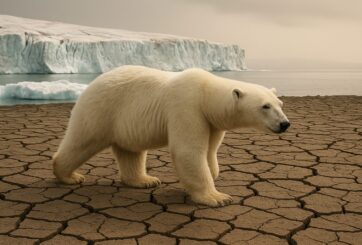
CORVALLIS, Ore. – A novel analysis suggests more than 3,500 animal species are threatened by climate change and also sheds light on huge gaps in fully understanding the risk to the animal kingdom. The study was published today in BioScience. “We’re at the start of an existential crisis for the Earth’s wild animals,” said Oregon State University’s William Ripple, who led the study. “Up till now, the primary cause of biodiversity loss has been the twin threats of overexploitation and…
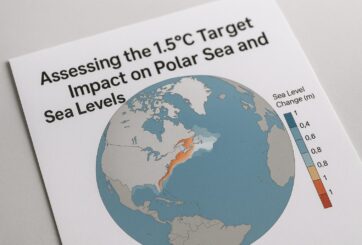
Efforts to limit the global temperature increase to 1.5°C under the Paris Climate Agreement may not go far enough to save the world’s ice sheets, according to a new study. Research led by Durham University, UK, suggests the target should instead be closer to 1°C to avoid significant losses from the polar ice sheets and prevent a further acceleration in sea level rise. The team reviewed a wealth of evidence to examine the effect that the 1.5°C target would have…
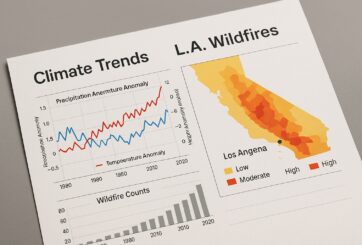
As wildfires continue to ravage regions from Los Angeles to South Korea, a new study featured on the cover of the Issue 7, 2025 of Advances in Atmospheric Sciences sheds light on the large-scale climate patterns influencing these devastating global extreme events. The research, led by Professor Young-Min Yang from Jeonbuk National University, reveals how tropical climate phenomena like the Madden-Julian Oscillation (MJO) can trigger dry, windy conditions that exacerbate wildfires in mid-latitude regions, including the western U.S. and East Asia. Wildfire…
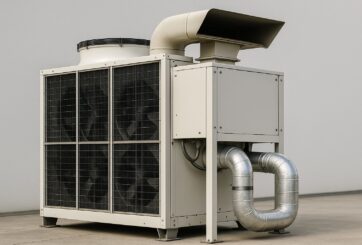
Noise ordinances can protect residents and guide developers toward quieter designs NEW ORLEANS, May 19, 2025 – The past few years have seen an explosion in data centers built across the country, as developers try to keep up with demand created by artificial intelligence, cloud storage, and e-commerce. Many of these data centers are being built near residential areas, and the people who live there keep complaining about the noise. Gregory Miller and his colleagues at Trinity Consultants will present…

First-of-its-kind global study shows grasslands can withstand climate extremes with a boost of nutrients Fertilizer might be stronger than we thought. A new international study featuring faculty at Binghamton University, State University of New York found that fertilizer can help plants survive short-term periods of extreme drought, findings which could have implications for agriculture and food systems in a world facing climate stressors. “Resources such as nutrients and water have been fundamentally altered by humans on a global scale, and…
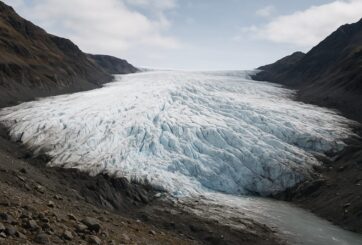
New research reveals mountain glaciers across the globe will not recover for centuries – even if human intervention cools the planet back to the 1.5°C limit, having exceeded it. The research, led by the University of Bristol in the UK and the University of Innsbruck in Austria, presents the first global simulations of glacier change up to 2500 under so-called ‘overshoot’ scenarios, when the planet temporarily exceeds the 1.5°C limit up to 3°C before cooling back down. The results, published…

Florida scientists have identified heat-tolerant algal symbionts as a vital intervention to protect endangered elkhorn coral. Their cross-institutional collaboration offers new hope for reef restoration and resilience amid rising ocean temperatures MIAMI — A new study published in the journal Coral Reefs reveals that heat-tolerant symbiotic algae may be essential to saving elkhorn coral (Acropora palmata)—a foundational species in Caribbean reef ecosystems—from the devastating impacts of marine heatwaves and coral bleaching. The research, conducted by scientists at the University of…
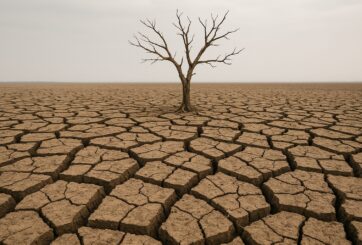
The Amazon rainforest may be able to survive long-term drought caused by climate change, but adjusting to a drier, warmer world would exact a heavy toll, a study suggests. The findings show that adjusting to cope with the effects of climate change could see some parts of the Amazon rainforest lose many of its largest trees. This would release the large amount of carbon stored in these trees to the air, and reduce the rainforest’s immediate capacity to act as…
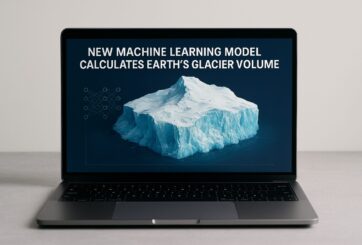
VENICE – A team of researchers led by Niccolò Maffezzoli, “Marie Curie” fellow at Ca’ Foscari University of Venice and the University of California, Irvine, and an associate member of the Institute of Polar Sciences of the National Research Council of Italy, has developed the first global model based on artificial intelligence to calculate the ice thickness distribution of all the glaciers on Earth. The model has been published in the journal Geoscientific Model Development and is expected to become…
 Feedback


