
New study finds that the nutritional value of prey within a single species can widely vary, offering key insights for food web dynamics and ecosystem change The hunt is on and a predator finally zeroes in on its prey. The animal consumes the nutritious meal and moves on to forage for its next target. But how much prey does a predator need to consume? Following a period of massive starvation among animals living along the California coast, University of California…

NASA's Terra satellite passed over Ashobaa on June, 11 at 06:35 UTC (2:35 a.m. EDT). The Moderate Resolution Imaging Spectroradiometer or MODIS instrument…
It has been hypothesized that globalization of human-mediated dispersal of species may break down biogeographic boundaries. However, empirical tests had been…
Researcher Johan Uddling has been working with Swedish and international colleagues to compile data on how raised levels of carbon dioxide impact on plant…
Most of us don't consider forests a source of pollution. As natural bodies, they should be good for the environment. But a recent study in Japan shows that…
The Global Precipitation Measurement (GPM) core observatory had an excellent view of Tropical Cyclone Ashobaa in the Arabian Sea over on June 8, 2015 at 2131…
An international team of scientists has found a dramatic ice sheet collapse at the end of the ice age before last caused widespread climate changes and led to…
A combination of drought, heat and insects is responsible for the death of more than 12 million trees in California, according to a new study from UC Santa…
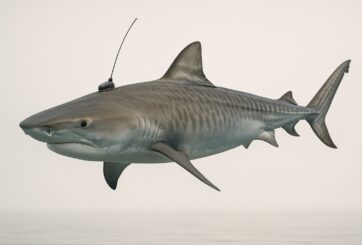
Tiger sharks are among the largest and most recognizable sharks on the planet, yet many of their habits remain mysterious because they are long-distance…
The work shows how the particles' chemical composition influences their abilities to take in moisture from the air, which indicates whether the particle will…
The GPM core observatory satellite flew over Ashobaa on the morning of June 8 at 0811 UTC (4:11 a.m. EDT). Tropical cyclone Ashobaa had sustained wind speeds…
Insects are the most diverse animal group on earth. Many of them feed on plants, and they are constantly challenged by the diverse direct and indirect defenses…
The agriculture industry accounts for one quarter of global greenhouse gas emissions, primarily due to fertiliser use, livestock farming and changes in land…
Quenched glasses formed by asteroid impacts can encapsulate and preserve biological material for millions of years on Earth, and can also serve as a substrate…
With its canary-yellow colouring, the yellow-breasted bunting – about the size of a sparrow – is one of the more striking species of songbirds. Until a few…
The Visible Infrared Imaging Radiometer Suite or VIIRS instrument aboard the satellite gathered infrared data of the storm that was made into an image at the…
In a major project, researchers from 43 countries determined the number of tropical and subtropical tree species. Based on mapping and extrapolation, they…
 Feedback


