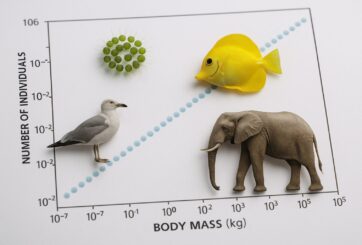
A new study published in Nature Ecology & Evolution has found a simple rule that seems to govern how life is organised on Earth. The researchers believe this rule helps explain why species are spread the way they are across the planet. The discovery will help to understand life on Earth – including how ecosystems respond to global environmental changes. At first glance, Earth seems like a collection of wildly different worlds. Each region has its own species and environmental conditions. Yet,…

In September 2023, a bizarre global seismic signal was observed which appeared every 90 seconds over nine days – and was then repeated a month later. Almost a year later, two scientific studies proposed that the cause of these seismic anomalies were two mega tsunamis which were triggered in a remote East Greenland fjord by two major landslides which occurred due to warming of an unnamed glacier. The waves were thought to have become trapped in the fjord system, forming…

A combination of stressors, not sea levels alone, cause the demise of reefs New research led by the University of Sydney adds to our understanding of how rapidly rising sea levels due to climate change foreshadow the end of the Great Barrier Reef as we know it. The findings suggest the reef can withstand rising sea levels in isolation but is vulnerable to associated environmental stressors arising from global climate change. Led by Professor Jody Webster from the School of…
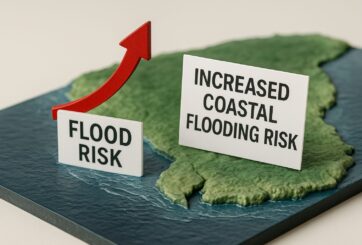
Flooding in coastal communities is happening far more often than previously thought, according to a new study from North Carolina State University and the University of North Carolina at Chapel Hill. The study also found major flaws with the widely used approach of using marine water level data to capture instances of flooding. “Government agencies and researchers use data from tide gauges to measure water levels in coastal areas, then use that data to estimate flood frequency in the region,”…
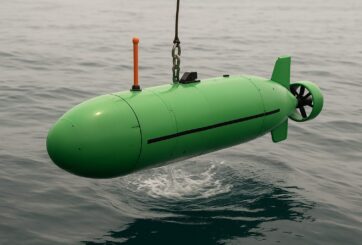
Frontiers in Ocean Sustainability author Dr. Mary Livingston reflects on her decades-long career as a marine scientist by Dr Mary Elizabeth Livingston In my recently published paper ‘My love affair with the sea’ I describe how from a very early age I fell in love with the sea and pursued that love throughout my younger years and at university, ending up with a 40-year career as a fisheries scientist. Political changes on how women were perceived in the workplace benefitted…
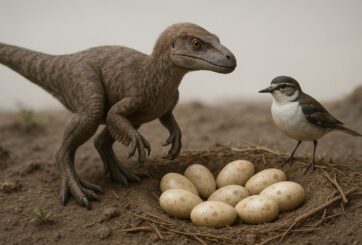
Paper documents the earliest-known example of birds nesting in the polar regions Spring in the Arctic brings forth a plethora of peeps and downy hatchlings as millions of birds gather to raise their young. The same was true 73 million years ago, according to a paper featured on the cover of this week’s edition of the journal Science. The paper documents the earliest-known example of birds nesting in the polar regions. “Birds have existed for 150 million years,” said lead…
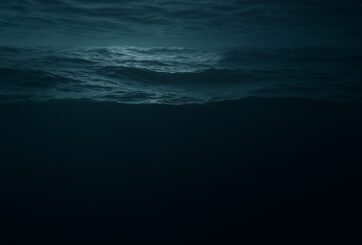
New research found 21% of the global ocean had experienced a reduction in the depth of its lit zones, which are home to 90% of all marine life, during the past 20 years More than one-fifth of the global ocean – an area spanning more than 75million sq km – has been the subject of ocean darkening over the past two decades, according to new research. Ocean darkening occurs when changes in the optical properties of the ocean reduce the…
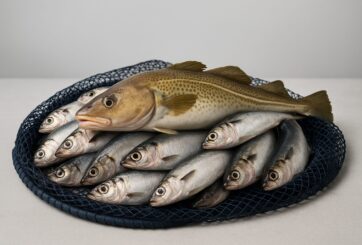
GEOMAR researchers identify systemic weaknesses in EU fisheries management and are calling for quotas to be set independently of national interests As legally required by the European Union, sustainable fisheries may not extract more fish than can regrow each year. Yet, about 70 per cent of commercially targeted fish stocks in northern EU waters are either overfished, have shrunken population sizes or have collapsed entirely. So why does the EU continue to miss its sustainable fisheries targets, despite a wealth…
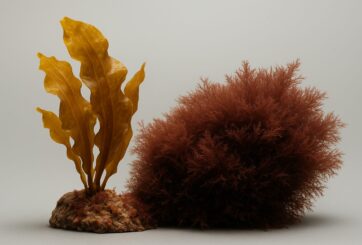
As the ocean warms across its temperate regions, kelp forests are collapsing and turf algae species are taking over. This shift from dense canopies of tall kelp to low-lying mats of turf algae is driving biodiversity loss and altering the flow of energy and nutrients through reef ecosystems. It’s also fundamentally altering the chemical ecology of coastal ecosystems. New research in Science, led by researchers at Bigelow Laboratory for Ocean Sciences, has shown for the first time how turf algae…
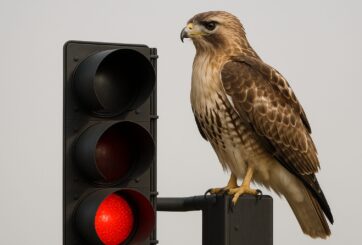
Guest editorial by Dr Vladimir Dinets, research assistant professor at the University of Tennessee and author of a new Frontiers in Ethology article Many years ago, I got to spend some time in Ngorongoro Crater, a unique place in Africa where immense herds of animals are being watched by equally immense crowds of 4×4-riding tourists, and traffic jams of all kinds are frequent. On my last evening there, a local guide told me at a campfire that some buffalo in…
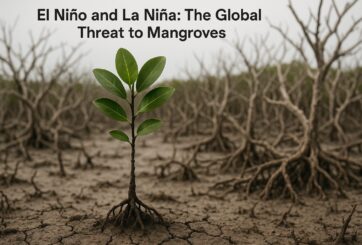
A new international study led by researchers at Tulane University shows that the El Niño and La Niña climate patterns affect nearly half of the world’s mangrove forests, underscoring the vulnerability of these vital coastal ecosystems to climatic shifts. Mangroves are shrubs or trees that grow in dense thickets mainly in coastal saline or brackish water. The research, published in Nature Geoscience, is based on nearly two decades of satellite data from 2001 to 2020 and is the first study…

UChicago-led study tests neural networks’ ability to handle ‘gray swan’ events Increasingly powerful AI models can make short-term weather forecasts with surprising accuracy. But neural networks only predict based on patterns from the past—what happens when the weather does something that’s unprecedented in recorded history? A new study led by scientists from the University of Chicago, in collaboration with New York University and the University of California Santa Cruz, is testing the limits of AI-powered weather prediction. In research published May 21…
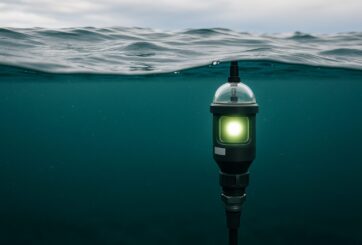
UV radiation fluctuates amid wet-dry extremes in clear water bodies Lake Tahoe is experiencing large-scale shifts in ultraviolet radiation (UV) as climate change intensifies wet and dry extremes in the region. That is according to a study led by the University of California, Davis’ Tahoe Environmental Research Center and co-leading collaborator Miami University in Ohio. For the study, published in ASLO, the journal of the Association for the Sciences of Limnology and Oceanography, scientists analyzed an 18-year record of underwater irradiance…
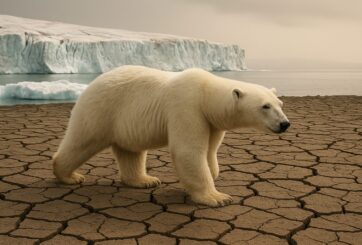
CORVALLIS, Ore. – A novel analysis suggests more than 3,500 animal species are threatened by climate change and also sheds light on huge gaps in fully understanding the risk to the animal kingdom. The study was published today in BioScience. “We’re at the start of an existential crisis for the Earth’s wild animals,” said Oregon State University’s William Ripple, who led the study. “Up till now, the primary cause of biodiversity loss has been the twin threats of overexploitation and…
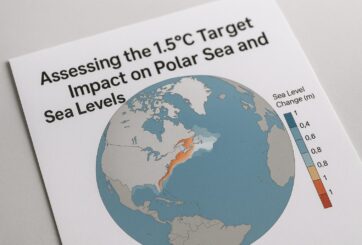
Efforts to limit the global temperature increase to 1.5°C under the Paris Climate Agreement may not go far enough to save the world’s ice sheets, according to a new study. Research led by Durham University, UK, suggests the target should instead be closer to 1°C to avoid significant losses from the polar ice sheets and prevent a further acceleration in sea level rise. The team reviewed a wealth of evidence to examine the effect that the 1.5°C target would have…
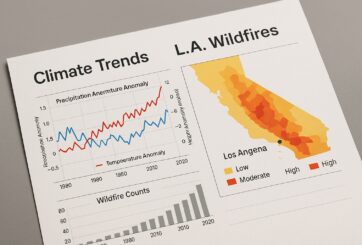
As wildfires continue to ravage regions from Los Angeles to South Korea, a new study featured on the cover of the Issue 7, 2025 of Advances in Atmospheric Sciences sheds light on the large-scale climate patterns influencing these devastating global extreme events. The research, led by Professor Young-Min Yang from Jeonbuk National University, reveals how tropical climate phenomena like the Madden-Julian Oscillation (MJO) can trigger dry, windy conditions that exacerbate wildfires in mid-latitude regions, including the western U.S. and East Asia. Wildfire…
 Feedback


