
Young stars ejecting plasma could give us clues into the Sun’s past Kyoto, Japan — Down here on Earth we don’t usually notice, but the Sun is frequently ejecting huge masses of plasma into space. These are called coronal mass ejections (CMEs). They often occur together with sudden brightenings called flares, and sometimes extend far enough to disturb Earth’s magnetosphere, generating space weather phenomena including auroras or geomagnetic storms, and even damaging power grids on occasion. Scientists believe that when…

Researchers at Osaka University develop a new centipede-like robot and show how its motion can be switched from straight and curved walking, which may assist with search and rescue operations or planetary exploration. Researchers from the Department of Mechanical Science and Bioengineering at Osaka University have invented a new kind of walking robot that takes advantage of dynamic instability to navigate. By changing the flexibility of the couplings, the robot can be made to turn without the need for complex…
Researchers investigate the swarming behavior of microrobots. Research study reveals alternative route to realize programmable active matter. Miniaturization is progressing rapidly in just any field and the trend towards the creation of ever smaller units is also prevalent in the world of robot technology. In the future, minuscule robots used in medical and pharmaceutical applications might be able to transport medication to targeted sites in the body. Statistical physics can contribute to the foundations for the development of such technologies….
Quantum key distribution system based on integrated photonics lays groundwork for network implementation. Researchers have developed a quantum key distribution (QKD) system based on integrated photonics that can transmit secure keys at unprecedented speeds. The proof-of-principle experiments represent an important step toward real-world application of this highly secure communication method. QKD is a well-established method of providing secret keys for secure communication between distant parties. By using the quantum properties of light to generate secure random keys for encrypting and…
Prof. Sebastian Reineke from TU Dresden has been awarded a Consolidator Grant from the European Research Council (ERC) in the amount of 2 million Euro for his research project SLOWTONICS. In this project he wants to initiate a paradigm shift in modern technology by developing and using biocompatible components. Project launch is January 2024. Modern technology has fundamentally changed our lives in recent decades and has permeated almost all areas of our lives. Communication, transportation, energy, industry or health –…
One Notre Dame researcher says we should look beyond the hype to see how virtual reality can make scientists more effective. But to realize the benefits, researchers must also plan well and avoid potential pitfalls. In 2021, Facebook made “metaverse” the buzziest word on the web, rebranding itself as Meta and announcing a plan to build “a set of interconnected digital spaces that lets you do things you can’t do in the physical world.” Since then, the metaverse has been…
Fast, precise, automated: The requirements placed upon production are increasing continuously. Products are becoming more complex and, at the same time, a larger quantity of variants is being demanded. In order to meet these challenges, manufacturing processes must be optimized. Quality assurance, process monitoring and control as well as automation thereby play a special role. At the Fraunhofer Institute for Surface Engineering and Thin Films IST, systems for improved process control and the automated process management of coating processes are…
“Cold atomic gases were well known in the past for the ability to ‘program’ the interactions between atoms,” says Professor Jean-Philippe Brantut at EPFL. “Our experiment doubles this ability!” Working with the group of Professor Helmut Ritsch at the University of Innsbruck, they have made a breakthrough that can impact not only quantum research but quantum-based technologies in the future. Density waves Scientists have long been interested in understanding how materials self-organize into complex structures, such as crystals. In the…
Combining meta-optics with a photonic integrated circuit, the innovative interface can shape multiple light beams simultaneously in free space. Recent technological advances have given us a remarkable ability to manipulate and control light waves, opening up numerous applications in various fields, such as optical communication, sensing, imaging, energy, and quantum computing. At the heart of this progress are photonic structures that can control light waves, either at the chip level in the form of photonic integrated circuits (PICs) or in…
Experiment ALPS starts searching for dark matter. The world’s most sensitive model-independent experiment to search for particularly light particles, of which dark matter might be composed, starts today at DESY in the form of the ‘light shining through a wall’ experiment ALPS II. Scientific calculations predict that this ominous form of matter should occur five times as often in the universe as normal, visible matter. Until now, however, no one has been able to identify particles of this substance; the…
First long-distance quantum repeater node for telecommunication networks. A quarter of a century ago, theoretical physicists at the University of Innsbruck, Austria, made the first proposal on how to transmit quantum information via quantum repeaters over long distances which would open the door to the construction of a worldwide quantum information network. Now, a new generation of researchers at the University of Innsbruck has built a quantum repeater node for the standard wavelength of telecommunication networks and transmitted quantum information…
DTU spin-out company develops quantum mechanical random number generator that must be reduced to chip size to be included in the electronics in mobile phones. In a few years, protection of communication with quantum encryption may become a permanent fixture in mobile phones and thus protect communication from hacking. The technology has already been demonstrated in large data transfers in the financial sector in Denmark, and now DTU spin-out company Alea Quantum Technologies has developed a quantum mechanical random number…
Topological materials are intensively investigated in the world. This boom started at Julius-Maximilians-Universität (JMU) Würzburg, where the physics professor Laurens Molenkamp realized the first topological insulator in 2007. These novel materials have unusual properties and promise innovative applications in information technology and quantum computing. In order to conduct fundamental research in these materials, physicists from Würzburg successfully applied to the German Research Foundation (DFG) in 2015 for the Collaborative Research Centre (CRC) “Topological and Correlated Electronics at Surfaces and Interfaces…
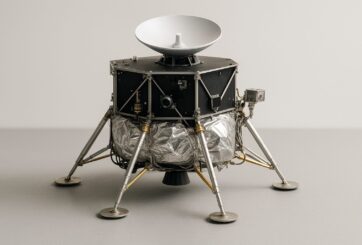
Georgia Tech researchers have been selected by NASA to lead a $7.5 million center that will study the lunar environment and the generation and properties of volatiles and dust. The Center for Lunar Environment and Volatile Exploration Research (CLEVER) will be led by Thomas Orlando, professor in the School of Chemistry and Biochemistry. CLEVER is the successor to Orlando’s pioneering REVEALS (Radiation Effects on Volatiles and Exploration of Asteroids and Lunar Surfaces) center, and both are part of NASA’s Solar System Exploration Research Virtual Institute (SSERVI)…
… Tokyo Tech, Tohoku University, Fujitsu, and RIKEN. Tokyo Institute of Technology (Tokyo Tech), Tohoku University, Fujitsu Limited, and RIKEN today announced that they will embark on the research and development of a distributed training of Large Language Models (LLM) [1]on supercomputer Fugaku in May 2023, within the scope of the initiatives for use of Fugaku defined by Japanese policy. LLMs are AI models for deep learning that serve as the core of generative AI including ChatGPT[2]. The four organizations aim to improve…
… in would-be superconductor. Precision measurements reveal connection between electron density and atomic arrangements in charge-ordered states of a superconducting copper-oxide material. What makes some materials carry current with no resistance? Scientists are trying to unravel the complex characteristics. Harnessing this property, known as superconductivity, could lead to perfectly efficient power lines, ultrafast computers, and a range of energy-saving advances. Understanding these materials when they aren’t superconducting is a key part of the quest to unlock that potential. “To solve the problem,…
– opens possibilities to see digital content in real-time. The world’s first flexible, transparent augmented reality (AR) display screen using 3D printing and low-cost materials has been created by researchers at the University of Melbourne, KDH Design Corporation and the Melbourne Centre for Nanofabrication (MCN). The development of the new display screen is set to advance how AR is used across a wide range of industries and applications. AR technology overlays digital content onto the real world, enhancing the user’s…
 Feedback


