
Young stars ejecting plasma could give us clues into the Sun’s past Kyoto, Japan — Down here on Earth we don’t usually notice, but the Sun is frequently ejecting huge masses of plasma into space. These are called coronal mass ejections (CMEs). They often occur together with sudden brightenings called flares, and sometimes extend far enough to disturb Earth’s magnetosphere, generating space weather phenomena including auroras or geomagnetic storms, and even damaging power grids on occasion. Scientists believe that when…

Research led by Chemnitz University of Technology reveals electronic defect landscape in organic solar cells and describes the density of states of these cells for the first time using a power law – publication in the prestigious journal Physical Review Letters. Researchers from the Professorship of Optics and Photonics of Condensed Matter (headed by Prof. Dr. Carsten Deibel) of Chemnitz University of Technology and other partner institutions are currently intensively working together on solar cells made of novel organic semiconductors,…
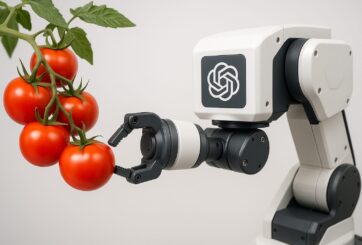
EPFL researchers have used the popular large language model Chat-GPT-3 to develop a robotic gripper for harvesting tomatoes, in a first demonstration of the artificial intelligence tool’s potential for collaborating with humans. With their ability to process vast amounts of text data, and to use this information to answer prompts, neural networks known as large language models (LLMs) like Chat-GPT have been making headlines for their potential to change the way we write, learn, and even make art. Now, EPFL researchers…
Quantum information (QI) processing may be the next game changer in the evolution of technology, by providing unprecedented computational capabilities, security and detection sensitivities. Qubits, the basic hardware element for quantum information, are the building block for quantum computers and quantum information processing, but there is still much debate on which types of qubits are actually the best. Research and development in this field is growing at astonishing paces to see which system or platform outruns the other. To mention…
Discovering ‘axions’ could help answer one of the most puzzling questions in physics. One of the most high-profile mysteries in physics today is what scientists refer to as the “Strong CP Problem.” Stemming from the puzzling phenomenon that neutrons do not interact with electric fields despite being made up of quarks—smaller, fundamental particles that carry electric charges—the Strong CP Problem puts into question the Standard Model of physics, or the set of theories scientists have been using to explain the…
DFKI develops innovative AI technologies for autonomous robots to recover munitions. More than one million tons of munitions dumped in the North and Baltic Seas during and after the two world wars posing a threat to both humans and the environment. So far, trained divers had to recover the ammunition. In the future, however, robots will take on this challenging and potentially dangerous task. The technologies required for this are being developed by the Robotics Innovation Center of the German…
An international research team has succeeded for the first time in measuring the electron spin in matter – i.e., the curvature of space in which electrons live and move – within “kagome materials“, a new class of quantum materials. The results obtained – published in Nature Physics – could revolutionise the way quantum materials are studied in the future, opening the door to new developments in quantum technologies, with possible applications in a variety of technological fields, from renewable energy to biomedicine, from electronics to quantum computers. Success was achieved by an international…
A new approach to optical communication that can be deployed with conventional technology. The patterns of light hold tremendous promise for a large encoding alphabet in optical communications, but progress is hindered by their susceptibility to distortion, such as in atmospheric turbulence or in bent optical fibre. Now researchers at the University of the Witwatersrand (Wits) have outlined a new optical communication protocol that exploits spatial patterns of light for multi-dimensional encoding in a manner that does not require the patterns…
An international research team makes a breakthrough in physics. An international team led by researchers at Nankai University in China and at University of Zagreb in Croatia, along with team at the Institut national de la recherche scientifique (INRS) in Canada, led by Roberto Morandotti has made an important breakthrough in the study of topological phases. Their findings were recently published in Nature Physics – a journal published by Nature Publishing Group. In the last decade, topological photonics has attracted increasing…
Quantum computing uses the principles of quantum mechanics to encode and elaborate data, meaning that it could one day solve computational problems that are intractable with current computers. While the latter work with bits, which represent either a 0 or a 1, quantum computers use quantum bits, or qubits – the fundamental units of quantum information. “With applications ranging from drug discovery to optimization and simulations of complex biological systems and materials, quantum computing has the potential to reshape vast…
A new antenna technology developed at Utah State University will soon be tested by a national wireless provider for a pilot study that could revolutionize the telecommunications industry. Bedri Cetiner, a professor of electrical engineering, patented a new antenna called a multifunctional reconfigurable antenna that can adapt to locate a signal’s direction and frequency. For more than a century, conventional antenna equipment was only capable of broadcasting and receiving signals in all directions. Cetiner’s design is more efficient because it…
Researches from Stuttgart are pioneers in E-band-research. This month, the EIVE nanosatellite will be sent into space on an exploration tour. A research team based at the University of Stuttgart is investigating rapid data transmission in a frequency band that has hardly been utilized so far. This is a milestone for future high-speed data communication networks in space. Later this month, after four years of development and testing, a research team based at the University of Stuttgart will send the…
… and further new developments at Laser World of Photonics. At the Munich trade show, the Ferdinand-Braun-Institut will be exhibiting, among other things, a robotic arm with a novel direct diode laser system for 3D printing. It will also present its diode laser and UV-LED portfolio – with advances in chip technology as well as modules and systems. Once again, the Ferdinand-Braun-Institut, Leibniz-Institut für Höchstfrequenztechnik (FBH) will present its complete range of services at Laser World of Photonics in Munich…
… could improve performance of quantum computers and artificial intelligence. U of M researchers’ device is more energy efficient and versatile than past models. A University of Minnesota Twin Cities-led team has developed a new superconducting diode, a key component in electronic devices, that could help scale up quantum computers for industry use and improve the performance of artificial intelligence systems. Compared to other superconducting diodes, the researchers’ device is more energy efficient; can process multiple electrical signals at a…
New simulations suggest, for the first time, that cocoons of debris around dying stars likely emit gravitational waves Cocoons form as a massive star sheds debris while collapsing into a black hole LIGO might be able to detect these gravitational waves from cocoons in upcoming runs So far, astrophysicists have only detected gravitational waves from binary systems — the mergers of either two black holes, two neutron stars or one of each. Although astrophysicists theoretically should be able to detect…
Researchers have detected complex organic molecules in a galaxy more than 12 billion light-years away from Earth – the most distant galaxy in which these molecules are now known to exist. Thanks to the capabilities of the recently launched James Webb Space Telescope and careful analyses from the research team, a new study lends critical insight into the complex chemical interactions that occur in the first galaxies in the early universe. University of Illinois Urbana-Champaign astronomy and physics professor Joaquin…
Aircraft that routinely fly over bodies of water around the world to monitor pollution could in future not only detect oil and chemical spills on the high seas, in coastal waters and on beaches, but also plastic waste floating on the surface of the water. In the PlasticObs+ project, a consortium led by the German Research Center for Artificial Intelligence (DFKI) is working to develop the first airborne monitoring of larger, contiguous marine areas that continuously detects plastic in waters…
 Feedback


