
Young stars ejecting plasma could give us clues into the Sun’s past Kyoto, Japan — Down here on Earth we don’t usually notice, but the Sun is frequently ejecting huge masses of plasma into space. These are called coronal mass ejections (CMEs). They often occur together with sudden brightenings called flares, and sometimes extend far enough to disturb Earth’s magnetosphere, generating space weather phenomena including auroras or geomagnetic storms, and even damaging power grids on occasion. Scientists believe that when…

International research team achieves advances in periodic oscillations and transportation for optical pulses, with potential for next-gen optical communications and signal processing. Full coherent control of wave transport and localization is a long-sought goal in wave physics research, which encompasses many different areas from solid-state to matter-wave physics and photonics. One among the most important and fascinating coherent transport effects is Bloch oscillation (BO), which refers to the periodic oscillatory motion of electrons in solids under a direct current (DC)-driving…
Why does the universe contain matter and (virtually) no antimatter? The BASE international research collaboration at the European Organisation for Nuclear Research (CERN) in Geneva, headed by Professor Dr Stefan Ulmer from Heinrich Heine University Düsseldorf (HHU), has achieved an experimental breakthrough in this context. It can contribute to measuring the mass and magnetic moment of antiprotons more precisely than ever before – and thus identify possible matter-antimatter asymmetries. BASE has developed a trap, which can cool individual antiprotons much…
Researchers at Leibniz University Hannover send entangled photons and laser pulses of the same color over a single optical fiber for the first time. Four researchers from the Institute of Photonics at Leibniz University Hannover have developed a new transmitter-receiver concept for transmitting entangled photons over an optical fiber. This breakthrough could enable the next generation of telecommunications technology, the quantum Internet, to be routed via optical fibers. The quantum Internet promises eavesdropping-proof encryption methods that even future quantum computers…
Microscope reveals tiniest cell processes. Research team including Göttingen University develops high-resolution fluorescence microscope. What does the inside of a cell really look like? In the past, standard microscopes were limited in how well they could answer this question. Now, researchers from the Universities of Göttingen and Oxford, in collaboration with the University Medical Center Göttingen (UMG), have succeeded in developing a microscope with resolutions better than five nanometres (five billionths of a metre). This is roughly equivalent to the…
Two new early career research groups bolster Stuttgart’s quantum photonics research. The first Junior Research Groups for Quantum Photonics have started work at the Carl-Zeiss-Stiftung Center for Quantum Photonics (CZS Center QPhoton), where three universities have been conducting joint research into new quantum technologies since 2022. They are headed by physicist Dr. Laëtitia Farinacci and physicist Dr. Stephan Welte respectively and are based at the University of Stuttgart. Stuttgart’s strong quantum research offers both groups ideal conditions. Dr. Laëtitia Farinacci…
The newly founded Robotics Institute Germany (RIG) has officially begun its operations with an exciting kickoff event. Led by the Technical University of Munich (TUM) and the Karlsruhe Institute of Technology (KIT), the consortium unites research, resources and infrastructures and aims to make Germany the world’s leading location for AI-based robotics. The University of Stuttgart is a founding partner and participates in the RIG with the Institutes for Artificial Intelligence and for Control Engineering of Machine Tools and Manufacturing Units…
Acquisition of aurora spectral images succeeded. Auroras are natural luminous phenomena caused by the interaction of electrons falling from the sky and the upper atmosphere. Most of the observed light consists of emission lines of neutral or ionized nitrogen and oxygen atoms and molecular emission bands, and the color is determined by the transition energy levels, molecular vibrations and rotations. There is a variety of characteristic colors of auroras, such as green and red, but there are multiple theories about…
Specific physical human-robot interactions are increasingly required in the manufacturing industry, the professional service sector, and healthcare. This necessitates improvements in comfort and convenience as well as in communication between humans and machines. Robots need to be able to predict human actions and recognize intentions. And that calls for flexible metamaterials, and more specifically, flat metasurface antennas with highly integrated electronics that allow for sensing of the near environment. The Fraunhofer FHR has teamed up with six partners in the…
Two-dimensional nano-semiconductors advancing quantum technology. Quantum technology is quantifiable in qubits, which are the most basic unit of data in quantum computers. The operation of qubits is affected by the quantum coherence time required to maintain a quantum wave state. Scientists have hypothesized that moiré excitons — electron-hole pairs confined in moiré interference fringes which overlap with slightly offset patterns — may function as qubits in next-generation nano-semiconductors. However, due to diffraction limits, it has not been possible to focus…
Machine learning shed new light on the formation history of our Milky Way: a surprising discovery about the evolution of our galaxy using data from the Gaia mission found a large number of ancient stars on orbits similar to that of our Sun. They formed the Milky Way’s thin disc already less than 1 billion years after the Big Bang, several billion years earlier than previously believed. The Milky Way galaxy has a large halo, a central bulge and bar,…
Finding and fixing errors in programme code still takes up a lot of developers’ time. A team at Graz University of Technology has now developed a solution that tackles the biggest time wasters. Modern software applications usually consist of numerous files and several million lines of code. Due to the sheer quantity, finding and correcting faults, known as debugging, is difficult. In many software companies, developers still search for faults manually – something which takes up a large proportion of…
CISPA researcher Adrian Dabrowski, together with colleagues from SBA Research and the University of Vienna, has discovered two major security vulnerabilities in the mobile protocol Voice over WiFi (VoWiFi), also known as WLAN calling. These vulnerabilities put the communication security of millions of mobile phone customers worldwide at risk. Updates to fix the problems have now been implemented. Modern smartphones can establish phone connections not only via mobile networks, but also via Wi-Fi, thus ensuring connectivity even in places with…
Devices could run on ocean bacteria and revolutionize aquatic robotics. Researchers at Binghamton University, State University of New York have developed a self-powered “bug” that can skim across the water, and they hope it will revolutionize aquatic robotics. Futurists predict that more than one trillion autonomous nodes will be integrated into all human activities by 2035 as part of the “internet of things.” Soon, pretty much any object — big or small — will feed information to a central database…
This groundbreaking research demonstrates a potential for quantum networks based on cold-atom integrated nanophotonic circuits. Researchers at Purdue University have trapped alkali atoms (cesium) on an integrated photonic circuit, which behaves like a transistor for photons (the smallest energy unit of light) similar to electronic transistors. These trapped atoms demonstrate the potential to build a quantum network based on cold-atom integrated nanophotonic circuits. The team, led by Chen-Lung Hung, associate professor of physics and astronomy at the Purdue University College…
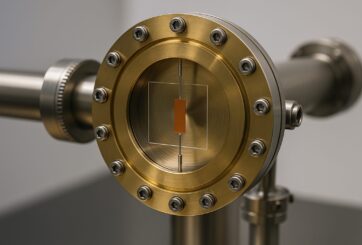
European XFEL creates exotic matter. Experiments at European XFEL generate states of matter close to what occurs in the interior of planets or in the imploding capsule of an inertial fusion reactor. At the same time, they open up a way to measure ultra-short phenomena. Sketch of the experimental setup and results. (c) European XFEL; Laurent Mercadier Exploring the extreme conditions reached in the interior of planets, including Earth, or during a fusion reaction, is a major challenge. By focusing…
A new generation of specialty optical fibers has been developed by physicists at the University of Bath in the UK to cope with the challenges of data transfer expected to arise in the future age of quantum computing. A new generation of specialty optical fibres has been developed by physicists at the University of Bath in the UK to cope with the challenges of data transfer expected to arise in the future age of quantum computing. Quantum technologies promise to…
 Feedback


