
From skill sets to an overall concept. At the International Conference on Robotics and Automation (ICRA2024) in Yokohama, Japan, geriatronics researchers from the Technical University of Munich (TUM) will present four new research projects – including work on gripping objects and new safety functionalities. For the first time, a generative AI model enables GARMI to perform telemedical applications, physiotherapy and nursing tasks on demand. Neural networks help GARMI to recognize and grasp objects precisely. For the first time, the assistance…
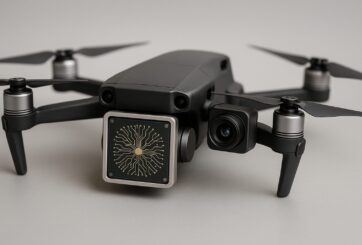
First neuromorphic vision and control of a flying drone. A team of researchers at Delft University of Technology has developed a drone that flies autonomously using neuromorphic image processing and control based on the workings of animal brains. Animal brains use less data and energy compared to current deep neural networks running on GPUs (graphic chips). Neuromorphic processors are therefore very suitable for small drones because they don’t need heavy and large hardware and batteries. The results are extraordinary: during…
Humboldt Professor Dieter Schmalstieg does research at the University of Stuttgart. Dieter Schmalstieg, Alexander von Humboldt Professor of Visual Computing at the University of Stuttgart, has been awarded the Humboldt Professorship. Germany’s most prestigious international research award was awarded to top researchers who have chosen to join German universities from abroad. Schmalstieg is working on augmented reality projects – with the aim of making people’s lives easier. “The Humboldt Professorship is a great honor and source of motivation,” says computer…
In the battle against climate change, mangroves are important allies – they store up to five times more carbon dioxide than other trees. A recently developed method from researchers in the member institutes of the U Bremen Research Alliance now provides more detailed information about the population of mangrove forests, which can help to protect these. Forest inventory with drone and ai. Photo: Jens Lehmkühler / U Bremen Research Alliance Dr. Arjun Chennu views mangroves as “super trees” because they…
A robot, designed to mimic the motion of a snail, has been developed by researchers at the University of Bristol. Adding to the increasing innovative new ways robots can navigate, the team, based at the Bristol Robotics Laboratory, fitted the robot with a sliding suction mechanism enabling the device to slide on water, a substitute of a snail’s mucus which also acts as an adhesive. The study, which was published today in the journal of Nature Communications, shows a novel…
A team from UPV participates in developing a new technique that allows studying turbulence in a completely different way from that used in the last 100 years. When we mention turbulence, the first association that springs to mind is often the uncomfortable jostling experienced during airplane travel. However, turbulence encompasses far more than just that; it’s a continuous presence in our daily lives. This term denotes the irregular and chaotic behavior exhibited by fluids, gases, and liquids in a wide…
… could lead to surfing a quantum internet. Researchers develop new methods to couple light to sound waves that glide on surfaces. Researchers at the University of Rochester used surface acoustic waves to overcome a significant obstacle in the quest to realize a quantum internet. In a new study published in Nature Communications, scientists from Rochester’s Institute of Optics and Department of Physics and Astronomy describe a technique for pairing particles of light and sound that could be used to faithfully convert information stored in quantum systems—qubits—to optical fields,…
Zoom is one of the most popular software products for video conferencing in the world. Every day, it is used by millions of users, trusting that their data is secure and that their conversations cannot be intercepted. So far, this depends on the Zoom servers, which also control group access: They verify if all group members are in possession of the meeting password. Now, there is another way of doing this: CISPA-Faculty Professor Dr. Cas Cremers, his postdoc Mang Zhao,…
In five years’ time, a large asteroid will fly very close to Earth – a unique opportunity to study it. Concepts for a national German small satellite mission are being examined at the University of Würzburg. The author of a disaster novel couldn’t have dreamed it up any better: On a Friday, the thirteenth of all days, the potentially dangerous asteroid (99942) Apophis will come extremely close to humanity. On 13 April 2029, there will only be around 30,000 kilometres…
The rapid advancement in photonic integrated circuits (PICs), whichcombine multiple optical devices and functionalities on a single chip, has revolutionized optical communications and computing systems. For decades, silicon-based PICs have dominated the field due to their cost-effectiveness and through their integration with existing semiconductor manufacturing technologies, despite their limitations with regard to their electro-optical modulation bandwidth. Nevertheless, silicon-on-insulator optical transceiver chips were successfully commercialized, driving information traffic through millions of glass fibers in modern datacenters. Recently, the lithium niobate-on-insulator wafer…
Researchers from the University of Basel and the NCCR SPIN have achieved the first controllable interaction between two hole spin qubits in a conventional silicon transistor. The breakthrough opens up the possibility of integrating millions of these qubits on a single chip using mature manufacturing processes. The race to build a practical quantum computer is well underway. Researchers around the world are working on a huge variety of qubit technologies. So far, there is no consensus on what type of…
Parkinson’s disease is one of the most prevalent neurodegenerative conditions. It causes motor impairments such as tremors, slow movement, muscle stiffness, and balance problems. The individual course of the disease cannot be predicted, so experts recommend close patient monitoring. New technological tools aim to facilitate communication between doctors, caregivers, and patients and improve the care situation. In the ParkProReakt project, researchers from Fraunhofer-Gesellschaft are working with partners to create a digital platform and app that, used with wearables, will track…
A four-legged robot trained with machine learning by EPFL researchers has learned to avoid falls by spontaneously switching between walking, trotting, and pronking – a milestone for roboticists as well as biologists interested in animal locomotion. With the help of a form of machine learning called deep reinforcement learning (DRL), the EPFL robot notably learned to transition from trotting to pronking – a leaping, arch-backed gait used by animals like springbok and gazelles – to navigate a challenging terrain with…
TUM professor uses ChatGPT for choreographies with flying robots. Prof. Angela Schoellig has proved that large language models can be used safely in robotics. ChatGPT develops choreographies for up to nine flying robots performing to selected music. An additional algorithm guarantees that the drones will fly safely. Prof. Angela Schoellig from the Technical University of Munich (TUM) uses ChatGPT to develop choreographies for swarms of drones to perform along to music. An additional safety filter prevents mid-air collisions. The researchers’…
Compact, low-power system opens doors for photon-efficient drone and satellite-based environmental monitoring and mapping. Researchers have developed a compact and lightweight single-photon airborne lidar system that can acquire high-resolution 3D images with a low-power laser. This advance could make single-photon lidar practical for air and space applications such as environmental monitoring, 3D terrain mapping and object identification. Single-photon lidar uses single-photon detection techniques to measure the time it takes laser pulses to travel to objects and back. It is particularly…
…for enhanced microscopy analysis. Observing individual cells through microscopes can reveal a range of important cell biological phenomena that frequently play a role in human diseases, but the process of distinguishing single cells from each other and their background is extremely time consuming — and a task that is well-suited for AI assistance. AI models learn how to carry out such tasks by using a set of data that are annotated by humans, but the process of distinguishing cells from…
 Feedback


