
New study reveals how human astroviruses bind to humans cells and paves the way for new therapies and vaccines Human astroviruses are a leading viral cause of the stomach bug—think vomiting, diarrhea, and fever. It often impacts young children and older adults, leading to vicious cycles of sickness and malnutrition, particularly for those in low and middle income countries. It’s very commonly found in wastewater studies, meaning it’s frequently circulating in communities. As of now, there are no vaccines for…

The mammalian cerebellum has long been associated almost exclusively with motor control, yet recent studies indicate that it also contributes to many higher brain functions. An international research team led by Prof. Dr Henrik Kaessmann from the Center for Molecular Biology of Heidelberg University (ZMBH) has now decoded the genetic programmes that control the development of cerebellar cell types before and after birth. The molecular biologists compared data from the mouse cerebellum with corresponding data from the opossum, revealing fundamental…
Controlling ferrimagnets by voltage… For the first time, an international research team with participants from Chemnitz University of Technology and IFW Dresden demonstrate 180° magnetization reversal purely by electric fields via magneto-ionic control of ferrimagnets– publication in Nature Nanotechnology The rapid increase in energy consumption related to digital technologies is a major global challenge. One key problem is the reduction of the energy consumption of magnetic data storage devices, which are used, for example, in large data centers. An international…
JDRF funds creation of implant to automatically regulate blood glucose levels. Rice University bioengineers are using 3D printing and smart biomaterials to create an insulin-producing implant for Type 1 diabetics. The three-year project is a partnership between the laboratories of Omid Veiseh and Jordan Miller that’s supported by a grant from JDRF, the leading global funder of diabetes research. Veiseh and Miller will use insulin-producing beta cells made from human stem cells to create an implant that senses and regulates…
Walking blindfolded in a straight line is a difficult task. Most of the time, we end up running in circles. Fruit flies that are blind to motion have similar problems during free flight: They only manage to fly straight for short distances, as researchers at the Max Planck Institute of Neurobiology have now shown. Motion vision is thus the component of visual perception that contributes decisively to course control in fruit flies. Walking in straight line towards a tree is…
We remember things longer if we take breaks during learning, referred to as the spacing effect. Scientists at the Max Planck Institute of Neurobiology gained deeper insight into the neuronal basis for this phenomenon in mice. With longer intervals between learning repetitions, mice reuse more of the same neurons as before – instead of activating different ones. Possibly, this allows the neuronal connections to strengthen with each learning event, such that knowledge is stored for a longer time. Many of…
Researchers at the ImmunoSensation2 Cluster of Excellence at the University of Bonn, the University Hospital and the research center caesar have develop a method that allows using multi-focal images to reconstruct the movement of fast biological processes in 3D. In the past, many discoveries have been made because better, more accurate measurement methods have become available, making it possible to obtain data from previously unexplored phenomena. For example, high-resolution microscopy has begun to dramatically change our perspectives of cell function…
Based on the principle of interaction between matter and light, a new method has been developed to track and observe the Brownian motion of fast-moving nanometer-sized molecules, and measure the different fluorescence signals of each biological nanoparticle. The nanoparticle tracking analysis (NTA) system is the most commonly used nanoparticle quantification method in the world. It is a method that observes and tracks a group of nanoparticles in a captured image as a single particle unit. Recently, a POSTECH research team…
Researchers from The Hong Kong University of Science and Technology (HKUST) have decoded the chromosomal-level genome of a deep-sea gutless tubeworm and the genome of its co-living “partner” – a kind of bacteria that provide nutrients they generate from inorganic compounds to the worm for the first time, explaining how the pair adapts to the extreme habitat. Their discovery lays foundation for potential applications such as nutrient generation, biomaterial production and microbial growth control. Living in deep-sea hydrothermal vents and…
Göttingen researchers have developed mini-antibodies that efficiently block the coronavirus SARS-CoV-2 and its dangerous new variants. These so-called nanobodies bind and neutralize the virus up to 1000 times better than previously developed mini-antibodies. In addition, the scientists optimized their mini-antibodies for stability and resistance to extreme heat. This unique combination makes them promising agents to treat COVID-19. Since nanobodies can be produced at low costs in large quantities, they could meet the global demand for COVID-19 therapeutics. The new nanobodies…
Heat stress procures the capacity for remembering in plant cells. How a plant grows depends on its genetic blueprint on the one hand, and on how the environment influences molecular and physiological processes on the other. Of particular importance are the so-called meristems, those divisible tissues that contain the plant stem cells. The shoot apical meristem is crucial for the growth of the organs above ground. Researchers led by Bernd Mueller-Roeber at the Max Planck Institute of Molecular Plant Physiology…
For decades, a key brain area has been thought to merely regulate locomotion. Now, a research group at the Biozentrum, University of Basel, and the Friedrich Miescher Institut for Biomedical Research (FMI) has shown that the region is involved in much more than walking, as it contains distinct populations of neurons that control different body movements. The findings could help to improve certain therapies for Parkinson’s disease. Even the mundane act of walking requires complex movements such as postural changes…
Results show how neurons may be damaged by mutations in tau protein, a hallmark of Alzheimer’s and other dementias. Frontotemporal dementias are a group of fatal and debilitating brain disorders for which there are no cures. In an article published July 26 in Cell, Mount Sinai researchers describe how they were able to recreate much of the damage seen in a widely studied form of the disease by growing special types of cerebral organoids in petri dishes. This form of…
A research team headed by biomedical engineer Dr Britta Trappmann from the Max Planck Institute for Molecular Biomedicine in Münster, Germany, has developed a cell culture system in which, for the first time, a functional blood vessel system is able to grow within a framework made of synthetic material. The team investigated which material properties promote individual parameters of vessel formation – a step towards the futuristic vision of implantable artificial tissues. The study has been published in the journal…
Heidelberg chemists succeed in producing synthesis and complete characterisation for the first time. Silicon, a semi-metal, bonds in its natural form with four other elements and its three-dimensional structure takes the form of a tetrahedron. For a long time, it seemed impossible to achieve the synthesis and characterisation of a two-dimensional equivalent – geometrically speaking, a square. Now scientists from the field of Inorganic Chemistry at Heidelberg University have succeeded in producing a crystalline complex with such a configuration. PD…
For much of human history, animals and plants were perceived to follow a different set of rules than the rest of the universe. In the 18th and 19th centuries, this culminated in a belief that living organisms were infused by a non-physical energy or “life force” that allowed them to perform remarkable transformations that couldn’t be explained by conventional chemistry or physics alone. Scientists now understand that these transformations are powered by enzymes – protein molecules comprised of chains of…
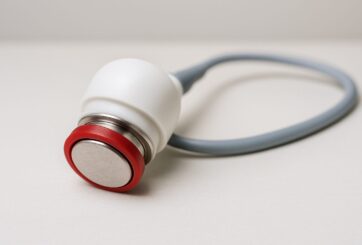
Houston Methodist Neurological Institute researchers from the department of neurosurgery shrunk a deadly glioblastoma tumor by more than a third using a helmet generating a noninvasive oscillating magnetic field that the patient wore on his head while administering the therapy in his own home. The 53-year-old patient died from an unrelated injury about a month into the treatment, but during that short time, 31% of the tumor mass disappeared. The autopsy of his brain confirmed the rapid response to the…
 Feedback


