
New study reveals how human astroviruses bind to humans cells and paves the way for new therapies and vaccines Human astroviruses are a leading viral cause of the stomach bug—think vomiting, diarrhea, and fever. It often impacts young children and older adults, leading to vicious cycles of sickness and malnutrition, particularly for those in low and middle income countries. It’s very commonly found in wastewater studies, meaning it’s frequently circulating in communities. As of now, there are no vaccines for…

New test developed as mechanism of skin cancer growth understood. A pioneering test which reliably predicts the spread or return of the most deadly form of skin cancer has been developed by a team of Newcastle scientists and clinicians. The technological advance came as they made a scientific breakthrough in understanding the mechanism of skin cancer growth. Led by Professor Penny Lovat at Newcastle University, UK, in association with the University spin out company AMLo Biosciences, the test offers reassurance…
Pathogens hijack host mitochondria. Mitochondria are known as energy suppliers for our cells, but they also play an important role in the defense against pathogens. They can initiate immune responses, and deprive pathogens of the nutrients they need to grow. A research team led by Lena Pernas of the Max Planck Institute for Biology of Ageing in Cologne, Germany, has now shown that pathogens can turn off mitochondrial defense mechanisms by hijacking a normal cellular response to stress. To survive,…
Every living thing requires energy. This is also true of microorganisms. This energy is frequently generated in the cells by respiration, that is by the combustion of organic compounds, in other words: food. During this process, electrons are released which the microorganisms then need to get rid of. In the absence of oxygen, microorganisms can use other methods to do so, including transporting the electrons to minerals outside the cells. Reduction rates vary considerably In oxygen-free soils or sediments, iron…
Research team develops new strategy to create molecular compounds without multi-step syntheses. For organic synthesis, i.e. for the production of carbon-based compounds, it is important to develop synthesis processes by which the desired product can be obtained in good yield. At the same time, the processes should be sustainable: for example, they should use environmentally friendly and readily available reagents, generate little waste and consume little energy. New synthesis processes that meet these criteria can serve as a springboard for…
A pioneering study has revealed how cellular compartments (organelles) are able to control how much they interact and cooperate. The study, led by Professor Michael Schrader and Dr Joseph Costello from the University of Exeter, builds on their recent discovery of how two cell organelles – called peroxisomes and the endoplasmic reticulum (ER) – associate with each other and work together. This cooperation is crucial for the production of specific lipids, which are essential for the function of nerve cells…
Approach harnesses newly identified method of cell death. Understanding how cells die is key to developing new treatments for many diseases, whether the goal is to make cancer cells die or keep healthy cells alive in the face of other illnesses, such as massive infections or strokes. Two new studies from Washington University School of Medicine in St. Louis have identified a previously unrecognized pathway of cell death — named lysoptosis — and demonstrate how it could lead to new…
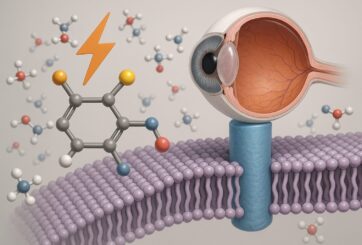
The biochemistry of vision is a complex process. The molecules supporting the visual pigments that allow us to see our surrounding reality have remained essentially invisible for scientists for a long time. The team led by Prof. Maciej Wojtkowski from the International Centre for Translational Eye Research (ICTER) has changed that, thanks to an innovative state-of-the art imaging device that they have developed. It is commonly said that eyes are the mirror of the soul; however, they are undoubtedly our…
A study led by microbiologists at TU Dresden shows that methanogenic archaea do not always need to form methane to survive. It is possible to bypass methanogenesis with the seemingly simpler and more environmentally friendly acetogenic energy metabolism. These new findings provide evidence that methanogens are not nearly as metabolically limited as previously thought, and suggest that methanogenesis may have evolved from the acetyl-CoA pathway – an important step towards fully understanding the ecology, biotechnology, and evolution of archaea. Archaea…
Use of patient-derived stem cells will enable high-throughput drug screening for potential therapeutics. The model’s development is described in the January issue of the journal Stem Cell Reports. NEI is part of the National Institutes of Health. “This ‘disease-in-a-dish’ system will help us understand how the absence of pigment in albinism leads to abnormal development of the retina, optic nerve fibers, and other eye structures crucial for central vision,” said Aman George, Ph.D., a staff scientist in the NEI Ophthalmic…
Hereditary diseases as well as cancers and cardiovascular diseases may be associated with a phenomenon known as genomic imprinting, in which only the maternally or paternally inherited gene is active. An international research team involving scientists at the Technical University of Munich (TUM), the Max Planck Institute for Molecular Genetics (MPIMG) in Berlin and Harvard University in Cambridge (USA) has now investigated the mechanisms responsible for the deactivation of the genes. Our cells contain the entire genetic information from our…
Those who are interested in climate change and wish to understand how algae in the oceans bonds with carbohydrates need to take a look at sugar. Dr. Jan-Hendrik Hehemann is sure of that. The glycobiologist and his research group within the U Bremen Research Alliance have been investigating complex sugars – so-called polysaccharides – and have made groundbreaking findings. Jan-Hendrik Hehemann is a rather shy person who chooses his words carefully. Yet when he talks about his research group’s findings,…
Theory shows how manipulating quasiparticles could improve chemical processes. Dig this: Catalysis appears to function because of holes. They’re not the physical kind. These quasiparticles, also known as electron holes, can be viewed as effective positive particles in the absence of negative electrons. And according to Rice University researchers, their action and propagation on heterogeneous catalyst particles allows the chemical reactions to happen. The Rice lab of chemist Anatoly Kolomeisky and his colleague Professor Srabanti Chaudhury at the Indian Institute of Science Education and Research (IISER)…
Tobacco hawkmoths (Manduca sexta) show an unusual preference for Datura plants that are already infested with leaf beetles when laying their eggs. The beetles and their larvae actually compete with tobacco hornworms, the larvae of Manduca, for food. Plants infested by beetles change their odor profile and increase the production of the substance alpha-copaene, making them, however, more attractive to tobacco hawkmoths. Despite food competition, tobacco hornworms seem to benefit from their mothers’ choice of such host plants because in…
Chemistry professor Martin Oschatz of the University of Jena (Germany) has been awarded a coveted Starting Grant by the European Research Council to support his pioneering work, the ERC announced today. This grant, which provides up to 1.5 million euros over five years, is given annually to young researchers to help them pursue an innovative project idea. As part of the “CILCat” project, Prof. Oschatz wishes to use the funding to revolutionise the process of catalysis, which originated in Jena….
… with potential impact on conditions like PTSD. Fish that glow; a tailor-made microscope; a new way to catalog science. After six years, researchers produce the first snapshots of memory in a living animal. What physical changes occur in the brain when a memory is made? A team of researchers at the University of Southern California has, for the first time, answered this question by inducing a memory in a larval zebrafish and then mapping changes in their transparent heads…
… previously thought to be irreversible. A study published by researchers at the University of Illinois Chicago describes a new method for analyzing pyroptosis — the process of cell death that is usually caused by infections and results in excess inflammation in the body — and shows that process, long thought to be irreversible once initiated, can in fact be halted and controlled. The discovery, which is reported in Nature Communications, means that scientists have a new way to study…
 Feedback


