



Feeding 9 Billion: Innovations in Agricultural Modeling
Researchers at Umeå University, Sweden, and Michigan State University, USA, have discovered a type of molecule that can kill chlamydia bacteria but spare bacteria that are important for health. The discovery opens the door for further research towards developing new antibiotics against chlamydia, the world’s most common bacterial sexually transmitted disease with 130 million cases a year.
“No one should have to live with chlamydia. But the problem is that the treatments we have today do not distinguish between dangerous and friendly bacteria. A growing problem is also that more and more bacteria are becoming resistant to today’s broad-acting antibiotics,” says the study’s lead author Barbara Sixt, associate professor at the Department of Molecular Biology at Umeå University, Sweden.
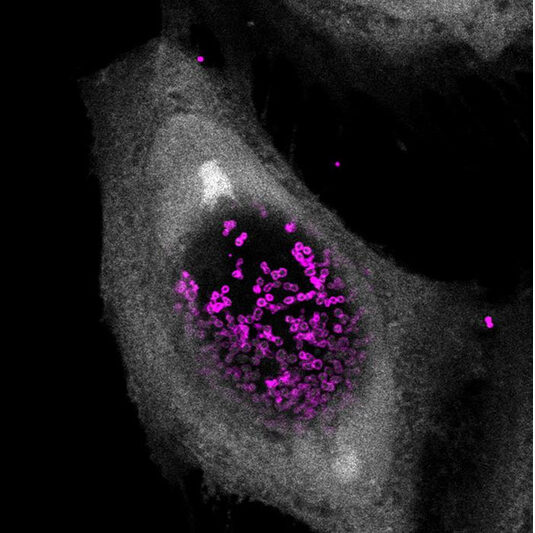
The bacterium that causes chlamydia, Chlamydia trachomatis, has very special properties. Just like viruses, it invades cells in the human body, which it then reshapes so that they give the bacterium a home where it can grow and multiply.
“We thought it could be possible to find a way to outsmart the bacterium’s lifestyle by interfering with its special properties and its interactions with human cells,” says the study’s first author Magnus Ölander, former postdoc at Umeå University.
The researchers searched through large collections of chemical molecules to find molecules that can eradicate the growth of the chlamydia bacterium in human cells in laboratory cultures. More than 60 possible anti-chlamydia molecules were identified. It was a matter of finding molecules that could selectively kill the chlamydia bacterium but at the same time be harmless to human cells and to beneficial bacteria that the body needs to stay healthy. After further refined studies, the researchers were able to identify a particularly potent molecule.
The molecule in question was found to be able to inhibit the bacterium’s ability to produce fatty acids, which are necessary for its growth.

“There is still a long way to go before we have a new treatment, but this finding may prove very important in developing new antibiotics that are both effective but at the same time gentle on the body”, says Barbara Sixt.
The research was carried out in collaboration with André Mateus and Björn Schröder at Umeå University, Sweden, and Jeremy Lohman at Michigan State University, United States of America.
Chlamydia often causes mild symptoms but if left untreated can cause long-term damage to the reproductive organs, especially in women. This can cause chronic pain and infertility and can have consequences for pregnancy and childbirth. Chlamydia may also contribute to the onset of cancer of the cervix and ovaries. Every year, about 25,000 people in Sweden are diagnosed with chlamydia, 130 million worldwide.
Original Publication
Authors: Magnus Ölander, Daniel Rea Vázquez, Karsten Meier, Aakriti Singh, Amanda Silva de Sousa, Fabiola Puértolas-Balint, Milica Milivojevic, Lieke Mooij, Johanna Fredlund, Eduard Calpe Bosch, María Rayón Díaz, Moa Lundgren, Karin van der Wal, Shaochun Zhu, André Mateus, Bjoern O. Schroeder, Jeremy R. Lohman and Barbara S. Sixt.
Journal: PLOS Biology
DOI: 10.1371/journal.pbio.3003123
Article Title: A multi-strategy antimicrobial discovery approach reveals new ways to treat Chlamydia
Article Publication Date: 29-Apr-2025
Original Source: https://doi.org/10.1371/journal.pbio.3003123
Media Contact
Ola Nilsson
Umea University
ola.nilsson@umu.se
Office: 46-907-866-982
Expert Contact
Barbara Sixt
Department of Molecular Biology, Umeå University
barbara.sixt@umu.se
Cell: +46 70 33 16 003
Recent discoveries by researchers at Umeå University and Michigan State University have identified a type of molecule that can selectively kill chlamydia bacteria, potentially leading to innovative chlamydia treatment options that spare beneficial bacteria.
The new molecule inhibits the ability of chlamydia bacteria, specifically Chlamydia trachomatis, to produce fatty acids necessary for their growth, offering a targeted approach to chlamydia treatment.
Effective chlamydia treatment is crucial as untreated chlamydia can lead to long-term reproductive health issues, including infertility and chronic pain, affecting millions of people worldwide.
Current broad-spectrum antibiotics are becoming less effective due to increasing bacterial resistance, highlighting the need for new antibiotics specifically designed to treat chlamydia without harming healthy bacteria.
Chlamydia often presents with mild symptoms, but if left untreated, it can cause serious complications including chronic pain, infertility, and increased risk of certain cancers, making effective treatment vital.
Source: EurekAlert!




Scientists uncover how support cells, once thought harmless, send damaging signals that weaken the heart Heart failure (HF) is one of the leading causes of death and disability worldwide, affecting millions of people and placing an enormous burden on healthcare systems. The disease occurs when the heart can no longer pump blood efficiently, leaving patients short of breath, fatigued, and at risk of life-threatening complications. For decades, scientists have focused on studying cardiomyocytes—the heart’s muscle cells responsible for pumping blood—believing…
European research team presents comprehensive review in Brain Medicine on tDCS, rTMS, and DBS for obsessive-compulsive disorder Lausanne, Switzerland – 28 October 2025. In a peer-reviewed article published today in Brain Medicine, a European research team presents a focused review of emerging neuromodulation techniques for treatment-resistant obsessive-compulsive disorder (OCD). The article, “Neuromodulation techniques in obsessive-compulsive disorder: Current state of the art,” examines how transcranial direct current stimulation (tDCS), repetitive transcranial magnetic stimulation (rTMS), and deep brain stimulation (DBS) are changing…
Lawsonia inermis, widely recognised as the source of henna dye used for colouring skin and fabrics, may soon have a life-saving medical application. Researchers at Osaka Metropolitan University have discovered that pigments derived from the plant could help combat liver fibrosis — a serious disease that leads to excessive scar tissue formation in the liver due to chronic injury. Understanding Liver Fibrosis Liver fibrosis occurs when prolonged liver damage — often from factors like alcohol abuse or unhealthy lifestyles —…
Study finds the molecule CCL5 is both protective and harmful, suggesting future drugs could target only its damaging effects Chronic kidney disease (CKD) is a progressive condition in which the kidneys gradually lose their ability to filter waste from the blood. It is a common health concern that affects an estimated 8–16% of the global population, particularly among older adults. CKD can arise from various causes, including glomerulonephritis, a group of diseases that damage the glomeruli, the tiny filtering units…
 Feedback
