



Feeding 9 Billion: Innovations in Agricultural Modeling
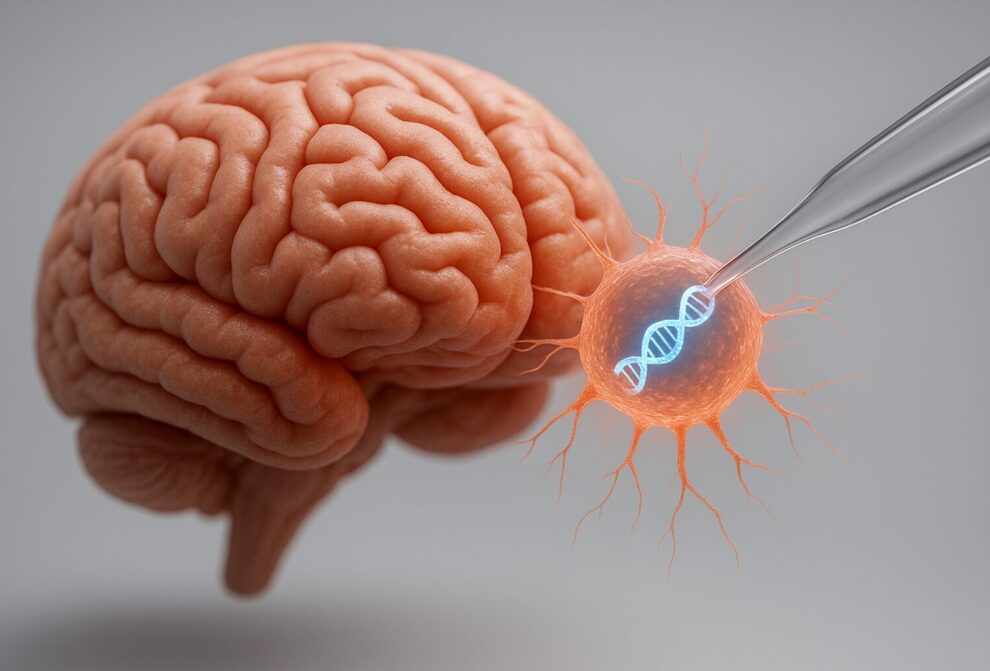
AI Generated Image
By reprogramming the behavior of brain cells, new gene therapy could stop Alzheimer’s at the source
Researchers at University of California San Diego School of Medicine have developed a gene therapy for Alzheimer’s disease that could help protect the brain from damage and preserve cognitive function. Unlike existing treatments for Alzheimer’s that target unhealthy protein deposits in the brain, the new approach could help address the root cause of Alzheimer’s disease by influencing the behavior of brain cells themselves.
Alzheimer’s disease affects millions of people around the world and occurs when abnormal proteins build up in the brain, leading to the death of brain cells and declines in cognitive function and memory. While current treatments can manage symptoms of Alzheimer’s, the new gene therapy aims to halt or even reverse disease progression.
Studying mice, the researchers found that delivering the treatment at the symptomatic stage of the disease preserved hippocampal-dependent memory, a critical aspect of cognitive function that is often impaired in Alzheimer’s patients. Compared to healthy mice of the same age, the treated mice also had a similar pattern of gene expression, suggesting that the treatment has the potential to alter the behavior of diseased cells to restore them to a healthier state.
While further studies will be required to translate these findings into human clinical trials, the gene therapy offers a unique and promising approach to mitigating cognitive decline and promoting brain health.
The study, published in Signal Transduction and Targeted Therapy, was led by senior author Brian Head, Ph.D., professor of anesthesiology at UC San Diego School of Medicine and Veterans Affairs research career scientist, and co-senior author Shanshan Wang, M.D. Ph.D., an assistant professor of anesthesiology at UC San Diego School of Medicine. The gene therapy technology was licensed by UC San Diego to Eikonoklastes Therapeutics in 2021. Eikonoklastes was granted Orphan Drug Designation (ODD) by the FDA for the use of the patented gene therapy in amyotrophic lateral sclerosis (ALS) also known as Lou Gehrig’s disease.
# # #
Original Publication
Authors: Dongsheng Wang, Andrei V. Chernov, Ryan Lam, Hongxia Wang, Wenxi Li, Xiaojing Li, Tiffany Duong, Shanshan Wang and Brian P. Head.
Journal: Signal Transduction and Targeted Therapy
DOI: 10.1038/s41392-025-02258-z
Media Contact
Miles Martin
University of California – San Diego
milesmartin@health.ucsd.edu
The research provides global estimates indicating that millions of people are affected by Alzheimer’s disease at various stages of the condition.
Clinical trials show that treatments like lecanemab and donanemab can potentially slow down the progression of early Alzheimer’s disease, offering hope for better management of the condition.
Caveolin-1 is important for maintaining neuronal health; its deficiency can lead to neurodegeneration and is linked to conditions like Alzheimer’s disease.
Source: EurekAlert!




Scientists uncover how support cells, once thought harmless, send damaging signals that weaken the heart Heart failure (HF) is one of the leading causes of death and disability worldwide, affecting millions of people and placing an enormous burden on healthcare systems. The disease occurs when the heart can no longer pump blood efficiently, leaving patients short of breath, fatigued, and at risk of life-threatening complications. For decades, scientists have focused on studying cardiomyocytes—the heart’s muscle cells responsible for pumping blood—believing…
European research team presents comprehensive review in Brain Medicine on tDCS, rTMS, and DBS for obsessive-compulsive disorder Lausanne, Switzerland – 28 October 2025. In a peer-reviewed article published today in Brain Medicine, a European research team presents a focused review of emerging neuromodulation techniques for treatment-resistant obsessive-compulsive disorder (OCD). The article, “Neuromodulation techniques in obsessive-compulsive disorder: Current state of the art,” examines how transcranial direct current stimulation (tDCS), repetitive transcranial magnetic stimulation (rTMS), and deep brain stimulation (DBS) are changing…
Lawsonia inermis, widely recognised as the source of henna dye used for colouring skin and fabrics, may soon have a life-saving medical application. Researchers at Osaka Metropolitan University have discovered that pigments derived from the plant could help combat liver fibrosis — a serious disease that leads to excessive scar tissue formation in the liver due to chronic injury. Understanding Liver Fibrosis Liver fibrosis occurs when prolonged liver damage — often from factors like alcohol abuse or unhealthy lifestyles —…
Study finds the molecule CCL5 is both protective and harmful, suggesting future drugs could target only its damaging effects Chronic kidney disease (CKD) is a progressive condition in which the kidneys gradually lose their ability to filter waste from the blood. It is a common health concern that affects an estimated 8–16% of the global population, particularly among older adults. CKD can arise from various causes, including glomerulonephritis, a group of diseases that damage the glomeruli, the tiny filtering units…
 Feedback
