
PCBs can be thought of as acting like a nervous system, forming a network that links the microchips mounted on the board and supplies them with power. One of…
Engineers at The University of Texas at Dallas have used advanced techniques to make the material graphene small enough to read DNA.Shrinking the size of a…
This effect, which carries important implications for improving the conductivity of electronics and other realms of materials science, was predicted six years…
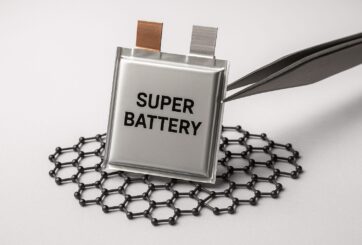
The European Research Council awards the ERC Starting Grant for top-level early-career scientists to Xinliang Feng, who is employed at the Max Planck Institute…
Award recipient Timo Thonhauser of Wake Forest University said current storage methods, such as compressing hydrogen into tanks, are unwieldy, making the…
More than 50 percent weight savings in aircraft construction is now possible using hypermodern production techniques. A process called 3-D laser sintering of…
Jak Chakhalian, Jian Liu, Derek Meyers and Benjamin Gray of the University of Arkansas and John W. Freeland and Phillip Ryan of the Advanced Photon Source at…
BASF and the Max Planck Institute for Polymer Research (MPI-P) opened their joint research and development platform, the Carbon Materials Innovation Center…
The findings could lead to advances in developing optical computers, sensors or lasers, say researchers Dr. Jie Gao and Dr. Xiaodong Yang, both assistant…
The finding, published in Nano Letters, could change the conventional wisdom that accommodating the strain inherent during the formation of epitaxial thin…
Federico Capasso and colleagues explain that the lenses used to focus light in eyeglasses, microscopes and other products use the same basic technology dating…
University of Iowa researchers have determined that thigh size in obese people is a reason their hip implants are more likely to fail.In a study, the team…
Carbon dots (C-dots) are light-emitting (luminescent) nanoparticles that can be used to track biological processes inside cells. They are less toxic than…
Near term, the technology could lead to better systems for growing and studying cells, including stem cells, in the laboratory. Long-term, the goal is to be…
Most materials will break when a force is applied to an imperfection in their structure — such as a notch or dislocation. The behavior of these imperfections,…
Hydrogen is crucial for the oil-refining industry and the production of essential chemicals such as the ammonia used in fertilizers. Since producing hydrogen…
 Feedback


