
A team of researchers at the Fraunhofer Institute for Production Technology IPT in Aachen has developed a hybrid additive manufacturing process that combines wire-based and powder-based laser cladding (LMD). The new process can be used to apply protective coatings of high-strength tool steel to workpieces and repair surface defects at low cost. The tool coatings produced in this way are more wear-resistant, resource-efficient and cost-efficient than those produced by other methods. Following successful test series with tool components, there are…
The Hallertau is Germany’s largest hop-growing region. During harvesting, hop bine chaff is left over, which is converted into environmentally friendly bio natural gas on site in a biogas plant. But that is not the end of the utilization chain for this fiber plant. Researchers at the German Institutes of Textile and Fiber Research Denkendorf (DITF) have used the plant-containing biogas digestate to produce a composite material that can be used to make furniture. Laminates are in great demand in…
A research team headed by biomedical engineer Dr Britta Trappmann from the Max Planck Institute for Molecular Biomedicine in Münster, Germany, has developed a cell culture system in which, for the first time, a functional blood vessel system is able to grow within a framework made of synthetic material. The team investigated which material properties promote individual parameters of vessel formation – a step towards the futuristic vision of implantable artificial tissues. The study has been published in the journal…
What happens when soft materials are compressed strongly? Researchers from the Max Planck Institute for Dynamic and Self-Organization, the University of Twente and Cornell University now revealed the morphology of creases created upon folding at micrometer scale. They revealed a dual folding mechanism driven by capillary forces, similar to wetting liquids, causing a T-shape folding profile. The unfolding leaves behind a scar which serves as a nucleation point for subsequent folds. Without damaging the material, it thereby enables a freely…
Pitt civil engineers use Pittsburgh to create energy usage model in commercial buildings. The building sector in the U.S. accounts for 39 percent of energy use, with commercial buildings responsible for about half of that. As cities grapple with climate change, making commercial buildings more efficient is a key part of the solution. Researchers at the University of Pittsburgh Swanson School of Engineering and the Mascaro Center for Sustainable Innovation used the City of Pittsburgh to create a model built…
Göttingen University researchers create new kind of environmentally friendly bioplastic with hydroplastic polymers. Plastics offer many benefits to society and are widely used in our daily life: they are lightweight, cheap and adaptable. However, the production, processing and disposal of plastics are simply not sustainable, and pose a major global threat to the environment and human health. Eco-friendly processing of reusable and recyclable plastics derived from plant-based raw materials would be an ideal solution. So far, the technological challenges have…
Reef Protection of Global Significance… The 14th International Coral Reef Symposium (ICRS) – the first virtual and climate-neutral world coral reef conference – ends on July 23, 2021. Around 1,300 participants from 80 countries were involved. A strategy paper demanding the saving of damaged coral reefs worldwide has been completed. “The first virtual conference in the 50-year history of world coral reef conferences has been a complete success,” says Professor Christian Wild happily. The head of the Marine Ecology group…
Heidelberg chemists succeed in producing synthesis and complete characterisation for the first time. Silicon, a semi-metal, bonds in its natural form with four other elements and its three-dimensional structure takes the form of a tetrahedron. For a long time, it seemed impossible to achieve the synthesis and characterisation of a two-dimensional equivalent – geometrically speaking, a square. Now scientists from the field of Inorganic Chemistry at Heidelberg University have succeeded in producing a crystalline complex with such a configuration. PD…
Research team develops new method to study astrophysical processes in the laboratory. In the depths of space, there are celestial bodies where extreme conditions prevail: Rapidly rotating neutron stars generate super-strong magnetic fields. And black holes, with their enormous gravitational pull, can cause huge, energetic jets of matter to shoot out into space. An international physics team with the participation of the Helmholtz-Zentrum Dresden-Rossendorf (HZDR) has now proposed a new concept that could allow some of these extreme processes to…
For much of human history, animals and plants were perceived to follow a different set of rules than the rest of the universe. In the 18th and 19th centuries, this culminated in a belief that living organisms were infused by a non-physical energy or “life force” that allowed them to perform remarkable transformations that couldn’t be explained by conventional chemistry or physics alone. Scientists now understand that these transformations are powered by enzymes – protein molecules comprised of chains of…
Using data from the MUSE instrument, researchers at the Leibniz Institute for Astrophysics Potsdam (AIP) succeeded in detecting extremely faint planetary nebulae in distant galaxies. The method used, a filter algorithm in image data processing, opens up new possibilities for cosmic distance measurement – and thus also for determining the Hubble constant. Planetary nebulae are known in the neighbourhood of the Sun as colourful objects that appear at the end of a star’s life as it evolves from the red…
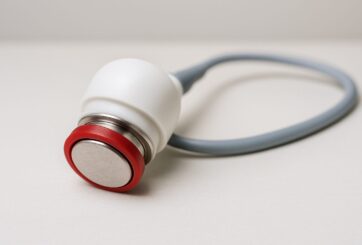
Houston Methodist Neurological Institute researchers from the department of neurosurgery shrunk a deadly glioblastoma tumor by more than a third using a helmet generating a noninvasive oscillating magnetic field that the patient wore on his head while administering the therapy in his own home. The 53-year-old patient died from an unrelated injury about a month into the treatment, but during that short time, 31% of the tumor mass disappeared. The autopsy of his brain confirmed the rapid response to the…
Every innovative drug starts with the search for an active substance targeting key players in disease-related processes. However, there is no perfect drug that affects the one target in the body: no effect without side effects, as also described in most medicine information leaflets. A group of chemists and biologists led by Prof. Herbert Waldmann and Dr. Slava Ziegler at the Max Planck Institute of Molecular Physiology in Dortmund have now combined different strategies to find bioactive molecules and identified…
Researchers at the University of Regensburg track the first step of the reaction of one single dye pigment with oxygen at unprecedented resolution. Why is it that the colours of a t-shirt fade over time in the sun? Why do you get a sunburn, and why do the leaves of a tree turn brown in the autumn? These questions all have one theme in common, the interplay between dye pigments and ambient oxygen. Every child learns about this chemical reaction…
Harnessing the combined power of Vitamin C and TET proteins may give scientists a leg up in treating autoimmune diseases. You can’t make a banana split without bananas. And you can’t generate stable regulatory T cells without Vitamin C or enzymes called TET proteins, it appears. Regulatory T cells (Tregs) help control inflammation and autoimmunity in the body. Tregs are so important, in fact, that scientists are working to generate stable induced Tregs (iTregs) in vitro for use as treatments…
A surprising discovery at TU Wien could help solve the riddle of high-temperature superconductivity: A famous “strange metal” turned out to be a superconductor. At low temperatures, certain materials lose their electrical resistance and conduct electricity without any loss – this phenomenon of superconductivity has been known since 1911, but it is still not fully understood. And that is a pity, because finding a material that would still have superconducting properties even at high temperatures would probably trigger a technological…
 Feedback


