
Northern and Western Europe are characterized by hedge landscapes. A Europe-wide study, in which the University of Bremen is involved, has investigated the effect of the climate and care on biodiversity in said hedges. The result: Climate change has an effect here too. In Northern and Western Europe, hedges often cover landscapes that are lacking forests like a tight net. Otherwise isolated habitats, such as forests, are connected to each other by the hedges. Many forest plant types, such as…
Inspired by nature: Electro-biocatalytic CO2 fixing replaces fossil resources. Making important raw materials for fine chemicals out of carbon dioxide really works. As part of the Max Planck collaborative project eBioCO2n, a team of researchers from Fraunhofer IGB have successfully performed a first ever fixation of CO2 via a multi-enzyme enzyme reaction driven by electricity yielding a prospective intermediate for the chemical industry. The process for electro-biocatalytic CO2 fixation was recently published and is considered a “hot paper.” Burning fossil…
Every living thing requires energy. This is also true of microorganisms. This energy is frequently generated in the cells by respiration, that is by the combustion of organic compounds, in other words: food. During this process, electrons are released which the microorganisms then need to get rid of. In the absence of oxygen, microorganisms can use other methods to do so, including transporting the electrons to minerals outside the cells. Reduction rates vary considerably In oxygen-free soils or sediments, iron…
The upcoming satellite experiment LiteBIRD is expected to probe the physics of the very early Universe if the primordial inflation happened at high energies. But now, a new paper in Physical Review Letters shows it can also test inflationary scenarios operating at lower energies. Cosmologists believe that in its very early stages, the Universe underwent a very rapid expansion called “cosmic inflation”. A success story of this hypothesis is that even the simplest inflationary models are able to accurately predict…
Research team develops new strategy to create molecular compounds without multi-step syntheses. For organic synthesis, i.e. for the production of carbon-based compounds, it is important to develop synthesis processes by which the desired product can be obtained in good yield. At the same time, the processes should be sustainable: for example, they should use environmentally friendly and readily available reagents, generate little waste and consume little energy. New synthesis processes that meet these criteria can serve as a springboard for…
A pioneering study has revealed how cellular compartments (organelles) are able to control how much they interact and cooperate. The study, led by Professor Michael Schrader and Dr Joseph Costello from the University of Exeter, builds on their recent discovery of how two cell organelles – called peroxisomes and the endoplasmic reticulum (ER) – associate with each other and work together. This cooperation is crucial for the production of specific lipids, which are essential for the function of nerve cells…
Approach harnesses newly identified method of cell death. Understanding how cells die is key to developing new treatments for many diseases, whether the goal is to make cancer cells die or keep healthy cells alive in the face of other illnesses, such as massive infections or strokes. Two new studies from Washington University School of Medicine in St. Louis have identified a previously unrecognized pathway of cell death — named lysoptosis — and demonstrate how it could lead to new…
New platform can program the transformation of 2D stretchable surfaces into specific 3D shapes. Flat materials that can morph into three-dimensional shapes have potential applications in architecture, medicine, robotics, space travel, and much more. But programming these shape changes requires complex and time-consuming computations. Now, researchers from the Harvard John A. Paulson School of Engineering and Applied Sciences (SEAS) have developed a platform that uses machine learning to program the transformation of 2D stretchable surfaces into specific 3D shapes. “While machine learning…
In the field of quantum metrology, scientists are developing novel measurement schemes that benefit from quantum features and are more precise and sensitive than classical conventional methods. The team of researchers from Tampere University, Finland, and the National Research Council of Canada has now shown how a simple and powerful technique called two-photon N00N states can be used to create spatially structured quantum states of light that can go beyond the classical limit in rotation estimation. The results are published…
Insights into the atomistic dynamics of emerging solid-state batteries will help speed their evolution. Materials scientists at Duke University have revealed paddlewheel-like molecular dynamics that help push sodium ions through a quickly evolving class of solid-state batteries. The insights should guide researchers in their pursuit of a new generation of sodium-ion batteries to replace lithium-ion technology in a wide range of applications such as data centers and home energy storage. The results appeared online November 10 in the journal Energy…
Using observations of Centaurus A, a nearby elliptical galaxy, obtained with the Gaia space telescope and ground-based instruments under the PISCeS survey, a team of astronomers led by the University of Arizona presents an unprecedented number of globular. A survey completed using a combination of ground and space-based telescopes yielded a treasure trove of previously unknown globular clusters – old, dense groups of thousands of stars that all formed at the same time – in the outer regions of the elliptical…
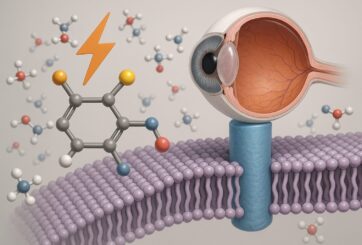
The biochemistry of vision is a complex process. The molecules supporting the visual pigments that allow us to see our surrounding reality have remained essentially invisible for scientists for a long time. The team led by Prof. Maciej Wojtkowski from the International Centre for Translational Eye Research (ICTER) has changed that, thanks to an innovative state-of-the art imaging device that they have developed. It is commonly said that eyes are the mirror of the soul; however, they are undoubtedly our…
A study led by microbiologists at TU Dresden shows that methanogenic archaea do not always need to form methane to survive. It is possible to bypass methanogenesis with the seemingly simpler and more environmentally friendly acetogenic energy metabolism. These new findings provide evidence that methanogens are not nearly as metabolically limited as previously thought, and suggest that methanogenesis may have evolved from the acetyl-CoA pathway – an important step towards fully understanding the ecology, biotechnology, and evolution of archaea. Archaea…
An international team of astronomers including a number of scientists from the Max Planck Institute for Radio Astronomy in Bonn, Germany, has announced the results of a comprehensive search for a background of low-frequency gravitational waves. These light-year-scale ripples, a consequence of general relativity, permeate all of spacetime and could originate from mergers of the most massive black holes in the Universe or from events occurring soon after the formation of the Universe in the Big Bang. The International Pulsar…
Study reveals why some attempts to convert the greenhouse gas into fuel have failed, and offers possible solutions. If researchers could find a way to chemically convert carbon dioxide into fuels or other products, they might make a major dent in greenhouse gas emissions. But many such processes that have seemed promising in the lab haven’t performed as expected in scaled-up formats that would be suitable for use with a power plant or other emissions sources. Now, researchers at MIT…
Use of patient-derived stem cells will enable high-throughput drug screening for potential therapeutics. The model’s development is described in the January issue of the journal Stem Cell Reports. NEI is part of the National Institutes of Health. “This ‘disease-in-a-dish’ system will help us understand how the absence of pigment in albinism leads to abnormal development of the retina, optic nerve fibers, and other eye structures crucial for central vision,” said Aman George, Ph.D., a staff scientist in the NEI Ophthalmic…
 Feedback


