
A new organoid model of the dopaminergic system sheds lights on its intricate functionality and potential implications for Parkinson’s disease. The model, developed by the group of Jürgen Knoblich at the Institute of Molecular Biotechnology (IMBA) of the Austrian Academy of Sciences, replicates the dopaminergic system’s structure, connectivity, and functionality. The study, published on December 5 in Nature Methods, also uncovers the enduring effects of chronic cocaine exposure on the dopaminergic circuit, even after withdrawal. A completed run, the early…
In cooperation with Munich Quantum Valley, the Leibniz Supercomputing Centre is procuring a quantum computer based on trapped-ion technology. Quantum technology for research and development: Together with Munich Quantum Valley (MQV), the Leibniz Supercomputing Centre (LRZ) of the Bavarian Academy of Sciences and Humanities (BAdW) is procuring another quantum computer for its Quantum Integration Centre (QIC). The computer, which uses 20 qubits implemented in an ion trap, was developed by the Austrian-based start-up Alpine Quantum Technologies (AQT). The new system…
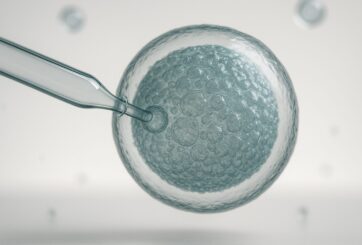
International Team publishes results in “Nature Chemistry“. A groundbreaking study published in “Nature Chemistry” reveals a remarkable leap in the synthesis of artificial cells using synthetic materials, achieved by an international team led by Dr. Andrea Belluati, Prof. Nico Bruns (both TU Darmstadt) and Dr. Sètuhn Jimaja (University of Fribourg). These cells, crafted through a process called biocatalytic polymerization-induced self-assembly (bioPISA), represent a significant advancement in the field of synthetic biology. Artificial cells are microscopic structures that emulate the properties…
In patients affected by myelodysplastic neoplasms, the body does not produce enough functional blood cells. Patients suffer from anaemia – a lack of red blood cells and haemoglobin – which can progress to acute leukaemia. Imetelstat, a new agent beyond the current standard of care, may help to avoid blood transfusions, which can be a burden for MDS patients, especially over a long period of time. This effect was demonstrated in a clinical trial at 118 sites in 17 countries…
New data analyses allow better evaluation of climate models. Scientists use climate models to simulate past climate, in order to determine how and why it has changed. As a result of man-made climate change it is not possible to apply models directly to the future, because the boundary conditions have changed. “We thus have to simulate the past in order to test the models. Simulations of climate from the Last Glacial Maximum, the LGM, are therefore important in the evaluation…
Bayreuth researchers have found ways to control tiny particles in liquids using magnetic patterns. The research results have now been published in the renowned journal „Nature Communications“ under the title „Simultaneous and independent topological control of identical microparticles in non-periodic energy landscapes“. Overall, the simultaneous and independent transport of colloidal particles over magnetic patterns can be of great use in various fields of science and technology to produce customised materials, improve biomedical applications, perform laboratory tests or investigate fundamental scientific…
Two satellites successfully launched from California. Technische Universität Berlin sets new standards in the development of small satellites with the NanoFF project. On Friday, 1 December 2023 two small satellites produced by Technische Universität Berlin were successfully put into low Earth orbit from Vandenberg Space Force Base in California with a Falcon 9 rocket. The primary mission objective is a pioneering performance for TU Berlin, as project leader Jens Freymuth explains: “NanoFF is an acronym for nanosatellites in formation flight….
Atmospheric water harvester provides water to arid communities using hygroscopic gel and salts. More than 2.2 billion people currently live in water-stressed countries, and the United Nations estimates that 3.5 million die every year from water-related diseases. Because the areas most in need of improved drinking water are also located in some of the sunniest places in the world, there is strong interest in harnessing sunlight to help obtain clean water. Researchers from Shanghai Jiao Tong University in China developed…
Bacterial hijack mechanisms as advanced genetic tools. Researchers have uncovered the intricate molecular mechanism used by parasitic phytoplasma bacteria, known for inducing ‘zombie-like’ effects in plants. This detailed revelation opens new horizons for groundbreaking applications in biotechnology and even in biomedicine. The team led by Professor Saskia Hogenhout at the John Innes Centre, in partnership with The Sainsbury Laboratory, has employed X-ray crystallography to unveil the structure and functional mechanism of SAP05. This molecule plays a crucial role in bridging…
Study reveals how snot facilitates infection. New study shows thicker mucus supercharges bacteria’s ability to self-organize into swarms to spread infection. Sniffles, snorts and blows of runny noses are the hallmarks of cold and flu season — and that increase in mucus is exactly what bacteria use to mount a coordinated attack on the immune system, according to a new study from researchers at Penn State. The team found that the thicker the mucus, the better the bacteria are able…
The molecules, known as acenes, could be useful as organic light-emitting diodes or solar cells, among other possible applications. Chains of fused carbon-containing rings have unique optoelectronic properties that make them useful as semiconductors. These chains, known as acenes, can also be tuned to emit different colors of light, which makes them good candidates for use in organic light-emitting diodes. The color of light emitted by an acene is determined by its length, but as the molecules become longer, they…
To speed up their growth, leukemia cells typically activate the recycling of cellular structures – enabling them to dispose of defective components and better supply themselves with building materials. Researchers at Goethe University Frankfurt have now shown that leukemia cells with a very common mutation activate specific genes that are important for this recycling process. Their findings, published in the journal Cell Reports, open up new therapeutic options for the future. In a recent study, scientists led by Professor Stefan…
“HySecunda” aims to optimize production, storage, capacity building and certification of H2. South Africa could play an important role in the coming years as a reliable producer of green hydrogen — including as a supplier for Germany. However, the storage and distribution of this resource currently poses challenges. This is where the recently launched Fraunhofer joint research project HySecunda comes in, which is a cooperation between nine Fraunhofer institutes and the Fraunhofer Academy. The project aims to find optimized solutions…
TU Freiberg clarifies basis for innovative PFAS filter made of clay. PFAS filters available for industrial waste are usually made of activated carbon (PFAS = perfluorinated and polyfluorinated alkyl compounds). As this is comparatively expensive, researchers are looking for alternative filter materials for the so-called “eternal toxins”, whose hazardous residues only degrade very slowly in the environment. A team from the TU Bergakademie Freiberg is now proposing a clay made of bentonite modified with organic substances as a possible PFAS…
Researchers led by Göttingen University determine factors for chemical development in crater lakes on Earth. In southern Germany just north of the Danube, there lies a large circular depression between the hilly surroundings: the Nördlinger Ries. Almost 15 million years ago, an asteroid struck this spot. Today, the impact crater is one of the most useful analogues for asteroid craters on early Mars. Studying the deposits of the former lake that formed in the crater is particularly informative. These deposits…
Publication on Optically Controlled Magnetic Fields. Stimulated by corkscrew-shaped radiation: physicists at the University of Duisburg-Essen and their cooperating partners have discovered that tiny graphene sheets can become electromagnets under infrared radiation. Nature Communications reports on the findings. The sample itself is invisible to the human eye: there are tiny discs on a 2 x 2 millimeter surface, each with a diameter of 1.2 micrometers, just one hundredth of an average human hair. They consist of two layers of graphene…
 Feedback


