
The Fraunhofer Institute for Photonic Microsystems IPMS presents a groundbreaking demonstrator for predictive maintenance of industrial equipment. The demonstrator uses advanced sensor technology combined with artificial intelligence (AI)-based data processing to detect potential machine damage at an early stage and avoid costly downtime. Based on the results of the iCampus project ForTune, Fraunhofer IPMS has developed a new demonstrator that combines sensor technology, data acquisition and AI-based data evaluation for condition monitoring and predictive maintenance. This opens up new possibilities…
German Research Foundation funds Collaborative Research Centre on medical diagnostics in Kiel with a further 12 million euros. The German Research Foundation (DFG) announced today (Friday, 31 May) that it is extending funding for the Collaborative Research Centre 1261 “Magnetoelectric Sensors: From Composite Materials to Biomagnetic Diagnostics” at Kiel University (CAU) until 2028. 53 researchers from the fields of materials science, electrical engineering, physics and medicine will receive more than 12 million euros for the third phase of their interdisciplinary…
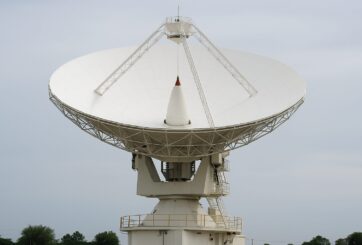
The National Astronomical Research Institute of Thailand (NARIT), in collaboration with the Max Planck Institute for Radio Astronomy (MPIfR), has achieved the historic first detection of astronomical radio signals using Very Long Baseline Interferometry (VLBI) with the 40-m Thai National Radio Telescope (TNRT). The experiment, performed together with the Effelsberg 100-m radio telescope in Germany, marks the first ever VLBI signal detection made in Thailand. Very Long Baseline Interferometry (VLBI) refers to multiple radio telescopes located far away from each…
… pave way to new physics and optoelectronic applications. Researchers have for the first time observed a time crystal on a microscale semiconductor chip oscillating at a rate of several billion times per second, unveiling exceptionally high non-linear dynamics in the GHz range. The results of the experiment, published today in Science, establish a firm connection between formerly uncorrelated areas of non-linear exciton-polariton dynamics and coherent optomechanics at GHz frequencies, say researchers from the Paul-Drude-Institute for Solid State Electronics (PDI)…
MRI scans are commonly used to diagnose a variety of conditions, anything from liver disease to brain tumors. But, as anyone who has been through one knows, patients must remain completely still to avoid blurring the images and requiring a new scan. A prototype device described in ACS Sensors could change that. The self-powered sensor detects movement and shuts down an MRI scan in real time, improving the process for patients and technicians. During an MRI scan, a patient must…
New telescope images of Jupiter’s moon Io rival those from spacecraft. Astronomers have captured a volcanic event on Jupiter’s moon Io at a resolution never before achieved with Earth-based observations. New images of Jupiter’s volcano-studded moon Io, taken by the Large Binocular Telescope on Mount Graham in Arizona, offer the highest resolution of Io ever achieved with an Earth-based instrument. The observations were made possible by a new high-contrast optical imaging instrument, dubbed SHARK-VIS, and the telescope’s adaptive optics system,…
Skin can send certain health-related signals, such as dry skin feeling tighter to indicate the need for moisture. But what if skin could be smarter, capable of monitoring and sharing specific health information, such as the concentration of glucose in sweat or heart rate? That was the question driving a team led by Penn State researchers that recently developed an adhesive sensing device that seamlessly attaches to human skin to detect and monitor the wearer’s health. The details of the…
Vessel-chip technology may offer a future of more personalized pharmaceutical drug testing, leading to our improved ability to combat disease. The pharmaceutical drug development and approval process is a multi-step undertaking that requires a plethora of testing before reaching the market. Even then, humans respond differently to drugs depending on their individual bodies and medical needs. Dr. Abhishek Jain, associate professor in the Department of Biomedical Engineering, and his lab received a grant from Texas A&M Innovation to continue developing an advanced…
MHH study identifies new autoantibodies in cerebrospinal fluid as a possible biomarker for rapidly progressing cerebellitis. Cerebellar ataxia is a neurological disorder of the cerebellum. This important area at the back of the brain acts as a conductor, so to speak, coordinating our movements and keeping us in balance. This ability is impaired in cerebellar ataxia. Affected people can have difficulties walking, speaking and grasping or even with controlled eye movements. In some cases, the damage begins gradually and develops…
Great success for the research group led by Prof. Dr. Dr.-Ing. Yilmaz Uygun at Constructor University Bremen: The start-up “NebulaForm”, which emerged from the group, has been accepted into the space incubator of the European Space Agency ESA. The team wants to use the world’s largest delta 3D printer, which they developed, to produce components for the space industry. In addition, they are working on producing a 3D printer for applications in space. The space incubator “ESA BIC Northern Germany”,…
Dr. Melissa Grunlan is developing synthetic plugs for patients suffering from chronic knee pain or disabilities that would avoid total knee replacements. Osteochondral defects (OCDs) can cause damage to cartilage and underlying bone, leading to chronic pain and loss of joint function. Depending on the extent of damage, individuals must undergo surgical treatment, the most extensive being total knee replacement, which over 800,000 Americans undergo each year. Dr. Melissa Grunlan, professor in the Department of Biomedical Engineering at Texas A&M…
Columbia Engineers link oxygen to graphene quality and develop new techniques to reproducibly make the wonder material at scale. Graphene has been called “the wonder material of the 21st century.” Since its discovery in 2004, the material—a single layer of carbon atoms—has been touted for its host of unique properties, which include ultra-high electrical conductivity and remarkable tensile strength. It has the potential to transform electronics, energy storage, sensors, biomedical devices, and more. But graphene has had a dirty little…
In an impressive leap forward for robotics technology, researchers from Shanghai Jiao Tong University have unveiled a novel hybrid-driven origami gripper, designed to tackle the challenge of grasping and manipulating objects with unprecedented versatility and precision. This innovative device, highlighted in a recent study published in Cyborg Bionic Systems, promises to reshape the capabilities of robotic systems in industries ranging from manufacturing to healthcare. The newly developed gripper utilizes a combination of pneumatic and cable-driven mechanisms to control an origami-inspired…
Theoretical physicists and experimentalists work together to measure the mass of a rare isotope expected to form a rare proton halo, publishing the first results from FRIB’s precision measurement program. In May 2022, the Facility for Rare Isotope Beams (FRIB) at Michigan State University (MSU), launched its precision measurement program. Staff from FRIB’s Low Energy Beam and Ion Trap (LEBIT) facility take high-energy, rare-isotope beams generated at FRIB and cool them to a lower energy state. Afterward, the researchers measure…
Scientists at the University of Wisconsin–Madison have developed the most sensitive method yet for detecting and profiling a single molecule — unlocking a new tool that holds potential for better understanding how the building blocks of matter interact with each other. The new method could have implications for pursuits as varied as drug discovery and the development of advanced materials. The technical achievement, detailed this month in the journal Nature, marks a significant advance in the burgeoning field of observing…
Artificial intelligence (AI) combined with a novel bio-inspired camera achieves 100 times faster detection of pedestrians and obstacles than current automotive cameras. This important step for computer vision and AI achieved by researchers of the University of Zurich can greatly improve the safety of automotive systems and self-driving cars. The image shows both color information from the color camera and events (blue and red dots) from the event camera; bounding boxes show the detection of cars by the algorithm. (c)…
 Feedback


