
Researchers from Tel Aviv University have for the first time created a transparent, self-repairing adhesive glass that forms spontaneously when it comes in contact with water. An international discovery published in the prestigious journal Nature: Researchers from Tel Aviv University (TAU) have created a new type of glass with unique and even contradictory properties, such as being a strong adhesive (sticky) and incredibly transparent at the same time. The glass, which forms spontaneously when comes in contact with water at…
… with Components from Basic Research at the FMP Enters Clinical Phase. Groundbreaking innovations by researchers at the Leibniz-Forschungsinstitut für Molekulare Pharmakologie (FMP) provided the basis for the development of an antibody-drug conjugate (ADC) by the company Tubulis, which is now being used in a Phase I/IIa trial in tumour patients. Thanks to an innovative linker chemistry known as P5 technology, the active substance is delivered safely to its target and can also develop its effect over a long period…
Mobile measuring devices enable the research of atmospheric processes in higher air layers that have not yet been recorded by conventional measuring stations on the ground. The airborne flight systems therefore make an important contribution to research into the causes of climate change in the Arctic. A team of German researchers has combined two of these methods over Spitsbergen in recent weeks: Simultaneous measurements of meteorological parameters and minute aerosol particles were carried out using a tethered balloon system and…
New instrument for operando battery research with KIT light source. Synchrotrons are particle accelerators that emit electromagnetic radiation such as soft X-rays. Synchrotron radiation enables insights into the internal structure and workings of materials, so it plays an important role in the development of advanced technologies. Soft X-rays (with wavelengths around one to two nanometers) are ideal for research on electrochemical storage systems for the energy transition – but their use has been limited so far: they require a vacuum…
Researchers at The Jackson Laboratory reveal that hematopoietic stem cells age differently in genetically identical mice, offering new pathways for interventions to preserve health with aging. Our bone marrow—the fatty, jelly-like substance inside our bones—is an unseen powerhouse quietly producing 500 billion new blood cells every day. That process is driven by hematopoietic stem cells that generate all of the various types of blood cells in our bodies and regenerating themselves to keep the entire assembly line of blood production…
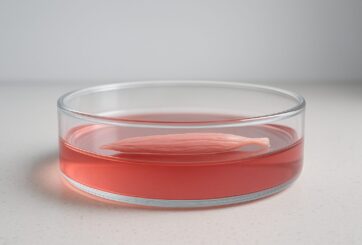
Muscles grown from stem cells taken from patients with limb girdle muscular dystrophy 2B (LGMD2B) respond positively to potential treatments. Biomedical engineers at Duke University have developed a new technique to better understand and test treatments for a group of extremely rare muscle disorders called dysferlinopathy or limb girdle muscular dystrophies 2B (LGMD2B). The approach grows complex, functional 3D muscle tissue from stem cells in the laboratory, creating a platform that replicates patient symptoms and treatment responses. In its debut…
Direct reciprocity facilitates cooperation in repeated social interactions. Traditional models suggest that individuals learn to adopt conditionally cooperative strategies if they have multiple encounters with their partner. However, most existing models make rather strong assumptions about how individuals decide to keep or change their strategies. They assume individuals make these decisions based on a strategy’s average performance. This in turn suggests that individuals would remember their exact payoffs against everyone else. In a recent publication, researchers from the Max Planck…
Researchers develop method to confine light inside an organic material to form a hybrid quantum state, creating new physical and chemical properties. A team of international scientists led by the University of Ottawa have gone back to the kitchen cupboard to create a recipe that combines organic material and light to create quantum states. Professor Jean-Michel Ménard, leader of the Ultrafast Terahertz Spectroscopy group at the Faculty of Science, coordinated with Dr. Claudiu Genes at the Max Planck Institute for…
Scientists in Germany have revealed how an unstructured protein traps cancer-promoting molecules. Each second of our lives, cells in our body grow and divide to ensure we stay healthy. However, this process has a dark side: if cell growth and divisions become excessive, that may cause cancer. To keep a safe balance, our cells are equipped with several molecular mechanisms to limit their own growth and division. EMBL Hamburg’s Wilmanns Group, in collaboration with research groups from the Center for…
With speeds over 200 times faster than traditional methods, new technology could benefit autonomous driving, industrial inspection and security applications. Researchers have developed a new 3D method that can be used to track fast-moving objects at unprecedented high speeds. The real-time tracking approach, which is based on single-pixel imaging, could be used to improve autonomous driving, industrial inspection and security surveillance systems. “Our approach does not require reconstructing the object’s image to calculate its position, which significantly reduces data storage…
…that could lead to unprecedented separations. Researchers use new technique to overcome perceived limitation of membranes with pores of consistent size. Imagine a close basketball game that comes down to the final shot. The probability of the ball going through the hoop might be fairly low, but it would dramatically increase if the player were afforded the opportunity to shoot it over and over. A similar idea is at play in the scientific field of membrane separations, a key process…
…opens doors to unprecedented biological insights. Groundbreaking research has revealed a new way to measure incredibly minute forces at the nanoscale in watery solutions, pushing the boundaries of what scientists know about the microscopic world. The significant nanotechnology advance was achieved by researchers from Beihang University in China with RMIT University and other leading institutions including the Australian National University and University of Technology Sydney. The new technique, involving a super-resolved photonic force microscope (SRPFM), is capable of detecting forces in water as small as 108.2…
An interdisciplinary team at TU Graz is revolutionising the design of sustainable buildings. The advantages and disadvantages of different construction measures are visualised in real time using VR simulation. Next-generation energy services are designed to help a building’s end users understand and visualise the benefits of new energy-efficient technologies or thermal refurbishment measures. This includes the control of heating and cooling, lighting and ventilation. In order to make this possible, Christina Hopfe, head of the Institute of Building Physics, Services…
The endosymbiont Symbiodolus clandestinus, living inside insect cells, has remained undiscovered until now. Scientists at the Max Planck Institute for Chemical Ecology report its discovery in at least six insect orders. Using fluorescence in situ hybridisation, they showed that Symbiodolus is present in all life stages and tissues of infected insects. The symbiont is abundant in reproductive organs of adult females, eggs, and larvae, suggesting transovarial transmission. The interactions with host insects are not yet understood, but Symbiodolus likely impacts…
Developers of thin-film gas sensors benefit from heated substrate platform. The Fraunhofer Institute for Photonic Microsystems IPMS develops and manufactures individual heatable test chips for the characterization of new gas sensor materials. Deposited sensing layers and their application-specific parameters, such as sensitivity and selectivity, can thus be specifically evaluated. Customized chip designs allow the optimal and highly accurate characterization of these thin films. Example thermal image of a heated test substrate held by a vacuum suction cup from Fraunhofer IPMS….
Looking under the microscope, a group of cells slowly moves forward in a line, like a train on the tracks. The cells navigate through complex environments. A new approach by researchers involving the Institute of Science and Technology Austria (ISTA) now shows how they do this and how they interact with each other. The experimental observations and the following mathematical concept are published in Nature Physics. Snapshots of the cell railroad. Cells stretch away from a fish scale (left) into…
 Feedback


