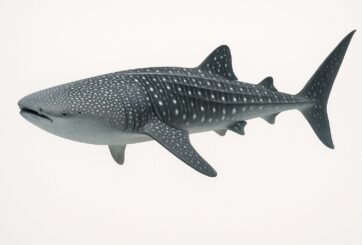
Whale sharks (Rhincodon typus)—which grow more than 30 feet long—are the largest fish in the world's ocean, but little is known about their movements on a…

Sea hares, (specifically the sea slug Stylocheilus striatus used in this study) usually hatch from their eggs to swim away and later feed on toxic alga but…
Scientists studying the potential effects of climate change on the world's animal and plant species are focusing on the wrong factors, according to a new paper…
Michigan Technological University researchers are joining US Forest Service and US Geological Survey scientists in the only tropical rainforest in the United…
Writing in the journal Biodiversity and Conservation, scientists from the University of Exeter and Ascension Island Government Conservation Department report…
Seeking to gain a high-tech edge over illegal fishers, the Government of Belize will use “eyes in the sky” to enforce fishing regulations in the biodiverse…
To answer this question, a team of researchers out of York University have created the first ever migratory connectivity map produced for a songbird, using…
Wildlife of many kinds are increasingly finding their meals in human environments, gathering at places like backyard bird feeders, landfills or farms that…
Sludge is a by-product of water treatment. Sludge is produced during the clarification and filtration process in the water treatment system. It is also…
“The Water Short List: The Most Effective Actions U.S. Households Can Take to Curb Water Use” describes how households can reduce water use substantially by…
Carbon dioxide is the most-prevalent gas when it comes to climate change. It is released by vehicles, industry, and forest removal and comprises the greatest…
The size and age of plants has more of an impact on their productivity than temperature and precipitation, according to a landmark study by University of…
A Florida-based marine research team has developed a unique formal process and modeling framework to help manage South Florida's economically important coastal…
Using lab-cultured bacteria as “bait,” a team of scientists led by Matthew Sullivan has sequenced complete and partial genomes of about 10 million viruses from…
“The device analyzes samples up to 30 times faster than conventional technologies,” says chemical engineer Schmittmann, “and you get initial results in about…
In an attempt to prevent vast quantities of oil from fouling beaches and marshes, BP applied 1.84 million gallons of chemical dispersant to oil to oil released…
 Feedback


