



Feeding 9 Billion: Innovations in Agricultural Modeling
Study Highlights Unexpected Ecological Benefits of Parasite-Ridden Diets
Edgewater, Md. — August 14, 2025 — North American river otters may not be known for their table manners, but their messy eating habits could make them valuable allies in tracking environmental health threats. A new study from the Smithsonian Environmental Research Center (SERC) reveals that the parasites found in the otters’ prey may serve as important indicators of ecosystem changes.
The study, published in Frontiers in Mammal Science, is the inaugural thorough examination of otter diets and latrine environments in the Chesapeake Bay area.
“River otters are impressive apex predators that play a vital role in ecosystems,” said Calli Wise, lead author of the study and a research technician at SERC. “The parasites consumed by river otters may also teach us about the health of the environment.”
River otters are among the Chesapeake’s most secretive residents. Nocturnal, semi-aquatic, and wary of humans, they are rarely spotted in the wild. Historically abundant across North America, their populations declined sharply due to the fur trade and habitat loss. A reintroduction program in Maryland during the mid-1990s helped restore their numbers, but population estimates for the Bay remain uncertain.
“It is shocking how little information there is about their biology and ecology,” said Katrina Lohan, co-author and head of SERC’s Coastal Disease Ecology Lab.
Because direct observation is difficult, researchers study river otters through the feces they leave at “latrines”—land sites where otters gather to eat, socialize, and scent-mark.
In this study, scientists collected scat samples from 18 active latrines on the SERC campus in Edgewater, Maryland. While most sites were natural (beaches and riverbanks), some were on manmade structures such as docks and boardwalks.
The team analyzed the samples under a microscope and used DNA metabarcoding to identify prey species and parasites.
DNA results showed that otters’ diets were dominated by finfish and crabs, making up 93% of all prey items. They also consumed amphibians, worms, birds, and even invasive species such as common carp and southern white river crayfish.
Parasites from six taxonomic classes were identified, with trematodes (parasitic flatworms) being the predominant type. Additional identified parasites were microscopic dinoflagellates and flatworms impacting fish gills, skin, or fins.
Most parasites likely came from infected prey and did not harm the otters. In fact, researchers believe the otters’ predation may benefit ecosystems by removing infected individuals from prey populations.
“While parasites have negative impacts on individuals, they are extremely important in food webs,” Lohan explained. “It is possible that river otters, like other top predators, wouldn’t be able to find enough food to eat without parasites.”
Some parasites found—such as roundworms and single-celled apicomplexans—likely infected the otters themselves. None detected are known to infect humans directly, but some are closely related to parasites that can cause diseases in people, including cystoisosporiasis, a gastrointestinal illness.
As otters increasingly occupy urban waterways, they may encounter pollutants and pathogens of greater concern to humans.
“As river otters move into more urban waterways, they will be increasingly exposed to pollutants and parasites of concern to humans,” Wise said. “As mammals, river otters may be disease sentinels that we can study to learn more about environmental risks to humans.”
Original Publication
Journal: Frontiers
DOI: 10.3389/fmamm.2025.1620318
Method of Research: Observational study
Subject of Research: Animals
Article Title: North American river otters consume diverse prey and parasites in a subestuary of the Chesapeake Bay
Article Publication Date: 14-Aug-2025
River otters prefer latrines located near permanent beaches, open water, and areas with woody debris and undercut banks. These features provide easier access to water and may offer protection from predators.
The diet of river otters in the Chesapeake Bay includes a variety of prey, primarily fish and crustaceans, and is more diverse than previously thought. New genetic methods revealed more unique prey items compared to traditional microscopic analysis.
Parasites found in the scat of river otters are mostly those that infect their prey, indicating that river otters may consume these parasites along with their food. This highlights the importance of parasites in the aquatic food web.




Earthquakes in the American state of Utah, the Soultz-sous-Forêts region of France or in the Dutch province of Groningen should not be able to occur even if the subsurface has been exploited for decades. This is because the shallow subsurface behaves in such a way that faults there become stronger as soon as they start moving. At least that is what geology textbooks teach us. And so, in theory, it should not be possible for earthquakes to occur. So why…
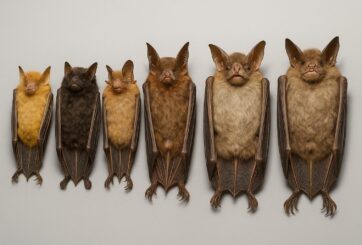
Just in time for Halloween, researchers from the Royal Ontario Museum (ROM), the Field Museum in Chicago, and Lawrence University in Wisconsin have announced the discovery of six new species of bats. These newly identified species, all found in the Philippines, belong to the group known as tube-nosed bats—a fascinating and diverse branch of the mammal family tree. Expanding the Tree of Life Formally recognized as new species through morphological and genetic analysis, this discovery expands the already impressive global…
In a recent study published today in the European Geosciences Union (EGU) journal Biogeosciences, scientists have confirmed that mercury pollution from artisanal and small-scale gold mining (ASGM) is contaminating food crops not through the soil, as previously believed, but directly from the air. Driven by the surging price of gold, which has increased by more than tenfold since 2000, the rapid expansion of unregulated mining in these regions raises urgent questions about food security, human health, and environmental justice The…
A new study from Iceland’s Surtsey island shows that birds carried most of the plants that colonised the island, challenging long-held beliefs that seed or fruit shape determines how plants spread — offering fresh insight into life’s adaptation to c When the volcanic island of Surtsey rose from the North Atlantic Ocean in 1963, it offered scientists a once-in-a-lifetime opportunity to observe how life takes hold on a brand-new and barren land. For decades, ecologists believed that plants’ ability to…
 Feedback
