
Pauline Treble, a researcher at the Australian Nuclear Science and Technology Organisation and the University of New South Wales, Sydney, first got interested…
Far from any controls, an underwater robot has been working for the past few days in 2,500 metres of water on the seabed of the Arctic, after the completion of…
This means stalagmites and stalactites work as time capsules that scientists can use to study how the environment changed over the past hundreds or thousands…
Groundwater discharge that flows into the Upper Colorado River Basin varies in response to drought, which is likely due to aquifer systems that contain…
Rocks formed beneath the ocean floor by fast-spreading tectonic plates may be a large and previously overlooked source of free hydrogen gas (H2), a new Duke…
NASA's Operation IceBridge completed the first research flight of its new 2016 Arctic summer campaign on July 13. The science flights, which continue through…
Scientists from the Alfred Wegener Institute, Helmholtz Centre for Polar and Marine Research (AWI) have overcome a seeming weakness of global climate models….
Present-day continents were shaped hundreds of millions of years ago as the supercontinent Pangaea broke apart. Derived from Pangaea’s main fragments Gondwana…
That's the findings of a new study by researchers from Georgia Institute of Technology and the National Oceanic and Atmospheric Administration. They linked the…
A team of small, shoebox-sized satellites, flying in formation around the Earth, could estimate the planet's reflected energy with twice the accuracy of…
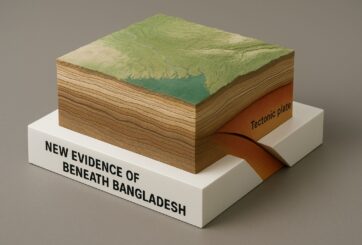
A huge earthquake may be building beneath Bangladesh, the most densely populated nation on earth. Scientists say they have new evidence of increasing strain…
The RapidScat instrument that flies aboard the International Space Station has been analyzing the winds around Super typhoon Nepartak. RapidScat is a…
The Atmospheric Tomography, or ATom, mission is the first to survey the atmosphere over the oceans. Scientists aboard NASA's DC-8 flying laboratory will…
A new study carried out on the floor of Pacific Ocean provides the most detailed view yet of how the earth's mantle flows beneath the ocean's tectonic plates….
New research has identified clear signs that the hole in the Antarctic ozone layer is beginning to close.
The earthquake distribution on ultraslow mid-ocean ridges differs fundamentally from other spreading zones. Water circulating at a depth of up to 15 kilometres…
 Feedback


