



Feeding 9 Billion: Innovations in Agricultural Modeling
People’s intuitive assessments of biodiversity based on visual and auditory stimuli are very accurate and closely match science assessments of biodiversity. Based on a new study from the British Ecological Society that came out in the magazine People and Nature.
Researchers from the German Centre for Integrative Biodiversity Research (iDiv), the Helmholtz Centre for Environmental Research (UFZ), and Friedrich Schiller University Jena recently did a study where people who had never studied ecology had to sort pictures and sounds of forests by how diverse they thought they were.
The researchers found that the biodiversity levels experienced by participants, as observed in the photos and audio recordings, closely aligned with the actual biodiversity of the forests.
Our perception of the natural world affects our health. Prior studies indicate that perceived biodiversity, rather than quantified biodiversity, correlates with human well-being.
The Lead author Kevin Rozario, iDiv, stated: “Because it’s suspected that perceived biodiversity translates into mental health benefits, it’s important to identify what people perceive with regards to biodiversity, what the contribution of the different senses could be, and under which circumstances people’s perception of biodiversity best aligns with what ecologists measure.”
To ascertain the biodiversity indicators perceived by individuals, the researchers instructed the study participants to categorise the images and audio recordings based on any salient criterion.
Observers noted the amount of vegetation, lighting conditions, and colour. Audibly, individuals discerned the attributes of birdsong, including its volume and the feelings it elicited.
“Not only are we experiencing an extinction of species, but also and extinction of biodiverse experiences.” stated Kevin Rozario.
“We recommend to conserve and restore diverse forests characterised by a variety of tree species and structures to also provide habitats for different vocalising bird species. These conservation measures will have the dual benefit of meeting conservation goals while also increasing people’s experience of biodiversity and therefore likely increasing mental wellbeing.”
In both sorting tests, 48 participants were shown 57 pictures or 16 audio recordings of forest patches from Germany, Belgium, and Poland, exhibiting diverse degrees of biodiversity.
The biodiversity of the forests depicted in the images was evaluated utilising four prevalent forest diversity indicators: tree species richness, forest structural diversity, understory structural diversity, and understory abundance. The actual biodiversity in the audio files was assessed by bird species richness.
The researchers instructed participants to categorise the photos and audio recordings according to notable features observed in the forest stimuli, thereafter organising them by perceived visual or auditory diversity, respectively.
The researchers warn that individuals’ capacities to assess biodiversity appropriately may depend on their ability to directly compare environments with varying amounts of variation. They reference analogous studies indicating that participants struggled to discern biodiversity when evaluating a single setting in isolation.
The researchers observe that most study participants were university-educated women and suggest that future studies should aim to duplicate their techniques with more representative samples of the general population.
Original Publication
Authors: Kevin Rozario, Taylor Shaw, Melissa Marselle, Rachel Rui Ying Oh, Erich Schröger, Mateo Giraldo Botero, Julian Frey, Valentin Ștefan, Sandra Müller, Michael Scherer‐Lorenzen, Bogdan Jaroszewicz, Kris Verheyen and Aletta Bonn.
Journal: People and Nature
DOI: 10.1002/pan3.70087
Method of Research: Survey
Subject of Research: People
Article Title: Perceived biodiversity: Is what we measure also what we see and hear?
Article Publication Date: 8-Jul-2025
COI Statement: Aletta Bonn, Melissa Marselle and Rachel Rui Ying Oh are associate editors of People and Nature, but were not involved in the peer
Review and decision-making processes for this paper.




Earthquakes in the American state of Utah, the Soultz-sous-Forêts region of France or in the Dutch province of Groningen should not be able to occur even if the subsurface has been exploited for decades. This is because the shallow subsurface behaves in such a way that faults there become stronger as soon as they start moving. At least that is what geology textbooks teach us. And so, in theory, it should not be possible for earthquakes to occur. So why…
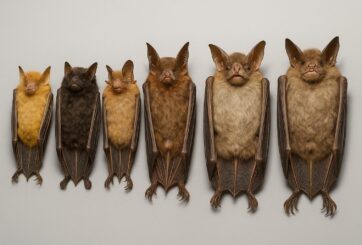
Just in time for Halloween, researchers from the Royal Ontario Museum (ROM), the Field Museum in Chicago, and Lawrence University in Wisconsin have announced the discovery of six new species of bats. These newly identified species, all found in the Philippines, belong to the group known as tube-nosed bats—a fascinating and diverse branch of the mammal family tree. Expanding the Tree of Life Formally recognized as new species through morphological and genetic analysis, this discovery expands the already impressive global…
In a recent study published today in the European Geosciences Union (EGU) journal Biogeosciences, scientists have confirmed that mercury pollution from artisanal and small-scale gold mining (ASGM) is contaminating food crops not through the soil, as previously believed, but directly from the air. Driven by the surging price of gold, which has increased by more than tenfold since 2000, the rapid expansion of unregulated mining in these regions raises urgent questions about food security, human health, and environmental justice The…
A new study from Iceland’s Surtsey island shows that birds carried most of the plants that colonised the island, challenging long-held beliefs that seed or fruit shape determines how plants spread — offering fresh insight into life’s adaptation to c When the volcanic island of Surtsey rose from the North Atlantic Ocean in 1963, it offered scientists a once-in-a-lifetime opportunity to observe how life takes hold on a brand-new and barren land. For decades, ecologists believed that plants’ ability to…
 Feedback
