



Feeding 9 Billion: Innovations in Agricultural Modeling
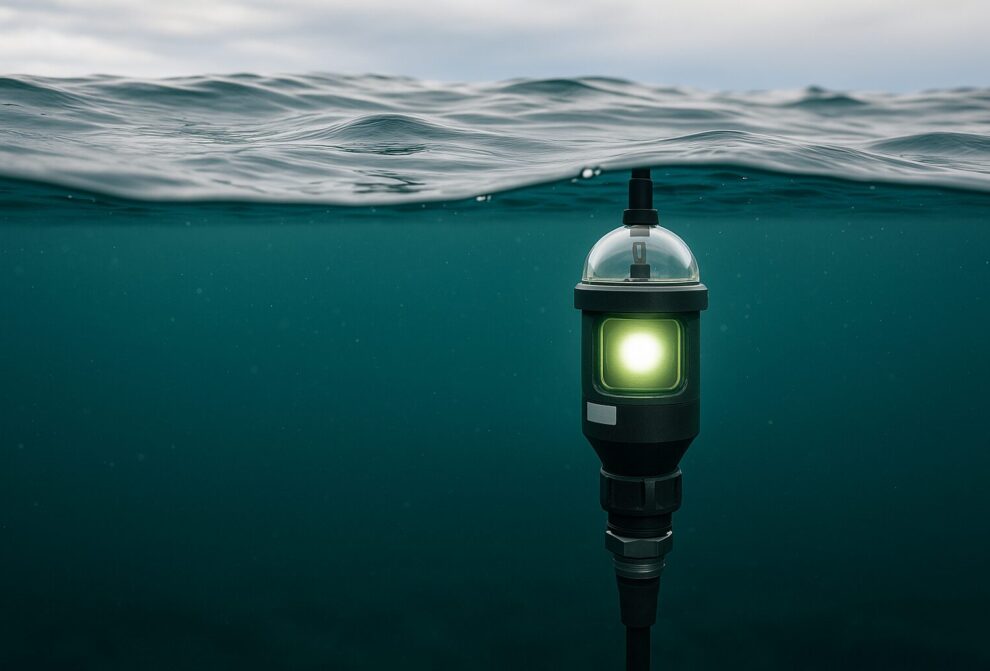
AI Generated Image
UV radiation fluctuates amid wet-dry extremes in clear water bodies
Lake Tahoe is experiencing large-scale shifts in ultraviolet radiation (UV) as climate change intensifies wet and dry extremes in the region. That is according to a study led by the University of California, Davis’ Tahoe Environmental Research Center and co-leading collaborator Miami University in Ohio.
For the study, published in ASLO, the journal of the Association for the Sciences of Limnology and Oceanography, scientists analyzed an 18-year record of underwater irradiance at Lake Tahoe, which is renowned for its clear blue waters. They found up to a 100-fold difference in UV radiation between a wet and dry year.
These large fluctuations were associated with wet and dry extremes in the local climate, which caused variations in particulate matter and colored dissolved organic matter in the lake.
UV radiation penetrates most deeply in clear water bodies, such as alpine or polar lakes, so the research carries implications for those water bodies. In less transparent lakes, UV radiation may reach only a few inches into the water. In clear systems like Lake Tahoe, it can reach dozens of feet down.
“In a wet year, UV radiation penetrates shallower,” said lead author Shohei Watanabe, an associate project scientist with UC Davis Tahoe Environmental Research Center. “In a drought year, more UV radiation is slicing through the water. It’s a bit like reducing the lake’s ‘sunscreen,’ making it susceptible to severe sunburn.”
The role of UV radiation
UV radiation has wide-ranging effects on aquatic ecosystems. It affects the carbon cycle and behavior of fish and zooplankton. It can suppress photosynthesis, which forms the basis of the lake ecosystem. Understanding how it is changing can help natural resource managers and others anticipate changes while building lake resilience.
In revealing the close tie between UV radiation changes and wet-dry cycles, the study also suggests that monitoring underwater radiation can help serve as a sentinel for climate-driven disturbances in lakes.
Long-term monitoring
Long-term observation of underwater UV radiation in lakes is rare. UC Davis researchers have been continuously monitoring Lake Tahoe since 1968. Specialized equipment to measure underwater UV radiation was introduced as a part of a collaborative research project with Miami University in Ohio in 2006. Since then, UV monitoring has been integrated into the long-term monitoring program. This study analyzed 18 years of that data through 2023.
“To understand what’s really happening in nature, the long-term data set is quite important,” Watanabe said. “One or two years of data couldn’t reveal this kind of huge fluctuation related to climatic perturbations.”
The study’s coauthors include Erin Overholt and Craig Williamson of Miami University in Ohio, Geoffrey Schladow of UC Davis, and Warwick Vincent of Laval University in Canada. It received funding from the National Science Foundation and philanthropic gifts to UC Davis TERC.
Original Publication
Authors: Shohei Watanabe, Erin P. Overholt, S. Geoffrey Schladow, Warwick F. Vincent and Craig E. Williamson.
Journal: Limnology and Oceanography Letters
DOI: 10.1002/lol2.70021
Article Title: Climate change and underwater light: Large-scale changes in ultraviolet radiation transparency associated with intensifying wet–dry cycles
Article Publication Date: 10-May-2025
Original Source: https://www.ucdavis.edu/climate/news/extreme-weather-cycles-change-underwater-light-tahoe
Media Contact
Kat Kerlin
University of California – Davis
kekerlin@ucdavis.edu
Cell: 530-750-9195
Climate change leads to extreme weather events, like heavy rain or drought, which significantly alter the amount of particulate matter and colored dissolved organic matter in lakes. This affects how much UV radiation can penetrate the water, impacting aquatic ecosystems.
Changes in UV transparency can disrupt the carbon cycle, affect photosynthesis rates, and influence the behavior and distribution of aquatic organisms, including invasive fish species. This can lead to significant shifts in the structure and function of lake ecosystems.
In wet years, UV transparency decreased significantly due to increased runoff carrying more particles and organic matter into the lake. In contrast, during dry years, UV transparency improved, allowing more UV light to penetrate the water, which can have different ecological consequences.
Source: EurekAlert!




Earthquakes in the American state of Utah, the Soultz-sous-Forêts region of France or in the Dutch province of Groningen should not be able to occur even if the subsurface has been exploited for decades. This is because the shallow subsurface behaves in such a way that faults there become stronger as soon as they start moving. At least that is what geology textbooks teach us. And so, in theory, it should not be possible for earthquakes to occur. So why…

Just in time for Halloween, researchers from the Royal Ontario Museum (ROM), the Field Museum in Chicago, and Lawrence University in Wisconsin have announced the discovery of six new species of bats. These newly identified species, all found in the Philippines, belong to the group known as tube-nosed bats—a fascinating and diverse branch of the mammal family tree. Expanding the Tree of Life Formally recognized as new species through morphological and genetic analysis, this discovery expands the already impressive global…
In a recent study published today in the European Geosciences Union (EGU) journal Biogeosciences, scientists have confirmed that mercury pollution from artisanal and small-scale gold mining (ASGM) is contaminating food crops not through the soil, as previously believed, but directly from the air. Driven by the surging price of gold, which has increased by more than tenfold since 2000, the rapid expansion of unregulated mining in these regions raises urgent questions about food security, human health, and environmental justice The…
A new study from Iceland’s Surtsey island shows that birds carried most of the plants that colonised the island, challenging long-held beliefs that seed or fruit shape determines how plants spread — offering fresh insight into life’s adaptation to c When the volcanic island of Surtsey rose from the North Atlantic Ocean in 1963, it offered scientists a once-in-a-lifetime opportunity to observe how life takes hold on a brand-new and barren land. For decades, ecologists believed that plants’ ability to…
 Feedback
