
Bacteria that “sense” Earth’s magnetic field found on deep undersea vents. Magnetotactic bacteria, which can align with the Earth’s magnetic field, have been discovered in a new location. Previously observed on land and in shallow water, analysis of a hydrothermal vent has proven that they can also survive deep under the ocean. The bacteria were able to exist in an environment that was not ideal for their typical needs. Magnetotactic bacteria are of interest not only for the role they…
With this new approach, a tailsitter aircraft, ideal for search-and-rescue missions, can plan and execute complex, high-speed acrobatic maneuvers. A tailsitter is a fixed-wing aircraft that takes off and lands vertically (it sits on its tail on the landing pad), and then tilts horizontally for forward flight. Faster and more efficient than quadcopter drones, these versatile aircraft can fly over a large area like an airplane but also hover like a helicopter, making them well-suited for tasks like search-and-rescue or…
Engineers create home test that uses saliva to detect periodontal disease. Engineers at the University of Cincinnati have developed a new device that can warn consumers about early risks of tooth decay from diseases such as gingivitis and periodontitis. Gingivitis, the earliest form of gum disease, is caused by bacteria. But not just any bacteria. The problem for researchers was getting a device to single out the particular type responsible for the disease, said Andrew Steckl, an Ohio Eminent Scholar…
A new investigation with NASA’s James Webb Space Telescope into K2-18 b, an exoplanet 8.6 times as massive as Earth, has revealed the presence of carbon-bearing molecules including methane and carbon dioxide. Webb’s discovery adds to recent studies suggesting that K2-18 b could be a Hycean exoplanet, one which has the potential to possess a hydrogen-rich atmosphere and a water ocean-covered surface. The first insight into the atmospheric properties of this habitable-zone exoplanet came from observations with NASA’s Hubble Space Telescope,…
… forming a new phase of matter. A study led by Brown University scientists begins to address a longstanding question in condensed matter physics on whether disorder mimics or destroys the quantum liquid state in a prominent compound. Quantum spin liquids are difficult to explain and even harder to understand. To start, they have nothing to do with everyday liquids, like water or juice, but everything to do with special magnets and how they spin. In regular magnets, when the…
A microbial enzyme inspires electrochemistry. Humans continuously emits greenhouse gases, worsening global warming. For example, carbon dioxide (CO2) accumulates dramatically over the years and is chemically very stable. Yet, some microbes capture CO2 using highly efficient enzymes. Scientists from the Max Planck Institute for Marine Microbiology in Bremen together with the Universities of Geneva and Radboud isolated one of these enzymes. When the enzyme was electronically branched on an electrode, they observed the conversion of CO2 to formate with perfect…
… helps mice recover after stroke. New research offers a tantalizing avenue for treating stroke by reprogramming microglia, the main immune cells in the brain, to replace damaged neurons. Researchers at Kyushu University have discovered that turning brain immune cells into neurons successfully restores brain function after stroke-like injury in mice. These findings, published on October 10 in PNAS, suggest that replenishing neurons from immune cells could be a promising avenue for treating stroke in humans. Stroke, and other cerebrovascular…
The First Protective Layer for 2D Quantum Materials. As silicon-based computer chips approach their physical limitations in the quest for faster and smaller designs, the search for alternative materials that remain functional at atomic scales is one of science’s biggest challenges. In a groundbreaking development, researchers at the Würzburg-Dresden Cluster of Excellence ct.qmat have engineered a protective film that shields quantum semiconductor layers just one atom thick from environmental influences without compromising their revolutionary quantum properties. This puts the application…
A novel mixed light field technique that utilizes a mix of ray-controlled ambient lighting with projection mapping (PM) to obtain PM in bright surroundings has been developed by scientists at Tokyo Institute of Technology. This innovative technology utilizes a novel kaleidoscope array to achieve ray-controlled lighting and a binary search algorithm for removing ambient lighting from PM targets. It provides an immersive augmented reality experience with applications in various fields. Projection mapping (PM) is a fascinating technology that provides an…
The SPECULOOS project has revealed the existence of an Earth-sized planet around SPECULOOS-3, a nearby star similar in size to Jupiter and twice as cold as our Sun. The SPECULOOS project, led by the astronomer Michaël Gillon from the University of Liège, has just discovered a new Earth-sized exoplanet around SPECULOOS-3, an “ultracool dwarf” star as small as Jupiter, twice as cold as our Sun, and located 55 light-years from Earth. After the famous TRAPPIST-1, SPECULOOS 3 is the second…
Application deadline for grants is July 15, 2024. The SETI Institute is announcing the launch of a pioneering grants program dedicated to advancing technosignature science. This first-of-its-kind initiative aims to support innovative research addressing criti-cal observational, theoretical, and technical questions in the search for technosig-natures that could provide evidence of past or present extraterrestrial technology. At the heart of this groundbreaking research is the Allen Telescope Array (ATA), a world-class instrument known for its capabilities in the search for extraterrestrial…
Nanoparticle potential found for assessing kidneys. In a study published July 29 in Advanced Materials, University of Texas at Dallas researchers found that X-rays of the kidneys using gold nanoparticles as a contrast agent might be more accurate in detecting kidney disease than standard laboratory blood tests. Based on their study in mice, they also found that caution may be warranted in employing renal-clearable nanomedicines to patients with compromised kidneys. Before administering renal-clearable drugs, doctors routinely check a patient’s kidney function…
ASU scientists first to examine hormones and PTSD in non-industrialized society According to the World Health Organization, about 3.9% of the world’s population has had post-traumatic stress disorder at some point during their lives. That number is higher in the United States, at about 6%. PTSD can happen to an individual after experiencing or witnessing a traumatic event and can last for months or years. But there is a lot that is still not understood about this mental health condition. Anthropologists, social scientists…
Advancing the search for weird life on weird planets Scientists have identified a promising new way to detect life on faraway planets, hinging on worlds that look nothing like Earth and gases rarely considered in the search for extraterrestrials. In a new Astrophysical Journal Letters paper, researchers from the University of California, Riverside, describe these gases, which could be detected in the atmospheres of exoplanets — planets outside our solar system — with the James Webb Space Telescope, or JWST….
Bringing SETI science to community colleges SETI Institute Launches ARISE Lab, Bringing SETI and Radio Astronomy to Community Colleges The SETI Institute announced it will expand its pilot program funded through a grant from the Amateur Radio and Digital Communication (ARDC) Foundation now called ARISE Lab (arise.seti.org). This initiative brings SETI science to community colleges and provides hands-on training for community college instructors and students in astronomy, digital signal processing, and radio science. “Hands-on experiences are proven to improve student…
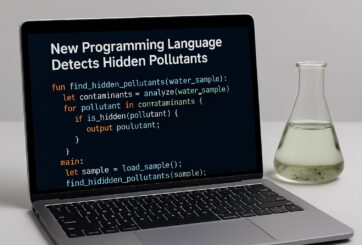
UC Riverside tool empowers scientists, accelerates discovery Biologists and chemists have a new programming language to uncover previously unknown environmental pollutants at breakneck speed – without requiring them to code. By making it easier to search massive chemical datasets, the tool has already identified toxic compounds hidden in plain sight. Mass spectrometry data is like a chemical fingerprint, showing scientists what molecules are in a sample such as air, water, or blood, and in what amounts. It helps identify everything…
When a tree dies, its remains become the foundation for new life. Leaves, wood, and roots gradually break down—not through weathering, but through the work of countless fungi, insects, and other tiny organisms. As they decompose plant material, these organisms release stored carbon back into the atmosphere, fueling photosynthesis and sustaining the global carbon cycle. But which organisms perform this critical work, and what molecular tools do they use? A research team at Goethe University Frankfurt has now developed a…
A new study proposes that building a rectangular-shaped telescope, instead of the traditional circular design, could dramatically improve our chances of finding habitable Earth-like planets orbiting nearby stars. The Challenge of Spotting Another Earth Finding an exoplanet that resembles Earth is notoriously difficult. Stars are millions to billions of times brighter than the planets orbiting them, making the faint planetary light nearly impossible to distinguish. Liquid water is considered essential for life as we know it, and the best candidates…
Often maligned as just another one of the Internet boom’s myriad hypes, e-learning’s chasm between theory and performance is being bridged by a new platform from SCHOOL+ that supports rather than imposes technology on Europe’s classrooms.
The three-year IST project SCHOOL+ project is developing a comprehensive online teaching and learning environment known as SCHOOL+ Microcosmos, which has been tested in 20 European schools at the beginning of this year. Simultaneously, this
Students from Duke University’s Pratt School of Engineering are partnering with Carnegie Mellon University’s “Red Team” in an effort to win a $2 million prize from the Defense Advanced Research Projects Agency (DARPA). All they have to do is complete the toughest ground course ever devised for a self-guided robotic vehicle.
The contest, called the DARPA Grand Challenge, is a race between fully self-guided ground vehicles to be conducted in the Southwestern United States on Oct. 8,
 Feedback


