
The most sensitive map of the gravitational wave sky to date was produced by an international collaboration of researchers including numerous scientists from the Max Planck Institute for Radio Astronomy in Bonn, Germany. To achieve this goal, the scientists analysed 4.5 years of pulsar data taken with the MeerKAT radio telescope in South Africa, one of the most powerful radio telescopes in the world. A Pulsar Timing Array uses the clock-like predictability of so-called pulsars (pulsating radio stars) to detect…
…using James Webb Space Telescope. The unusual system of three “super puff” planets has at least one more planet, revealed by its gravitational tug on other planets. An unusual planetary system with three known ultra-low density “super-puff” planets has at least one more planet, according to new research led by researchers from Penn State and Osaka University. The research team set out to study Kepler-51d, the third planet in the system, with NASA’s James Webb Space Telescope (JWST) but almost…
Glyphosate exposure exacerbates Alzheimer’s disease-like pathology in mice even after a significant pause from exposure. The human brain is an incredibly adaptable organ, often able to heal itself even from significant trauma. Yet for the first time, new research shows even brief contact with a common herbicide can cause lasting damage to the brain, which may persist long after direct exposure ends. In a groundbreaking new study, Arizona State University researcher Ramon Velazquez and his colleagues at the Translational Genomics Research Institute…
ASU- and Banner Alzheimer’s Institute-led study implicates link between a common virus and the disease, which travels from the gut to the brain and may be a target for antiviral treatments. Arizona State University and Banner Alzheimer’s Institute researchers, along with their collaborators, have discovered a surprising link between a chronic gut infection caused by a common virus and the development of Alzheimer’s disease in a subset of people. It is believed most humans are exposed to this virus — called…
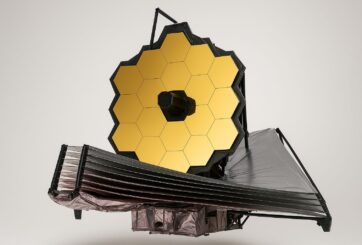
University of Arizona astronomers have learned more about a surprisingly mature galaxy that existed when the universe was just less than 300 million years old – just 2% of its current age. What Does the James Webb Telescope Tell Us About the Universe? Ever since the launch of the James Webb Telescope, it has sailed across the starry universe, discovering galaxies formed around thirteen billion years ago—almost the inception of time itself! It possesses advanced infrared capabilities, much more evolved…
Researchers have discovered antiferromagnetism in a real icosahedral quasicrystal, reinvigorating the search for antiferromagnetic quasicrystals Quasicrystals (QCs) are fascinating solid materials that exhibit an intriguing atomic arrangement. Unlike regular crystals, in which atomic arrangements have an ordered repeating pattern, QCs display long-range atomic order that is not periodic. Due to this ‘quasiperiodic’ nature, QCs have unconventional symmetries that are absent in conventional crystals. Since their Nobel Prize-winning discovery, condensed matter physics researchers have dedicated immense attention towards QCs, attempting to…
Billions of years ago, Earth’s atmosphere looked very different from today. Oxygen levels were about a million times lower, forests and animals did not exist, and for many organisms, oxygen itself was toxic. A key question for scientists has long been: how did life survive and adapt during this oxygen-poor period? A team led by Fatima Li-Hau, then a graduate student at the Earth-Life Science Institute (ELSI), Institute of Science Tokyo, along with her supervisor Associate Professor Shawn McGlynn, explored…
Global warming isn’t what it used to be.
“Some people will tell you that the planet has warmed in the past and that species always managed to adapt, so there’s no cause for alarm. Unfortunately that’s not the case,” said Johannes Foufopoulos, assistant professor at the University of Michigan School of Natural Resources and Environment. Foufopoulos says new research illustrates major differences between global warming today and past natural climate fluctuations as they relate to spec
New findings may have implications for the stability of today’s climate
Scientists at the University of California, Riverside and Columbia University have found evidence of the release of an enormous quantity of methane gas as ice sheets melted at the end of a global ice age about 600 million years ago, possibly altering the ocean’s chemistry, influencing oxygen levels in the ocean and atmosphere, and enhancing climate warming because methane is a powerful greenhouse gas. Th
A statistical model from Ohio State University is forecasting sea surface temperatures in the tropical Pacific Ocean in a new way.
The model gives scientists a way to quantify the uncertainty that surrounds the climatic phenomenon known as El Niño, which triggers severe weather changes in North and South America and Australia and endangers crops and wildlife, said Noel Cressie, professor of statistics and director of the university’s Program in Spatial Statistics and Environmental Sci
College and high school students can now see how Earth’s climate is changing without leaving their computers.
NASA and other organizations use NASA’s global climate computer model (GCM) to see how Earth’s climate is changing. A GCM calculates many things, such as how much sunlight is reflected and absorbed by Earth’s atmosphere, the temperature of the air and oceans, the distribution of clouds, rainfall, and snow, and what may happen to the polar ice caps in th
Researchers at Duke University Medical Center have identified a previously unknown family of virulence factors that make the bacterium responsible for the plague especially efficient at killing its host.
In the process, the team not only demonstrated that the use of the common roundworm is a valid model for studying the virulence of Yersinia pestis, the bacterium that causes plague. They also showed that the interaction between Y. pestis and the worm is quite similar to what occur
The progression of the artery-clogging disease atherosclerosis is linked to the inability of specialized bone marrow cells to continuously repair damage to the arterial lining, Duke University Medical Center researchers have demonstrated.
The researchers also identified characteristic clusters of genes expressed at distinct phases of disease progression. The Duke cardiologists and geneticists believe that the findings of their latest experiments represent a new paradigm for unders
A report entitled “International Perceptions of UK Research in Physics and Astronomy” was published on 26 January 2006.
The conclusions of the international panel included the following statement:
“The UK continues to enjoy a high standing in astrophysics and solar system physics. The best departments and individuals have outstanding international reputations and there has been considerable growth on several fronts since the 2000 review, both in terms of participation in larg
A unifying physics principle that describes design in nature predicts, in surprisingly straightforward fashion, the basic features of global circulation and climate, according to researchers at Duke University’s Pratt School of Engineering and the University of Evora in Portugal. They said the new approach to climate may have important implications for forecasting environmental change.
The researchers found that the “constructal theory” can predict the global circulation that
Learning becomes more and more important as one of the indispensable tools to ensure future prosperity and well-being. New learning paradigms and pedagogic principles, new learning environments and conditions, and new learning technologies are being tested in order to find the right combination of parameters that can optimize the outcome of the learning process in a given situation.
After a successful prelude with a number of publications on learning, including the book The Future of L
A Duke University engineering group is doing pioneering work at very diminutive dimensions. Their basic studies could lead to genetically engineered proteins that can form erasable chemical detectors; self-grown forests of molecular “bottlebrushes” that keep themselves contamination-free; and auto-assembled DNA “towers” that could become anchors for the tiniest of devices.
Professor of biomedical engineering Ashutosh Chilkoti of Duke’s Pratt School of Engineering will describe such a
UB researchers say their “Fingertip Digitizer,” which users wear on the tip of the index finger, can transfer to the virtual world the meaning and intent of…
Dr. Edward Fon, a neurologist and researcher at the MNI, studies Parkinson’s disease (PD), a neurodegenerative disease that causes muscle stiffness and tremor…
“If Europe really wants to become the world’s leading knowledge economy by 2010, the patent network urgently needs to be developed,” Prof Pompidou told more…
 Feedback


