
Analysis of lightweight nuclei emerging from gold ion collisions offers insight into primordial matter phase changes. Physicists analyzing data from gold ion smashups at the Relativistic Heavy Ion Collider (RHIC), a U.S. Department of Energy (DOE) Office of Science user facility for nuclear physics research at DOE’s Brookhaven National Laboratory, are searching for evidence that nails down a so-called critical point in the way nuclear matter changes from one phase to another. New findings from members of RHIC’s STAR Collaboration published in Physical…
A team of researchers from EPFL have found a way to use the phenomenon of strong gravitational lensing to determine with precision – about 3 times more precise than any other technique – the mass of a galaxy containing a quasar, as well as their evolution in cosmic time. Knowing the mass of quasar host galaxies provides insight into the evolution of galaxies in the early universe, for building scenarios of galaxy formation and black hole development. The results are…
… can circulate in superconductors in ways not seen before. Within superconductors little tornadoes of electrons, known as quantum vortices, can occur which have important implications in superconducting applications such as quantum sensors. Now a new kind of superconducting vortex has been found, an international team of researchers reports. Egor Babaev, professor at KTH Royal Institute of Technology in Stockholm, says the study revises the prevailing understanding of how electronic flow can occur in superconductors, based on work about quantum…
Explaining the interaction between quantized vortices and normal fluids. Liquid helium-4, which is in a superfluid state at cryogenic temperatures close to absolute zero (-273°C), has a special vortex called a quantized vortex that originates from quantum mechanical effects. When the temperature is relatively high, the normal fluid exists simultaneously in the superfluid helium, and when the quantized vortex is in motion, mutual friction occurs between it and the normal-fluid. However, it is difficult to explain precisely how a quantized…
Scientists from the Institute of Modern Physics (IMP) of the Chinese Academy of Sciences (CAS) and their collaborators in the RHIC-STAR experiment have observed the collective flow of hypernuclei in heavy-ion collisions for the first time. This achievement offers a new direction for studying hyperon–nucleon (Y–N) interactions in dense nuclear matter environments. The study was published in Physical Review Letters on May 24. Hyperons are baryons that contain strange (s) quark, while nucleons (proton or neutron) only contain up (u) and down (d)…
Research using the world’s most energetic laser has shed light on the properties of highly compressed matter – essential to understanding the structure of giant planets and stars, and to develop controlled nuclear fusion, a process that could harvest carbon-free energy. Matter in the interior of giant planets and some relatively cool stars is highly compressed by the weight of the layers above. The extreme pressures generated are strong enough to charge of atoms and generate free electrons, in a…
SwRI scientist awarded JWST Cycle 2 observations of Enceladus. Two Southwest Research Institute scientists were part of a James Webb Space Telescope (JWST) team that observed a towering plume of water vapor more than 6,000 miles long — roughly the distance from the U.S. to Japan — spewing from the surface of Saturn’s moon, Enceladus. In light of this NASA JWST Cycle 1 discovery, SwRI’s Dr. Christopher Glein also received a Cycle 2 allocation to study the plume as well as…
A team of astrophysicists and citizen scientists have identified what may be some of the last planets NASA’s retired Kepler space telescope observed during its nearly decade-long mission. The trio of exoplanets – worlds beyond our solar system – are all between the size of Earth and Neptune and closely orbit their stars. ”These are fairly average planets in the grand scheme of Kepler observations,” said Elyse Incha, a senior at the University of Wisconsin-Madison. “But they’re exciting because Kepler observed them…
Did you know that wires can be used to ionize air to make a loudspeaker? Simply put, it’s possible to generate sound by creating an electric field in a set of parallel wires, aka a plasma transducer, strong enough to ionize the air particles. The charged ions are then accelerated along the magnetic field lines, pushing the residual non-ionized air in a way to produce sound. If a loudspeaker can generate sound, it can also absorb it. While this plasma…
“Cold atomic gases were well known in the past for the ability to ‘program’ the interactions between atoms,” says Professor Jean-Philippe Brantut at EPFL. “Our experiment doubles this ability!” Working with the group of Professor Helmut Ritsch at the University of Innsbruck, they have made a breakthrough that can impact not only quantum research but quantum-based technologies in the future. Density waves Scientists have long been interested in understanding how materials self-organize into complex structures, such as crystals. In the…
Combining meta-optics with a photonic integrated circuit, the innovative interface can shape multiple light beams simultaneously in free space. Recent technological advances have given us a remarkable ability to manipulate and control light waves, opening up numerous applications in various fields, such as optical communication, sensing, imaging, energy, and quantum computing. At the heart of this progress are photonic structures that can control light waves, either at the chip level in the form of photonic integrated circuits (PICs) or in…
Experiment ALPS starts searching for dark matter. The world’s most sensitive model-independent experiment to search for particularly light particles, of which dark matter might be composed, starts today at DESY in the form of the ‘light shining through a wall’ experiment ALPS II. Scientific calculations predict that this ominous form of matter should occur five times as often in the universe as normal, visible matter. Until now, however, no one has been able to identify particles of this substance; the…
Topological materials are intensively investigated in the world. This boom started at Julius-Maximilians-Universität (JMU) Würzburg, where the physics professor Laurens Molenkamp realized the first topological insulator in 2007. These novel materials have unusual properties and promise innovative applications in information technology and quantum computing. In order to conduct fundamental research in these materials, physicists from Würzburg successfully applied to the German Research Foundation (DFG) in 2015 for the Collaborative Research Centre (CRC) “Topological and Correlated Electronics at Surfaces and Interfaces…
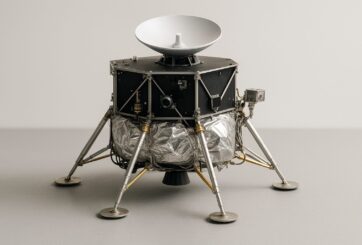
Georgia Tech researchers have been selected by NASA to lead a $7.5 million center that will study the lunar environment and the generation and properties of volatiles and dust. The Center for Lunar Environment and Volatile Exploration Research (CLEVER) will be led by Thomas Orlando, professor in the School of Chemistry and Biochemistry. CLEVER is the successor to Orlando’s pioneering REVEALS (Radiation Effects on Volatiles and Exploration of Asteroids and Lunar Surfaces) center, and both are part of NASA’s Solar System Exploration Research Virtual Institute (SSERVI)…
… in would-be superconductor. Precision measurements reveal connection between electron density and atomic arrangements in charge-ordered states of a superconducting copper-oxide material. What makes some materials carry current with no resistance? Scientists are trying to unravel the complex characteristics. Harnessing this property, known as superconductivity, could lead to perfectly efficient power lines, ultrafast computers, and a range of energy-saving advances. Understanding these materials when they aren’t superconducting is a key part of the quest to unlock that potential. “To solve the problem,…
Researchers have observed the X-ray emission of the most luminous quasar seen in the last 9 billion years of cosmic history, known as SMSS J114447.77-430859.3, or J1144 for short. The new perspective sheds light on the inner workings of quasars and how they interact with their environment. The research is published in Monthly Notices of the Royal Astronomical Society. Hosted by a galaxy 9.6 billion light years away from the Earth, between the constellations of Centaurus and Hydra, J1144 is extremely…
 Feedback


