
Astronauts driving a vehicle around the landscape of the Moon must not only face dangers related to zero gravity and falling into craters, but also the problem of extreme fluctuations in temperature. The lunar environment oscillates between blistering highs of 127°C (260°F) and frigid lows of -173°C (-280°F). Future missions to explore the Moon will need reliable machines that can function under these harsh conditions. This led a team from Nagoya University in Japan to invent a heat-switch device that…
Due to the complex structures of microporous crystals known as MOFs, reliable simulations of their properties have been difficult until now. Machine learning provides the solution. Hydrogen storage, heat conduction, gas storage, CO2 and water sequestration – metal-organic frameworks (MOFs) have extraordinary properties due to their unique structure in the form of microporous crystals, which have a very large surface area despite their small size. This makes them extremely interesting for research and practical applications. However, MOFs are very complex…
Experiments in weightlessness isolate classic diffusion phenomenon. For years, various models have been developed to describe an important class of mixing effects that occur, for example, in the flow in a chemical reactor. Experimental validation, however, has lagged far behind due to the superimposition of gravity effects. A European research team involving the Helmholtz-Zentrum Dresden-Rossendorf (HZDR) and partners at the University of Szeged (Hungary) and Université libre de Bruxelles (ULB, Belgium) has now closed this gap with experiments conducted under…
Optical waves propagating through air or multi-mode fiber can be patterned or decomposed using orthogonal spatial modes, with far-ranging applications in imaging, communication, and directed energy. Yet the systems that perform these wavefront manipulations are cumbersome and large, restricting their utilization to high-end applications. The development of a Free-Standing Microscale Photonic Lantern Spatial Mode (De-)Multiplexer using 3D Nanoprinting, as revealed by a recent study, marks a significant advancement in photonic technology. This spatial multiplexer, characterized by its compactness, minimal footprint,…
Developing transparent particles and imaging their positions, researchers shed light on never-before-seen interiors of crystalline structures. A team of New York University researchers has created a new way to visualize crystals by peering inside their structures, akin to having X-ray vision. Their new technique—which they aptly named “Crystal Clear”—combines the use of transparent particles and microscopes with lasers that allow scientists to see each unit that makes up the crystal and to create dynamic three-dimensional models. “This is a powerful…
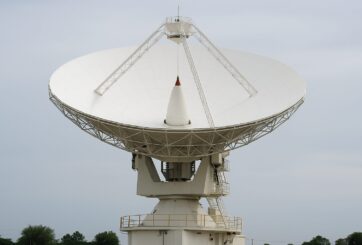
The National Astronomical Research Institute of Thailand (NARIT), in collaboration with the Max Planck Institute for Radio Astronomy (MPIfR), has achieved the historic first detection of astronomical radio signals using Very Long Baseline Interferometry (VLBI) with the 40-m Thai National Radio Telescope (TNRT). The experiment, performed together with the Effelsberg 100-m radio telescope in Germany, marks the first ever VLBI signal detection made in Thailand. Very Long Baseline Interferometry (VLBI) refers to multiple radio telescopes located far away from each…
New telescope images of Jupiter’s moon Io rival those from spacecraft. Astronomers have captured a volcanic event on Jupiter’s moon Io at a resolution never before achieved with Earth-based observations. New images of Jupiter’s volcano-studded moon Io, taken by the Large Binocular Telescope on Mount Graham in Arizona, offer the highest resolution of Io ever achieved with an Earth-based instrument. The observations were made possible by a new high-contrast optical imaging instrument, dubbed SHARK-VIS, and the telescope’s adaptive optics system,…
Theoretical physicists and experimentalists work together to measure the mass of a rare isotope expected to form a rare proton halo, publishing the first results from FRIB’s precision measurement program. In May 2022, the Facility for Rare Isotope Beams (FRIB) at Michigan State University (MSU), launched its precision measurement program. Staff from FRIB’s Low Energy Beam and Ion Trap (LEBIT) facility take high-energy, rare-isotope beams generated at FRIB and cool them to a lower energy state. Afterward, the researchers measure…
For the first time, magnetic fields have been detected in three massive, hot stars in our neighboring galaxies, the Large and Small Magellanic Clouds. While magnetic massive stars have already been detected in our own galaxy, the discovery of magnetism in the Magellanic Clouds is especially important because these galaxies have a strong population of young massive stars. This provides a unique opportunity to study actively forming stars and the upper limit to the mass that a star can have…
²Lying between the microwave and infrared regions of the electromagnetic spectrum, the terahertz (1 THz = 10¹² Hz) gap is being rapidly closed by development of new terahertz sources and detectors, with promising applications in spectroscopy, imaging, sensing, and communication. These applications greatly benefit from terahertz sources delivering high-energy or high-average-power radiation. On the other hand, high-intensity or strong-field terahertz sources are essential to observe or exploit novel nonlinear terahertz-matter interactions, where the electric and/or magnetic field strengths play a…
– via the telegraph equation. When a train approaches or an ambulance with its siren blaring nears us, we hear the sound with an increased frequency, gradually decreasing slightly. As it passes, the frequency changes abruptly to a lower one, then decreases further. This commonly encountered Doppler effect can be a valuable clue to the nature of a phenomenon seemingly completely unrelated to sound propagation: heat transport. Burns are not pleasant for anyone, but they hurt physicists two-fold: not only…
New physical model reinforces planetary hypothesis. Researchers at the Helmholtz-Zentrum Dresden-Rossendorf (HZDR) and the University of Latvia have posited the first comprehensive physical explanation for the sun’s various activity cycles. It identifies vortex-shaped currents on the sun, known as Rossby waves, as mediators between the tidal influences of Venus, Earth as well as Jupiter and the sun’s magnetic activity. The researchers thus present a consistent model for solar cycles of different lengths – and another strong argument to support the…
Using observations by NASA’s TESS (Transiting Exoplanet Survey Satellite) and many other facilities, two international teams of astronomers have discovered a planet between the sizes of Earth and Venus only 40 light-years away. Multiple factors make it a candidate well-suited for further study using NASA’s James Webb Space Telescope. TESS stares at a large swath of the sky for about a month at a time, tracking the brightness changes of tens of thousands of stars at intervals ranging from 20 seconds to 30…
Exploring uncharted territory in quantum devices. Many of today’s quantum devices rely on collections of qubits, also called spins. These quantum bits have only two energy levels, the ‘0’ and the ‘1’. However, spins in real devices also interact with light and vibrations known as bosons, greatly complicating calculations. In a new publication in Physical Review Letters, researchers in Amsterdam demonstrate a way to describe spin-boson systems and use this to efficiently configure quantum devices in a desired state. Quantum…
Rensselaer Polytechnic Institute researchers have created the first topological quantum simulator device in the strong light-matter interaction regime that operates at room temperature. Researchers at Rensselaer Polytechnic Institute have fabricated a device no wider than a human hair that will help physicists investigate the fundamental nature of matter and light. Their findings, published in the journal Nature Nanotechnology, could also support the development of more efficient lasers, which are used in fields ranging from medicine to manufacturing. The device is…
A recent study reveals new details of the origins of the proton’s spin. Nuclear physicists have long been working to reveal how the proton gets its spin. Now, a new method that combines experimental data with state-of-the-art calculations has revealed a more detailed picture of spin contributions from the very glue that holds protons together. It also paves the way toward imaging the proton’s 3D structure. The work was led by Joseph Karpie, a postdoctoral associate in the Center for…
 Feedback


