
New study details how large-scale, cost-effective use of high-temperature superconducting wire is another step closer to reality. Our energy future may depend on high-temperature superconducting (HTS) wires. This technology’s ability to carry electricity without resistance at temperatures higher than those required by traditional superconductors could revolutionize the electric grid and even enable commercial nuclear fusion. Yet these large-scale applications won’t happen until HTS wires can be fabricated at a price-performance metric equal to that of the plain copper wire sold…
Team discovers Magnon-phonon Fermi resonance in an antiferromagnet. Soon, data storage centers are expected to consume almost 10 percent of the world’s energy generation. This increase is, among other things, due to intrinsic limitations of the materials used – ferromagnets. Consequently, this problem has ignited a quest for faster and more energy efficient materials. One of the most encouraging pathways are antiferromagnets – materials that not only promise more robust and 1.000 times faster read and write operations but also…
Why toast plasma when you can microwave it! Some believe the future of fusion in the U.S. lies in compact, spherical fusion vessels. A smaller tokamak, it is thought, could offer a more economical fusion option. The trick is squeezing everything into a small space. New research suggests eliminating one major component used to heat the plasma, freeing up much-needed space. Scientists at the U.S. Department of Energy’s (DOE) Princeton Plasma Physics Laboratory (PPPL), the private company Tokamak Energy and Kyushu University in Japan have proposed a design for a…
International research team achieves advances in periodic oscillations and transportation for optical pulses, with potential for next-gen optical communications and signal processing. Full coherent control of wave transport and localization is a long-sought goal in wave physics research, which encompasses many different areas from solid-state to matter-wave physics and photonics. One among the most important and fascinating coherent transport effects is Bloch oscillation (BO), which refers to the periodic oscillatory motion of electrons in solids under a direct current (DC)-driving…
Why does the universe contain matter and (virtually) no antimatter? The BASE international research collaboration at the European Organisation for Nuclear Research (CERN) in Geneva, headed by Professor Dr Stefan Ulmer from Heinrich Heine University Düsseldorf (HHU), has achieved an experimental breakthrough in this context. It can contribute to measuring the mass and magnetic moment of antiprotons more precisely than ever before – and thus identify possible matter-antimatter asymmetries. BASE has developed a trap, which can cool individual antiprotons much…
Microscope reveals tiniest cell processes. Research team including Göttingen University develops high-resolution fluorescence microscope. What does the inside of a cell really look like? In the past, standard microscopes were limited in how well they could answer this question. Now, researchers from the Universities of Göttingen and Oxford, in collaboration with the University Medical Center Göttingen (UMG), have succeeded in developing a microscope with resolutions better than five nanometres (five billionths of a metre). This is roughly equivalent to the…
Acquisition of aurora spectral images succeeded. Auroras are natural luminous phenomena caused by the interaction of electrons falling from the sky and the upper atmosphere. Most of the observed light consists of emission lines of neutral or ionized nitrogen and oxygen atoms and molecular emission bands, and the color is determined by the transition energy levels, molecular vibrations and rotations. There is a variety of characteristic colors of auroras, such as green and red, but there are multiple theories about…
Machine learning shed new light on the formation history of our Milky Way: a surprising discovery about the evolution of our galaxy using data from the Gaia mission found a large number of ancient stars on orbits similar to that of our Sun. They formed the Milky Way’s thin disc already less than 1 billion years after the Big Bang, several billion years earlier than previously believed. The Milky Way galaxy has a large halo, a central bulge and bar,…
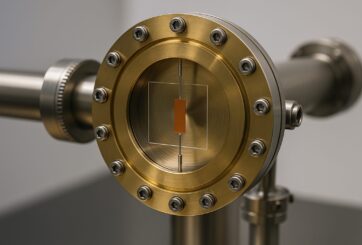
European XFEL creates exotic matter. Experiments at European XFEL generate states of matter close to what occurs in the interior of planets or in the imploding capsule of an inertial fusion reactor. At the same time, they open up a way to measure ultra-short phenomena. Sketch of the experimental setup and results. (c) European XFEL; Laurent Mercadier Exploring the extreme conditions reached in the interior of planets, including Earth, or during a fusion reaction, is a major challenge. By focusing…
All-optical multiplane QPI design eliminates the need for digital phase recovery algorithms. Light waves, as they propagate through a medium, experience a temporal delay. This delay can unveil crucial information about the underlying structural and compositional characteristics. Quantitative phase imaging (QPI) is a cutting-edge optical technique that reveals variations in optical path length as light moves through biological samples, materials, and other transparent structures. Unlike traditional imaging methods that rely on staining or labeling, QPI allows researchers to visualize and…
How molecular interactions make it possible to overcome the energy barrier. Non-reciprocal interactions allow the design of more efficient molecular systems. In their new paper, scientists from the department “Living Matter Physics” at the Max Planck Institute for Dynamics and Self-Organization (MPI-DS) propose a mechanism on how energy barriers in complex systems can be overcome. These findings can help to engineer molecular machines and to understand the self-organization of active matter. In both physics and biology, systems aim to achieve…
In October 2022, astronomers were stunned by what was quickly dubbed the BOAT — the brightest-of-all-time gamma-ray burst (GRB). Now an international science team reports that data from NASA’s Fermi Gamma-ray Space Telescope reveals a feature never seen before. “A few minutes after the BOAT erupted, Fermi’s Gamma-ray Burst Monitor recorded an unusual energy peak that caught our attention,” said lead researcher Maria Edvige Ravasio at Radboud University in Nijmegen, Netherlands, and affiliated with Brera Observatory, part of INAF (the…
A research team led by Prof Ursula Wurstbauer from the Institute of Physics at the University of Münster has investigated how electrons in two-dimensional crystals can be collectively excited and controlled. The study is pioneering for understanding the electronic properties of crystal structures and specifically influencing them. If you make a material thinner and thinner, at a certain point it undergoes a seemingly miraculous transformation: A two-dimensional material that consists of only one or two layers of molecules sometimes has…
Federal funding will allow University of Rochester scientists and their European collaborators to study the feasibility of coherent light sources beyond x-rays. Since the laser was invented in the 1960s, scientists have been working to increase lasers’ peak power and to design machines producing coherent light at progressively shorter wavelengths that can improve image resolution and enable probing of quantum nuclear states. Progress has been made with regard to peak power, most notably with the invention of chirped pulse amplification…
– magnetrons show promise as radiofrequency source. The small but mighty gadget could help make massive research machines more efficient and enable future industrial applications. It has a pretty fascinating past, as well. A pocket-size gizmo that puts the “pop” in microwave popcorn could soon fuel particle accelerators of the future. The small but mighty device is a magnetron – a mashup of the words “magnetic” and “electron.” The term was coined in 1921, and the technology was once a…
Researchers at Berkeley Lab’s 88-Inch Cyclotron successfully made superheavy element 116 using a beam of titanium-50. That milestone sets the team up to attempt making the heaviest element yet: 120. Scientists at the Department of Energy’s Lawrence Berkeley National Laboratory (Berkeley Lab) are credited in the discovery of 16 of the 118 known elements. Now they’ve completed the crucial first step to potentially create yet another: element 120. Today, an international team of researchers led by Berkeley Lab’s Heavy Element…
 Feedback


