
Young stars ejecting plasma could give us clues into the Sun’s past Kyoto, Japan — Down here on Earth we don’t usually notice, but the Sun is frequently ejecting huge masses of plasma into space. These are called coronal mass ejections (CMEs). They often occur together with sudden brightenings called flares, and sometimes extend far enough to disturb Earth’s magnetosphere, generating space weather phenomena including auroras or geomagnetic storms, and even damaging power grids on occasion. Scientists believe that when…

LUNA (Laboratory for Underground Nuclear Astrophysics) is a compact linear accelerator. It is the only one in the world installed in an underground facility,…
“When we looked at all the data from this event, from gamma rays to radio, we realized the measurements told us something we didn't expect about how the black…
Improved sprayer for the application of pesticides. The invention ensures that yawing and rolling movements of a field sprayer are compensated, that output quantities of such chemicals are evenly distributed in the field.
The results confirm the expected magic neutron number N=82 and are of significant relevance for simulation studies extending our understanding of the origin of…
This effort, led by Jürgen Kerp (AIfA) and Benjamin Winkel (MPIfR), began in 2008 and has culminated today in the initial data release of the Effelsberg-Bonn…
Researchers at Tohoku University have found a way to make covered or hidden PC steel wires visible, by developing a new terahertz wave light source featuring…
“EmAsIn” stands for “Emotion-sensitive Assistance Systems for Reactive Psychological Interaction with People”. Within the scope of the project, the team will…
The Large Underground Xenon (LUX) dark matter experiment, which operates nearly a mile underground at the Sanford Underground Research Facility (SURF) in the…
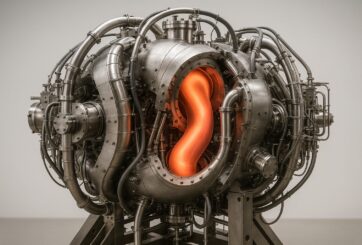
The plasma researchers’ efforts and patience have paid off. On December 10th, a good ten years after the assembly of the Wendelstein 7-X fusion device began at…
The novel system for combined diagnosis and therapy, described here, allows for a radiographic examination for diagnostic purposes and therapeutic irradiation to be implemented using only a single device. This combination of therapy and diagnostics ? theranostics ? provides great advantages towards the current course of action, esp. time- and cost-reduction.
A study into the way nanoparticles scatter light could lead to simpler and smaller optical nanoantennas with improved directivity and efficiency — crucial…
Within a project of the Baden-Württemberg Stiftung a novel surface technology has been developed that can hold gas molecules between a surface and surrounding liquids. Such a material could be extremely useful in shipbuilding rendering toxic anti-fouling coatings obsolete and simultanously reducing frictional resistance between vessel and seawater, thus saving fuel.
When the Sun shines into the Occator crater on the surface of the dwarf planet Ceres, a kind of thin haze appears above its brightest spot. This can be seen in…
But half of all stars are in binaries — pairs of stars that orbit each other. Half of binary stars orbit so close that gravitational interaction significantly…
Exploding stars may seem like an unlikely yardstick for measuring the vast distances of space, but astronomers have been mapping the universe for decades using…
In the early morning of December 3, 2015 scientists and engineers from nine European countries started the installation of KM3NeT, the largest detector of…
 Feedback


